


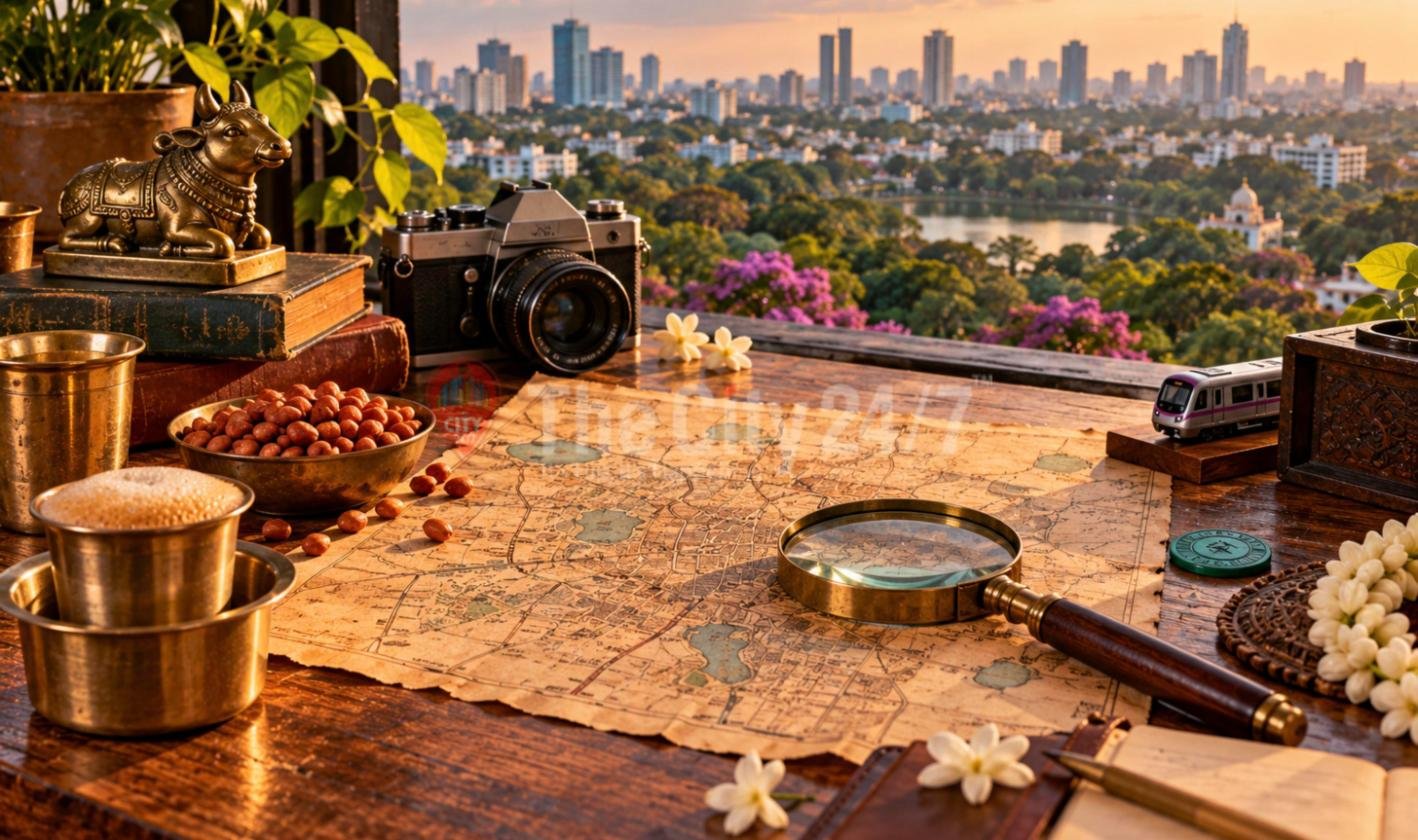
“Bengaluru is a city that everyone describes in terms of the last twenty years, which is a bit like describing a novel by its final page.”
• On a place with a much longer memory than it lets on
I have lived here long enough to have heard Bengaluru reduced to three things: traffic, tech and weather. All three are true and all three are recent. What almost nobody mentions is that this city has a ninth century inscription bearing its name, was the first place in Asia to be lit by hydroelectric power, sits on some of the oldest exposed rock on the planet, and once had a young Winston Churchill run up a bar bill he never settled.
The facts below are the ones that genuinely surprised me, and I have checked each against something more reliable than a forwarded message. Some are historical, some geological, some administrative and one or two are simply odd. They are arranged loosely from the oldest to the most recent, which turns out to be a decent way to tell the story of the place.
If you want the full narrative rather than the highlights, read our history of Bangalore alongside this. And if a fact here is wrong or incomplete, I would genuinely like to know, because this is the kind of page that attracts confident misinformation.
Quick Information
The twenty five, compressed. Read the table, win the argument, then read the article for the interesting part.
Where Does the Name Bangalore Actually Come From?
From Bengaluru, a name recorded in a ninth century stone inscription at Begur, roughly six hundred years before Kempe Gowda founded the city. The boiled beans story is charming and almost certainly later folklore.
The inscription, at the Nageshwara temple in Begur in the south east of the modern city, refers to a battle at a place called Bengaluru. That is the earliest known appearance of the name and it comfortably predates the 1537 founding, which means Kempe Gowda did not name the city so much as build a fort at a place that already had a name.
The popular story, that a Hoysala king lost in the forest was fed boiled beans by an old woman and named the spot benda kaalu ooru in gratitude, is a lovely piece of folk etymology and you will hear it from every second auto driver. Treat it as a story the city tells about itself rather than as history. Both versions are worth knowing, because the difference between them is exactly the difference between what a city remembers and what it can prove.
What Is the Oldest Thing in Bangalore?
The rock in Lalbagh. It is peninsular gneiss, dated at roughly three billion years, which makes it one of the oldest exposed rock formations on Earth and older than almost every continent in its current form.
You can walk up it in ten minutes, and there is a Kempe Gowda watchtower from the sixteenth century sitting on top of it, which produces one of the more absurd juxtapositions available anywhere: a four hundred and fifty year old building on a three billion year old rock, with a modern city in every direction. It is a National Geological Monument and almost everybody who visits Lalbagh walks past it to look at flowers.
- The Begur inscription, ninth century. The earliest surviving written appearance of the name Bengaluru, at the Nageshwara temple complex in Begur.
- Someshwara Temple, Halasuru. The oldest temple in the city, with Vijayanagara era work and a quiet corner of Ulsoor that almost no visitor reaches.
- The Bull Temple, Basavanagudi. Sixteenth century, built under Kempe Gowda, with a single monolithic Nandi carved from the local granite.
- Bangalore Fort. Kempe Gowda's mud fort of 1537, rebuilt in stone by Hyder Ali and Tipu Sultan. A gateway and a wall section survive.
- Tipu Sultan's Summer Palace, 1790s. A two storey teak pavilion with painted ceilings, still standing in the middle of the busy old city.
- The four Kempe Gowda towers. Built by his sons at Lalbagh, Kempambudhi, Halasuru and Mekhri Circle to mark the city's intended boundaries. The city passed them some centuries ago.
Was Bangalore Really the First City in Asia With Electric Lights?
Yes. Bengaluru was lit by hydroelectric power in 1905, drawn from a generating station at Shivanasamudra on the Kaveri, and it was the first city in Asia to be lit this way.
The scheme was driven by the Mysore state under the Wadiyars, with the Shivanasamudra plant commissioned in 1902 primarily to power the Kolar Gold Fields, and the transmission line to Bengaluru followed. The falls at Shivanasamudra, which most people here now think of as a monsoon day trip, were the reason the city had streetlights before most of Europe's smaller towns.
This is part of a pattern that gets forgotten. Princely Mysore was unusually technocratic, and the same impulse produced the Indian Institute of Science in 1909, funded substantially by the Tatas and hosted here, and Hindustan Aircraft Limited in 1940. The tech city narrative that starts in the 1990s is really the third or fourth chapter of a much older story about engineering in this particular place.
“Bengaluru has been an engineering town since 1905. The software just arrived last, and took all the credit.”
• A reasonable summary of the last hundred and twenty years
Did Winston Churchill Really Leave an Unpaid Bill in Bangalore?
The Bangalore Club still holds a ledger entry recording an unsettled balance in the name of Lieutenant W L S Churchill, from his time stationed here as a young cavalry officer in 1896. The amount is small and the story is entirely real.
Churchill served with the 4th Hussars and was posted to Bangalore, living in a bungalow in the Cantonment and by his own account finding the place rather dull, which is a view later residents have occasionally shared about the same neighbourhoods. The club has kept the ledger and it has become one of the more cheerfully told facts about the city.
The wider point is that the Cantonment was a separate city with a separate character, populated by the British garrison, Tamil and Anglo Indian communities, and administered apart from the old Kannada pete to the west. Frazer Town, Cooke Town and Richards Town still look and feel different from Basavanagudi and Malleshwaram because for a century they were not the same city at all.
What Happened to Bangalore's Lakes?
They were built as an interconnected cascading tank system, because the city has no river. Hundreds existed, and a large number were built over during the twentieth century, becoming bus stands, stadiums, golf courses and residential layouts.
This is the single most consequential thing to understand about Bengaluru's geography. Sitting at 900 metres on a ridge with no river, the city depended entirely on rainwater harvesting at scale: tanks arranged down the natural gradients so that the overflow from one fed the next. Kempe Gowda and successive rulers built them, and they worked for four centuries.
Then they were filled in. The Majestic bus station, the Kanteerava stadium, the football stadium and several large layouts all sit on former tank beds, which is why those areas flood in a heavy monsoon: water still goes where water used to go. The good news is the reversal in recent decades, with Kaikondrahalli, Puttenahalli and others restored largely through residents organising and forcing the issue, and they are genuinely better now than they were twenty years ago.
Which Other Facts Surprised Me Most?
- Lalbagh's trees were an eighteenth century diplomatic project. Hyder Ali laid out the garden in the 1760s and Tipu Sultan actively sought species from Persia, Kabul, Mauritius and beyond. Some of what you walk past arrived as a gift between rulers.
- The Glass House is a Crystal Palace copy. Built in the late nineteenth century in iron and glass, modelled on the London original, and still the venue for the January and August flower shows.
- Cubbon Park's namesake did not want it. Laid out in the 1860s and named for Mark Cubbon, the long serving Commissioner of Mysore. Its official name is now Sri Chamarajendra Park.
- India's aircraft industry is a Bengaluru story. Hindustan Aircraft was founded here in 1940, before independence, and HAL still builds and maintains military aircraft in the city. Hence an aerospace museum with real cockpits.
- Two Mars and Moon missions were run from here. ISRO is headquartered in Bengaluru, and India's lunar and Martian missions were commanded from this city's control rooms.
- The microbrewery boom has a specific legal cause. A 2011 change in Karnataka's licensing rules made standalone microbreweries viable, and Bengaluru's brewery culture, now among the densest in Asia, dates from that decision.
- Vidhana Soudha is the largest of its kind in India. Completed in 1956 in Neo Dravidian granite, it remains the biggest state legislature building in the country and the grandest structure in the city.
- The city has no natural river. Unusual for a major Indian city. Bengaluru's water now comes largely from the Kaveri, pumped uphill across roughly a hundred kilometres, which is why water costs what it does here.
- Garden City came first. The nickname was in use long before the IT industry arrived, earned by the gardens, the Cantonment's tree lined avenues and the planned layouts of the early twentieth century.
- The renaming in 2014 was a restoration. Bangalore officially became Bengaluru, returning to the Kannada name recorded in that ninth century inscription rather than adopting anything new.
Why Does None of This Show up in How Bangalore Is Described?
Because the last thirty years were loud enough to drown out the previous thousand. The tech boom is the most globally legible thing this city has done, so it became the whole story.
That has practical consequences. Visitors arrive expecting either a software park or a monument city and find neither. Residents of five years frequently do not know that there is a ninth century inscription bearing the city's name, or that the rock in Lalbagh is older than the Himalayas by an almost comic margin. The heritage here is real but it is quiet, wedged between apartment blocks and traffic, and it does not announce itself.
Which is, in the end, the argument for walking around. Someshwara Temple in Ulsoor, the Begur inscription, Tipu's teak palace and the Kempe Gowda towers are all still there, all still free or nearly so, and all largely unvisited. The city is not hiding any of it. Nobody is simply looking.
Bangalore Facts: Frequently Asked Questions
What does the name Bangalore mean?
It comes from Bengaluru, a name recorded in a ninth century Western Ganga inscription at Begur, roughly six hundred years before the city was founded. The popular story about benda kaalu ooru, the town of boiled beans, is folk etymology rather than documented origin.
Who founded Bangalore and when?
Kempe Gowda I in 1537, when he built a mud fort and laid out the market streets known as petes. His sons later built four watchtowers marking the city's intended limits, at Lalbagh, Kempambudhi, Halasuru and Mekhri Circle, and all four still stand.
Was Bangalore the first city in Asia to have electricity?
Bengaluru was lit by hydroelectric power in 1905, supplied from a generating station at Shivanasamudra on the Kaveri, and was the first city in Asia to be lit this way. The plant had been commissioned in 1902 primarily to power the Kolar Gold Fields.
What is the oldest thing in Bangalore?
The rock in Lalbagh, which is peninsular gneiss dated at roughly three billion years and recognised as a National Geological Monument. A sixteenth century Kempe Gowda watchtower sits on top of it, which is one of the odder juxtapositions in India.
Is the Winston Churchill unpaid bill story true?
Yes. The Bangalore Club holds a ledger entry recording an unsettled balance in the name of Lieutenant W L S Churchill from his posting here with the 4th Hussars in 1896. The amount is small and the story is genuine.
Why does Bangalore have so many lakes?
Because it has no river. Sitting at about 900 metres with no natural watercourse, the city was built around an interconnected cascading system of rainwater tanks, where overflow from one fed the next. Hundreds existed and many were built over in the twentieth century.
Why is Bangalore called the Garden City?
The nickname predates the IT industry by roughly a century, earned by Lalbagh and Cubbon Park, the Cantonment's tree lined avenues and the planned green layouts of the early twentieth century. The great gardens survive, though the street tree canopy has thinned considerably.
When did Bangalore become Bengaluru?
Officially in 2014, when the state restored the older Kannada name that appears in the ninth century Begur inscription. Both names remain in common use in speech and writing.
Why does Bangalore have so many microbreweries?
A change in Karnataka's licensing rules in 2011 made standalone microbreweries commercially viable, and Bengaluru's brewery scene, now among the densest in Asia, dates from that decision. The Pub City reputation is considerably older, from the 1980s and 1990s.
What is Bangalore's connection to India's space and aviation programmes?
Hindustan Aircraft was founded here in 1940, before independence, and HAL still builds and maintains military aircraft in the city, which is why there is an aerospace museum with real cockpits. ISRO is also headquartered in Bengaluru, and India's lunar and Mars missions were commanded from here.
Know Something About This City I Don't?
This is exactly the sort of page that attracts confident misinformation, mine included. If a fact here is wrong, incomplete or out of date, or if you know something about Bengaluru that deserves to be on this list, click the WhatsApp icon at the bottom right of your screen and tell me. I would rather correct a page than defend it. That is also the fastest way to reach The City 24/7 about anything at all.
And if you want the city explained one useful thing at a time, join our ever growing community. One weekly email, free, and reliably full of things nobody mentions.
Same city, new stories, always.

Related Stories
 CITY GUIDE
Bangalore's Heritage Buildings You Should Know, Including the Ones We Lost
July 30, 2026
 CITY GUIDE
Bangalore's Most Interesting Streets, and What Each One Is For
July 29, 2026
 CITY GUIDE
The Ultimate Guide to Bangalore: Everything You Need to Know
November 1, 2026
 CITY GUIDE
KSR Bengaluru City Station: How to Use India's Busiest Confusing Railway Station
September 22, 2026
 CITY GUIDE
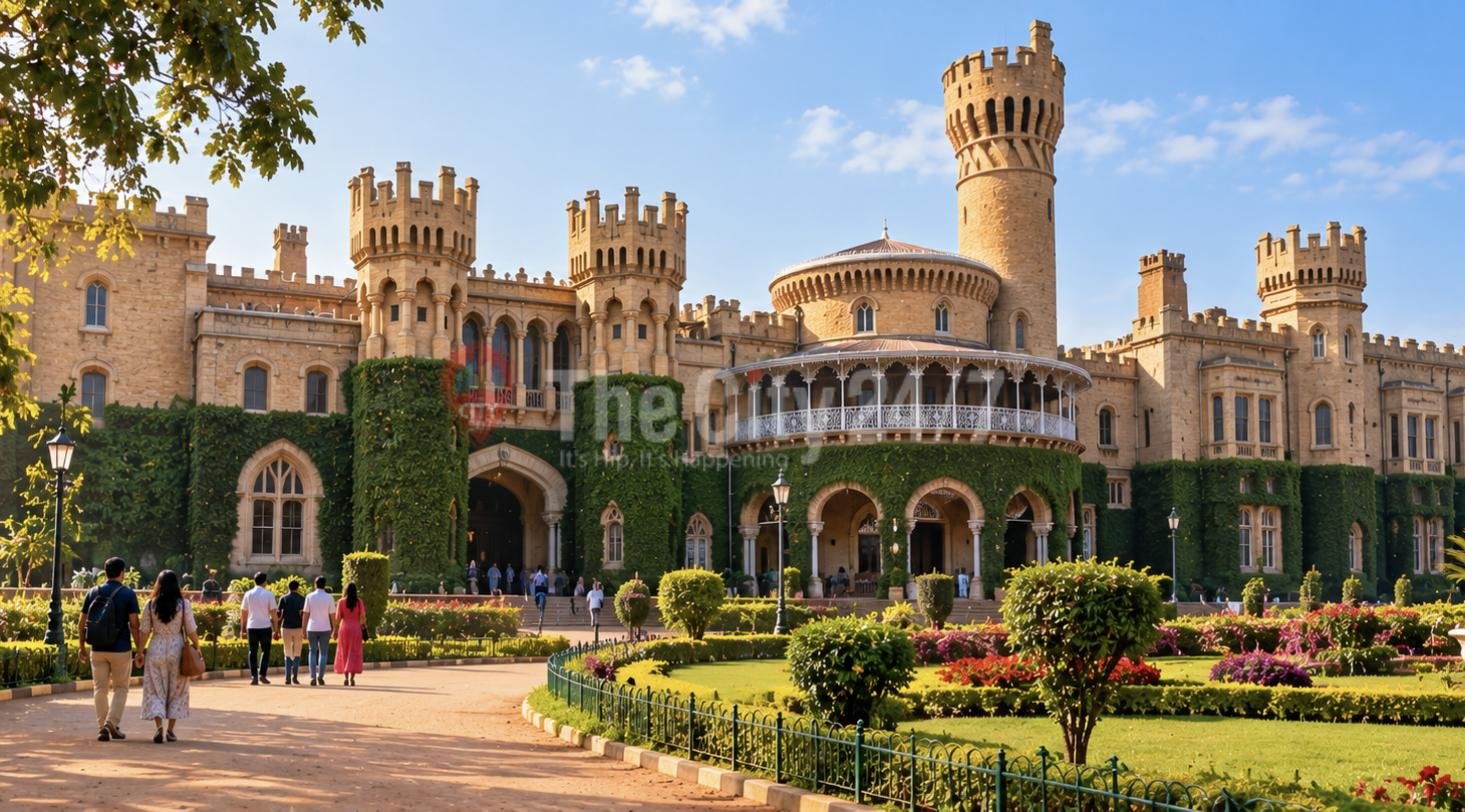
Bangalore Palace: Timings, Entry Fee and Whether It Is Worth Rs 230
September 8, 2026
 CITY GUIDE
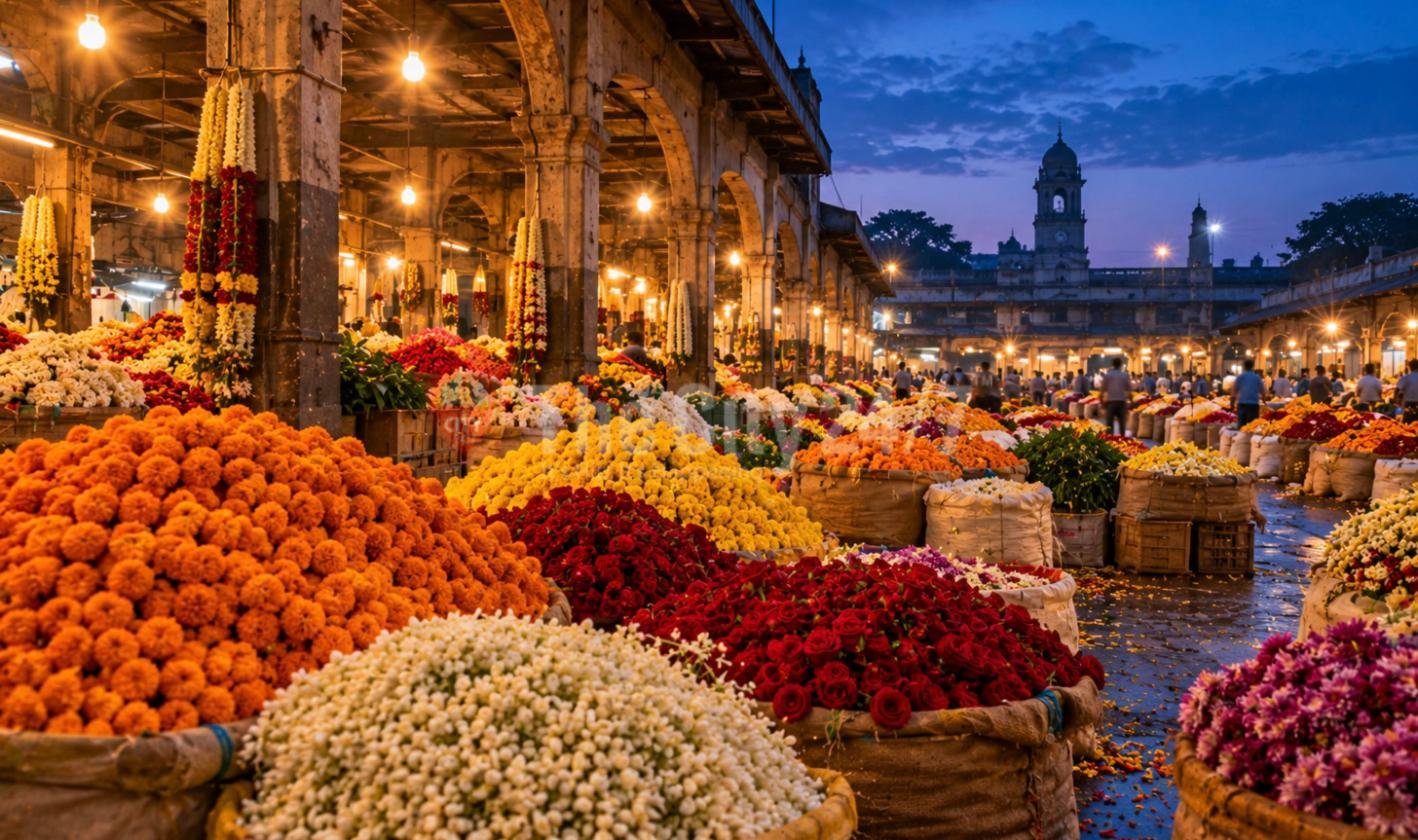
KR Market: Go at Five in the Morning, or Do Not Bother
September 4, 2026
