


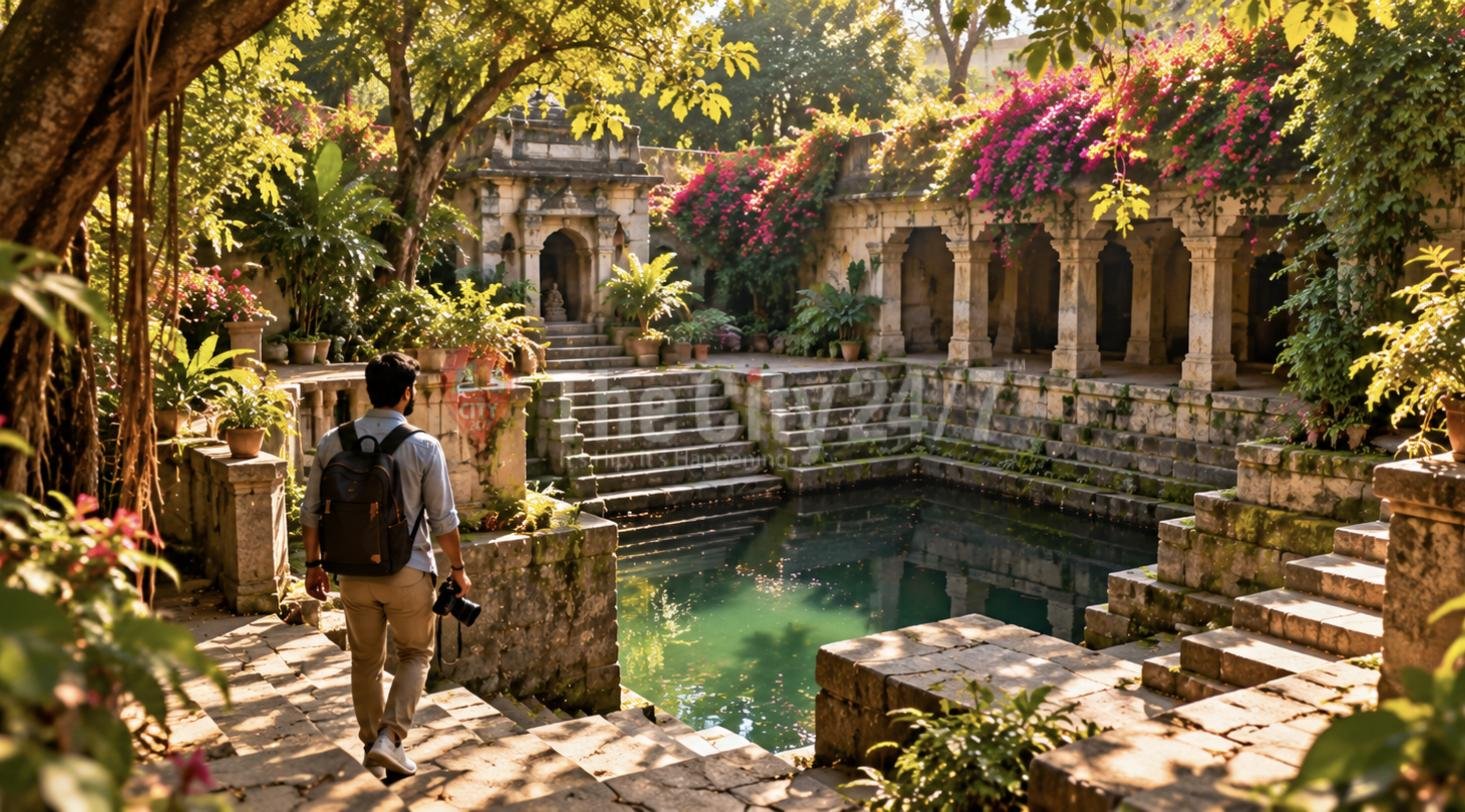
“Bengaluru does not hide anything. It simply declines to put up a sign, and that turns out to be enough.”
• On a city that keeps its best things in plain view
Every city has a hidden gems list and most of them are dishonest, full of places that are neither hidden nor gems. This one has a stricter test: everything on it is genuinely under visited, genuinely worth going to, and genuinely accessible, meaning free or nearly free and open to anyone who turns up.
What qualifies in Bengaluru is unusual, because this is not a city with a tourist circuit that things can hide behind. It is a city where the oldest temple sits between two shops with no fuss, where a 1915 library has a reading room you can walk into, and where a ninth century inscription bearing the city's own name sits in a temple complex absorbed by the southern suburbs.
So this is twelve places, roughly grouped by what kind of thing they are, with what each one is and how to reach it. Several appear in our landmarks, lakes and streets guides as well, but these are the ones I would send somebody to if they had already done the obvious morning and wanted the better one.
Quick Information
Twelve places, and the cost of visiting all of them is roughly the price of one museum ticket.
What Is Bangalore's Most Under Visited Historic Place?
Someshwara Temple in Halasuru, now Ulsoor. It is the oldest temple in Bengaluru, with Vijayanagara period work, it is free, and on most mornings there is almost nobody there.
Halasuru predates the 1537 founding of the city, and this temple is the proof of it. There is carved stone work, later additions from the Mysore rulers, a gopura and a courtyard, and it sits quietly among shops and houses with no visitor infrastructure at all. It is a working temple, in daily use by the neighbourhood, and that is precisely what makes it better than a monument.
Go in the morning, dress with covered shoulders and knees, leave your shoes at the entrance and do not photograph the sanctum. One of the four Kempe Gowda watchtowers is nearby, and Ulsoor Lake is a short walk, which makes a very good hour out of a part of the city most visitors pass through on the way to somewhere else.
Where Is the Oldest Written Record of Bangalore's Name?
On a ninth century Western Ganga inscription at the Nageshwara temple complex in Begur, in the south east of the city. It refers to a battle at a place called Bengaluru, roughly six hundred years before the city was founded.
This is the single most significant object in Bengaluru and there is no queue for it. Begur was a village and is now absorbed into the sprawl near Electronic City and Bommanahalli, and the temple complex there holds inscriptions including the one bearing the name. Visiting is more of a pilgrimage than a sightseeing trip, and it requires wanting to go.
It is worth the effort for one reason: the popular story about the city's name, the king fed boiled beans by an old woman, is folklore, and this stone is the evidence of what was actually here. Standing in front of it is a quietly remarkable experience for anybody who lives in this city, and I have never once seen another visitor there.
“There is a ninth century stone in this city bearing its name, and a three billion year old rock you can climb in ten minutes. Neither has a gift shop and both are free.”
• The case for looking harder
Which Hidden Interiors Can I Actually Go Inside?
The State Central Library reading room in Cubbon Park and St Mark's Cathedral on MG Road. Both are free, both are open, and almost nobody who is not already using them goes in.
- Seshadri Iyer Memorial Hall, 1915. The red building in Cubbon Park that houses the State Central Library. You can walk into the reading room, sit under high ceilings among people reading, and it is one of the calmest and most beautiful interiors in central Bengaluru.
- St Mark's Cathedral, 1808. On MG Road, open to visitors, and a genuinely peaceful interior about thirty seconds from the busiest commercial street in the city. Worth going in for the contrast alone.
- St Mary's Basilica, Shivajinagar. The oldest church in Bengaluru and a minor basilica. Free, and its September feast is one of the largest religious gatherings in the city.
- The Lalbagh Glass House. Iron and glass, modelled on London's Crystal Palace, and worth going inside even outside the January and August flower shows.
- Tipu Sultan's Summer Palace. Not hidden exactly, but consistently skipped. A 1790s teak pavilion with painted ceilings, a small museum, and twenty minutes that stays with you.
- Russell Market, 1927. A working Cantonment market in a handsome arched brick building. Heritage you can shop in, best very early in the morning.
Which Natural Places Do Visitors Miss?
The Lalbagh rock, Bugle Rock, Turahalli Forest and Kaikondrahalli Lake. Two are inside gardens people already visit and walk straight past, and two require going somewhere deliberately.
The Lalbagh rock is the best example of the phenomenon. It is peninsular gneiss, roughly three billion years old, a recognised National Geological Monument, with a sixteenth century Kempe Gowda watchtower on top and the best view of how the old city was laid out, and thousands of people walk past it every morning to look at flowers. Ten minutes up, and free with the garden's nominal entry.
Bugle Rock in Basavanagudi does something similar: a granite outcrop with a watchtower, deep shade underneath, and the Bull Temple next door. Turahalli in the south west is the city's only real scrub forest, best at dawn, with access rules that have varied over the years so worth checking. Kaikondrahalli Lake on Sarjapur Road is the best restored lake in Bengaluru, with wetland boardwalks and genuine biodiversity, and it exists because residents fought for it.
What Is the Single Best Free Experience in Bangalore?
KR Market between five and seven in the morning, when the wholesale flower trade is running. It costs nothing and there is nothing else in this city remotely like it.
Flowers arrive overnight from growers across Karnataka and Tamil Nadu and are sold in bulk in a compressed window before dawn, in quantities that stop making visual sense. The floor is wet, men carry loads on their heads through gaps that should not fit them, and by nine it is swept and finished. Take the Green Line, wear shoes you do not care about, keep your bag in front of you and stay out of the way of anyone carrying a load.
The reason it belongs on a hidden gems list despite being the largest market in the city is simple: almost no visitor goes, because it happens at an hour that does not suit a holiday. That is the entire barrier. Set an alarm and the best thing in Bengaluru is free.
How Should I Visit These Places?
- Go between six and nine. Every place here except the library reading room is better early. The markets are finished by nine and the temples and rocks are hot by ten.
- Group them by geography. Basavanagudi has Bugle Rock, the Bull Temple and a Kempe Gowda tower in one walk. Halasuru has the temple, a tower and the lake. Cubbon Park has the library and Attara Kacheri.
- Use the Green Line. KR Market, Chickpete, Malleshwaram and National College are all on it, and parking at any of these places is not worth attempting.
- Dress for temples. Covered shoulders and knees, shoes off at the entrance, and no photography in sanctums. Some restrict entry to certain areas, which is normal.
- Ask before photographing people. The markets and old streets are workplaces. Ask, accept a no, and buy something from anybody who says yes.
- Check access for Turahalli and Begur. Forest access rules change and Begur takes real effort to reach. Confirm before travelling across the city for either.
- Consider a heritage walk. A guide who knows the petes or the Cantonment will show you inscriptions, doorways and details you would walk past ten times without noticing.
Bangalore's Hidden Gems: Frequently Asked Questions
What are Bangalore's best hidden places?
Someshwara Temple in Halasuru, the ninth century Begur inscription bearing the city's name, the State Central Library reading room in Cubbon Park, Bugle Rock in Basavanagudi, the three billion year old rock in Lalbagh, Turahalli Forest and KR Market at dawn. Nearly all are free.
Where is the oldest temple in Bangalore?
Someshwara Temple in Halasuru, or Ulsoor, with Vijayanagara era work and later Mysore additions. It is free, in daily use by the neighbourhood, and receives almost no visitors despite being the oldest structure of its kind in the city.
Where is the oldest record of the name Bengaluru?
On a ninth century Western Ganga inscription at the Nageshwara temple complex in Begur, in the south east of the city near Bommanahalli and Electronic City. It refers to a battle at a place called Bengaluru, roughly six hundred years before the city was founded.
Can I visit the State Central Library in Bangalore?
Yes. It occupies the Seshadri Iyer Memorial Hall from 1915 in Cubbon Park, and the reading room is open to walk into with no ticket. It is one of the calmest and most beautiful interiors in central Bengaluru and almost nobody visits it as a place.
What is the oldest thing in Bangalore?
The rock in Lalbagh, peninsular gneiss dated at roughly three billion years and recognised as a National Geological Monument, with a sixteenth century Kempe Gowda watchtower on top. Thousands of people walk past it every morning without climbing it.
What is the best free thing to do in Bangalore?
KR Market between five and seven in the morning, when the wholesale flower trade runs. It costs nothing, it is extraordinary, and almost no visitors go because of the hour. Take the Green Line and wear shoes you do not mind ruining.
Is Turahalli Forest open to visitors?
It has been accessible to early morning walkers, cyclists and mountain bikers, though access rules have varied over the years, so check current status with the forest department before travelling. It is the only genuine scrub forest inside the city.
Which lake in Bangalore is worth a special trip?
Kaikondrahalli on Sarjapur Road, the city's best restored lake, with wetland boardwalks and real biodiversity, revived largely by residents. Sankey Tank in Malleshwaram has the best walking track and Hebbal is best for birds.
Where are the four Kempe Gowda towers?
At Lalbagh, Kempambudhi, Halasuru and Mekhri Circle, built to mark the intended limits of the sixteenth century city. All four still stand, all are free, and tracing all four in a day is a good way to see the outline of the original town.
What is the best time to visit Bangalore's hidden gems?
Between six and nine in the morning for almost all of them, since the markets finish by nine and the temples, rocks and streets are hot by ten. The library reading room is the exception and suits an afternoon.
Useful Links
Access, protection and transport information for the places in this guide.
Know Somewhere That Belongs on This List?
This is the page I most want readers in, because genuinely under visited places are found by people who live near them rather than by anyone writing a guide. If you know one, or if access to something here has changed, click the WhatsApp icon at the bottom right of your screen and tell me. That is also the fastest way to reach The City 24/7 about anything at all.
And if you want the city explained one useful thing at a time, join our ever growing community. One weekly email, free, and often about somewhere nobody goes.
Same city, new stories, always.

Related Stories
 CITY GUIDE
Bangalore's Most Famous Landmarks, and What Makes Them Special
September 11, 2026
 CITY GUIDE
Morning Walks in Bangalore: The Best Route in Every Part of the City
September 18, 2026
 CITY GUIDE
Bengaluru's Theatres and Cultural Venues: Where to Actually See Something Live
September 18, 2026
 CITY GUIDE
Bangalore's Heritage Buildings You Should Know, Including the Ones We Lost
September 11, 2026
 CITY GUIDE
Bangalore's Most Interesting Streets, and What Each One Is For
September 11, 2026
 CITY GUIDE
A Guide to Bangalore's Markets: Go at Six, Leave by Nine
September 11, 2026
