


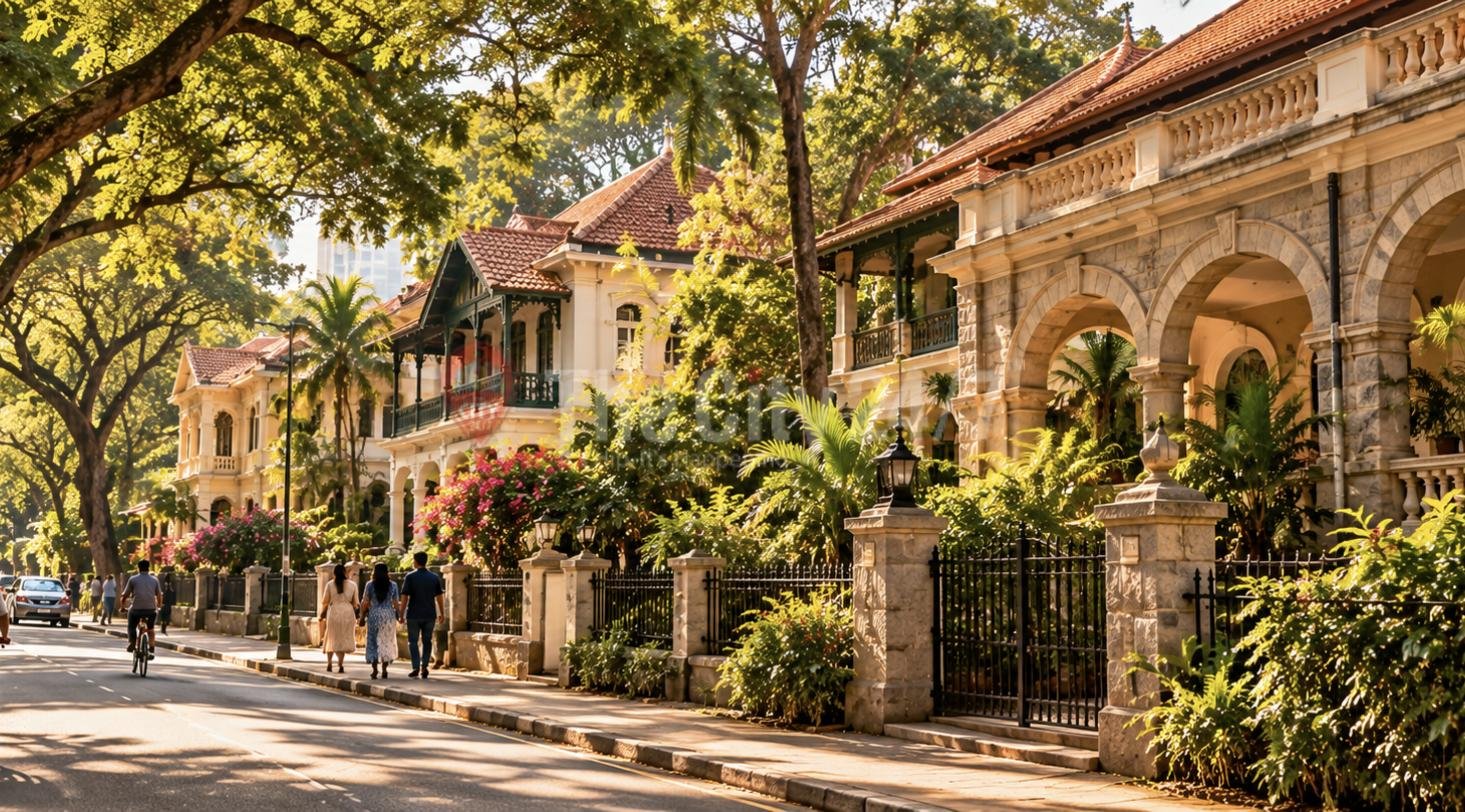
“Bengaluru's heritage problem is not that the buildings are unloved. It is that a single old bungalow on a large plot is worth more as an apartment block than as a bungalow, and that arithmetic has never once lost.”
• On why this list gets shorter every decade
This city's heritage is unusually varied for its age. There is the Vijayanagara and Kempe Gowda layer in temples and watchtowers, the Mysore sultanate in Tipu's summer palace and the fort, the princely Wadiyar era in Bangalore Palace and the public buildings of the late nineteenth century, the British Cantonment in its churches, clubs, halls and bungalows, and the immediate post independence statement of the Vidhana Soudha.
What it does not have is protection that matches the value. Karnataka has never passed a comprehensive heritage regulation of the sort Mumbai has, and Bengaluru has consequently lost a substantial number of significant buildings, some of them within the last two decades, usually to redevelopment rather than to neglect.
So this guide does two things. It covers the heritage buildings still standing and how to see them, which is the useful part. And it is honest about the losses, because a list of surviving buildings that does not mention the demolition record gives a misleading impression of a city that is, in this particular respect, not doing well.
Quick Information
What is still standing, what you can get inside, and what it will cost you. Mostly nothing.
Which Heritage Buildings in Bangalore Can I Actually Go Inside?
The Seshadri Iyer Memorial Hall's reading room, St Mark's Cathedral, St Mary's Basilica, Bangalore Palace, Tipu Sultan's Summer Palace and the Lalbagh Glass House. Everything else is exterior viewing.
The Seshadri Iyer Memorial Hall is the best of these and the least visited. Built in 1915 in red brick and stone in Cubbon Park, it houses the State Central Library, and you can walk into the reading room, which is one of the quietest and most beautiful interiors in central Bengaluru. There is no ticket and no queue, and people sit reading under high ceilings exactly as they have for a century.
St Mark's Cathedral on MG Road, from 1808, is similarly open, similarly calm and about thirty seconds from the noise of the city's main commercial street. St Mary's Basilica in Shivajinagar is the oldest church in Bengaluru and a minor basilica, and its September feast is one of the largest religious gatherings in the city. All three are free.
What Is a Monkey Top and Why Does It Matter?
A monkey top is the wooden gabled hood projecting over a window or verandah, typically with slatted or louvred sides, found on Bengaluru's older bungalows. It is the city's signature architectural detail and it is disappearing with the houses that carry it.
The form is practical: it shades the window, sheds monsoon rain and allows air through, which is exactly what a house in this climate needs. Combined with deep verandahs, high ceilings, Mangalore tiled roofs, red oxide floors and a compound with trees, it produced a domestic architecture genuinely suited to Bengaluru, and one that needed no air conditioning, which is a point worth sitting with.
You will find them in the Cantonment, in Richards Town, Cooke Town, Frazer Town and Langford Town, and in the older parts of Malleshwaram, Basavanagudi and Sadashivanagar. Almost all are privately owned and lived in, so appreciate them from the street rather than through anyone's gate. And see them now, because this is the category of Bengaluru heritage vanishing fastest, one plot at a time.
“The most sophisticated climate engineering in this city is a hundred years old, made of wood and tile, and being knocked down to build flats that need air conditioning.”
• On Bengaluru's bungalow architecture
What Are Bangalore's Most Important Colonial Era Buildings?
Attara Kacheri, Mayo Hall, St Mark's Cathedral, the Bangalore Club and the Seshadri Iyer Memorial Hall. Together they are the administrative, social and religious architecture of the Cantonment and the civil station.
- Attara Kacheri, 1860s. The red Gothic building facing Cubbon Park, now the Karnataka High Court. Its name means eighteen offices, after the departments it once held. Best seen floodlit at night from the park.
- Mayo Hall, 1883. A Cantonment public building in Italianate style, named for Lord Mayo, and still in official use. Exterior viewing, with occasional public access for events.
- St Mark's Cathedral, 1808. On MG Road, open to visitors, and a genuinely peaceful interior thirty seconds from the busiest commercial street in the city.
- The Bangalore Club, 1868. Members only and not publicly accessible, but historically significant, and it holds the ledger recording Lieutenant Churchill's unpaid balance from 1896.
- Seshadri Iyer Memorial Hall, 1915. In Cubbon Park, housing the State Central Library, with a reading room you can walk into. The most rewarding heritage interior in the city.
- Russell Market, 1927. The Cantonment's arched brick market building, still in daily use for meat, fish, fruit and flowers. Heritage you can shop in.
- The railway and institutional buildings. Bengaluru's older station buildings, schools and colleges include a substantial amount of nineteenth and early twentieth century fabric that almost nobody photographs.
What Heritage Has Bangalore Lost?
A significant number of bungalows and several notable public and institutional buildings, mostly to redevelopment over the last three or four decades. The losses are concentrated in privately owned property on valuable land.
The mechanism is straightforward and almost impossible to argue against commercially. A single storey bungalow on a large central plot generates no income and carries maintenance costs. The same plot as an apartment block or office building is worth many times more. Without a statutory heritage designation that restricts demolition and offers the owner something in return, the outcome is decided before the conversation starts.
Karnataka has not enacted a comprehensive heritage regulation comparable to Maharashtra's, which is the central structural problem. The Archaeological Survey of India protects a small number of monuments such as Tipu's palace, and there have been draft heritage bylaws, committee recommendations and listing exercises over the years, but the protection has not matched the pace of redevelopment. Meanwhile the citizen and conservation groups documenting and campaigning for these buildings are doing genuinely important work with very little leverage.
How Do I See Bangalore's Heritage in One Morning?
Start in Cubbon Park at seven, take in Attara Kacheri and the Seshadri Iyer Memorial Hall, walk to St Mark's Cathedral on MG Road, then take an auto to the Cantonment bungalow streets and finish with breakfast in Frazer Town.
That route gives you the British administrative city, a heritage interior you can sit in, the oldest church in the centre and the bungalow architecture, in about three hours, almost all of it free. The Metro at Cubbon Park and MG Road covers the first half and an auto handles the second.
The alternative morning, for the pre colonial layer, runs from Chickpete Metro station down Avenue Road to the Bangalore Fort gateway and Tipu Sultan's Summer Palace, then on to KR Market, and is covered in our oldest neighbourhoods guide. And if you want any of this properly explained, the heritage walk scene in this city is genuinely good, and a guide will show you doorways, inscriptions and details you would otherwise walk past repeatedly.
Bangalore's Heritage Buildings: Frequently Asked Questions
Which heritage buildings in Bangalore can visitors go inside?
The Seshadri Iyer Memorial Hall's reading room in Cubbon Park, St Mark's Cathedral on MG Road, St Mary's Basilica in Shivajinagar, Bangalore Palace, Tipu Sultan's Summer Palace and the Lalbagh Glass House. Attara Kacheri, Mayo Hall, the Vidhana Soudha and the Bangalore Club are not publicly accessible inside.
What is a monkey top?
The wooden gabled hood projecting over a window or verandah on Bengaluru's older bungalows, usually with slatted sides. It shades the window, sheds monsoon rain and lets air through, and it is the city's signature architectural detail, found in the Cantonment and older parts of Malleshwaram, Basavanagudi and Sadashivanagar.
What is the Attara Kacheri?
The red Gothic building from the 1860s facing Cubbon Park, now housing the Karnataka High Court. Its name means eighteen offices, after the administrative departments it originally held, and it is floodlit and impressive after dark.
Can I visit the State Central Library in Bangalore?
Yes. The Seshadri Iyer Memorial Hall from 1915, in Cubbon Park, houses it, and the reading room is open to visitors with no ticket and no queue. It is one of the most beautiful and least visited interiors in central Bengaluru.
Is Bangalore losing its heritage buildings?
Yes, particularly privately owned bungalows on valuable land, where redevelopment value far exceeds the value of the standing house. Karnataka has no comprehensive state heritage regulation comparable to Maharashtra's, and protection has not kept pace with redevelopment.
Where can I see old bungalows in Bangalore?
Richards Town, Cooke Town, Frazer Town and Langford Town in the Cantonment, and the older streets of Malleshwaram, Basavanagudi and Sadashivanagar. Almost all are privately owned and lived in, so they are best appreciated from the street.
What is the oldest church in Bangalore?
St Mary's Basilica in Shivajinagar, which is also a minor basilica and hosts one of the largest religious gatherings in the city at its September feast. St Mark's Cathedral on MG Road, from 1808, is the other significant early church and is open to visitors.
Are Bangalore's heritage buildings protected by law?
Only partially. The Archaeological Survey of India protects a small number of monuments including Tipu Sultan's Summer Palace, but Karnataka has not enacted comprehensive heritage legislation, so most privately owned heritage property has little effective protection against demolition.
What is the best heritage walk in Bangalore?
Cubbon Park at seven in the morning for Attara Kacheri and the Seshadri Iyer Memorial Hall, then St Mark's Cathedral on MG Road, then the Cantonment bungalow streets, finishing with breakfast in Frazer Town. About three hours and almost entirely free.
Why is the Vidhana Soudha architecturally significant?
Completed in 1956, it is the largest state legislature building in India and was deliberately designed in a Neo Dravidian granite idiom drawing on south Indian temple architecture, as a conscious reply to the colonial buildings around it, including the Attara Kacheri opposite.
Useful Links
Protection authorities, access information and the bodies that hold the records.
Live in One of These Buildings, or Know One at Risk?
Bengaluru's heritage is badly documented, and the buildings most at risk are the privately owned bungalows nobody has photographed. If you live in one, know one, or have seen a demolition notice go up, click the WhatsApp icon at the bottom right of your screen and tell me. Documentation is most of what protection looks like in this city. That is also the fastest way to reach The City 24/7 about anything at all.
And if you want the city explained one useful thing at a time, join our ever growing community. One weekly email, free, and often about something worth keeping.
Same city, new stories, always.

Related Stories
 CITY GUIDE
Bangalore's Oldest Neighbourhoods, and How to Walk Each One
July 29, 2026
 CITY GUIDE
25 Things You Probably Didn't Know About Bangalore
November 1, 2026
 CITY GUIDE
The Ultimate Guide to Bangalore: Everything You Need to Know
November 1, 2026
 CITY GUIDE
Bengaluru's Theatres and Cultural Venues: Where to Actually See Something Live
September 8, 2026
 CITY GUIDE
The Bengaluru Festival Calendar: Every Annual Event Worth Planning Your Year Around
September 2, 2026
 CITY GUIDE
A Guide to Bangalore's Markets: Go at Six, Leave by Nine
August 1, 2026
