


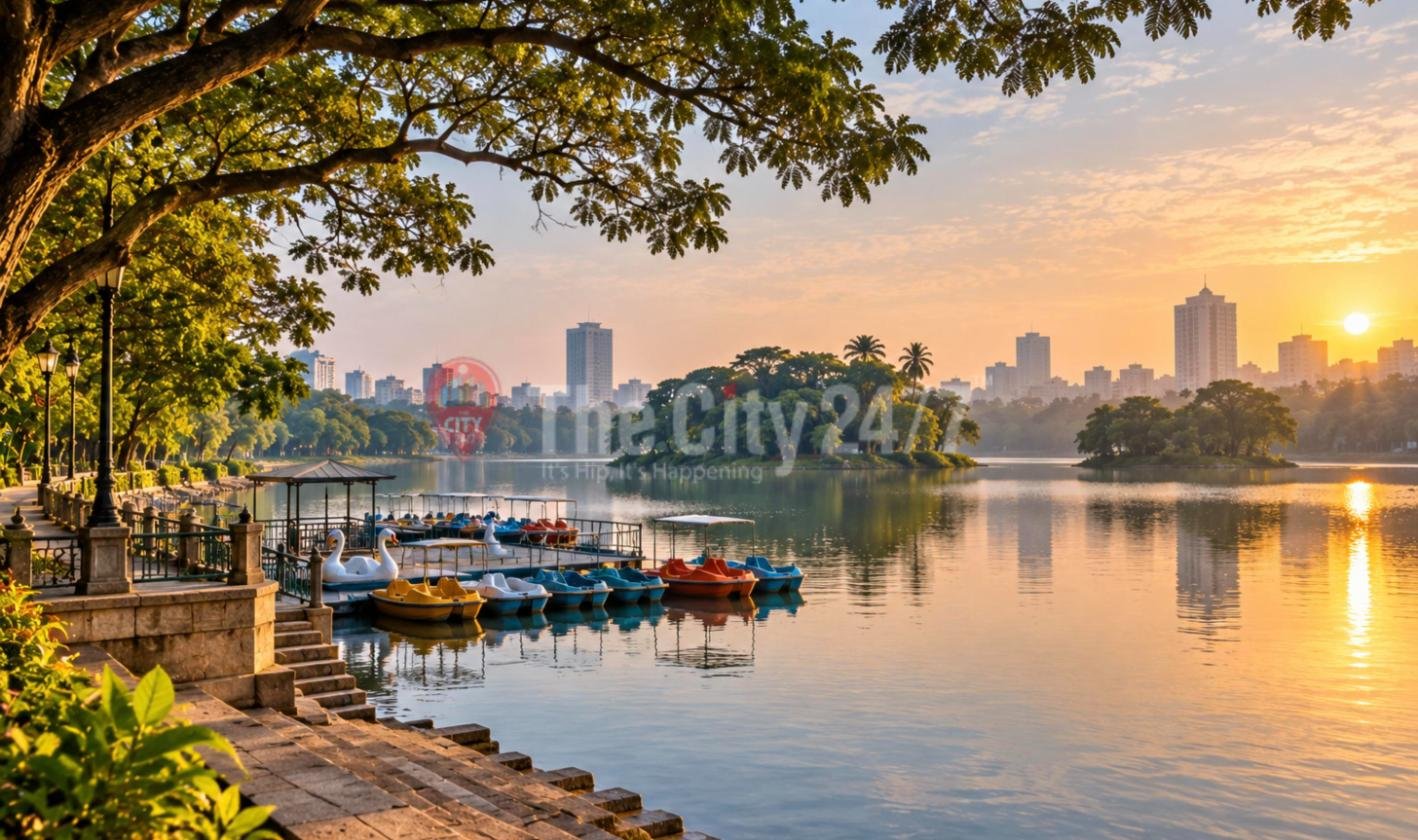
“Ulsoor Lake is what happens when a city grows around a reservoir instead of over it. That is both the good news and the bad news.”
• On four hundred years of coexistence
Ulsoor Lake, also called Halasuru Lake, is open roughly 6 AM to 8 PM with a walking track and free entry, and sits about 123 acres in east Bengaluru near MG Road and Trinity metro station. Boating operates on the lake at modest charges, and the best time to visit is between 6 and 8 AM. It is a walking lake rather than a destination attraction.
The lake is usually traced to Kempe Gowda II in the seventeenth century, later expanded during the British period, and it has been part of the city's water and social life ever since. The Kempegowda watchtower at Ulsoor is one of the four that marked the boundaries of old Bengaluru, which tells you how far the city has grown.
I want to be straightforward about its condition, because tourism pages are not. Ulsoor Lake has had serious water quality problems, including fish kill events, and restoration work has been ongoing in phases. It is a genuinely pleasant place to walk at dawn and it is not a pristine urban wetland. Both things are true.
Quick Information
A four-hundred-year-old lake wedged between a cantonment, an army camp and MG Road. Here is the practical crux.
What Are Ulsoor Lake Timings and Is There an Entry Fee?
The lake promenade and walking track are open roughly 6 AM to 8 PM with free entry. Boating has its own operating hours and days, and closure days have varied over the years, so confirm before making a special trip for a boat ride.
- Mornings, 6 to 8 AM. The best hours by a wide margin. Cool, quiet, and the walking community out in force.
- Evenings, 5 to 7 PM. Busier and more social. Families, couples and the after-work crowd.
- Midday. Hot, exposed in stretches, and not much to recommend it.
- Boating hours. Typically daytime, with per-person charges in the range of a few tens of rupees. Days of operation have changed over time.
- Closure days. Sections have been closed on particular weekdays at various times for maintenance. Worth a check if you are travelling across the city.
Do not swim, wade or let children into the water at Ulsoor Lake. Water quality has been a persistent problem, with documented fish kill incidents, and this is a lake for walking beside rather than getting into.
What Is the History of Ulsoor Lake?
It is generally attributed to Kempe Gowda II in the seventeenth century as one of the tanks built to supply the growing settlement, and it was substantially expanded during the British cantonment period in the nineteenth century. Its name comes from Halasuru, the old village that the area is still officially named after.
- Kempe Gowda's tanks. Bengaluru was built on a cascade of man-made tanks because it has no river. Ulsoor is one of the survivors of that system.
- The cantonment era. The British expanded the lake and the surrounding area became part of the cantonment, which is why Ulsoor still has a distinct character from old Bengaluru to the west.
- The Kempegowda Tower. One of four watchtowers marking the boundaries of the sixteenth-century city, alongside Lalbagh, Mekhri Circle and Gavipuram.
- Madras Engineer Group. The MEG army establishment sits alongside the lake, which is why some of the shoreline is not publicly accessible.
- What was lost. Bengaluru had hundreds of such tanks. Most were built over. Reading Ulsoor as a survivor rather than an amenity is the more accurate framing.
“This city was built on a chain of man-made lakes because it had no river. Ulsoor is one of the few that the city did not eventually pave over.”
• On why it matters
What Can You Do at Ulsoor Lake?
Walk, run, watch birds, take a boat ride and sit. It is not a large-attraction lake, and the pleasure is routine rather than spectacle. The paved promenade around much of the perimeter is the main feature.
- The walking track. A paved promenade around much of the lake, popular with walkers and runners from before six in the morning.
- Boating. Operated on the lake with pedal and rowing options at modest charges. Pleasant, brief, and a good thing to do with children.
- Birds. Cormorants, egrets, herons, kingfishers and spot-billed ducks. Early morning, and better than you expect for a lake this central.
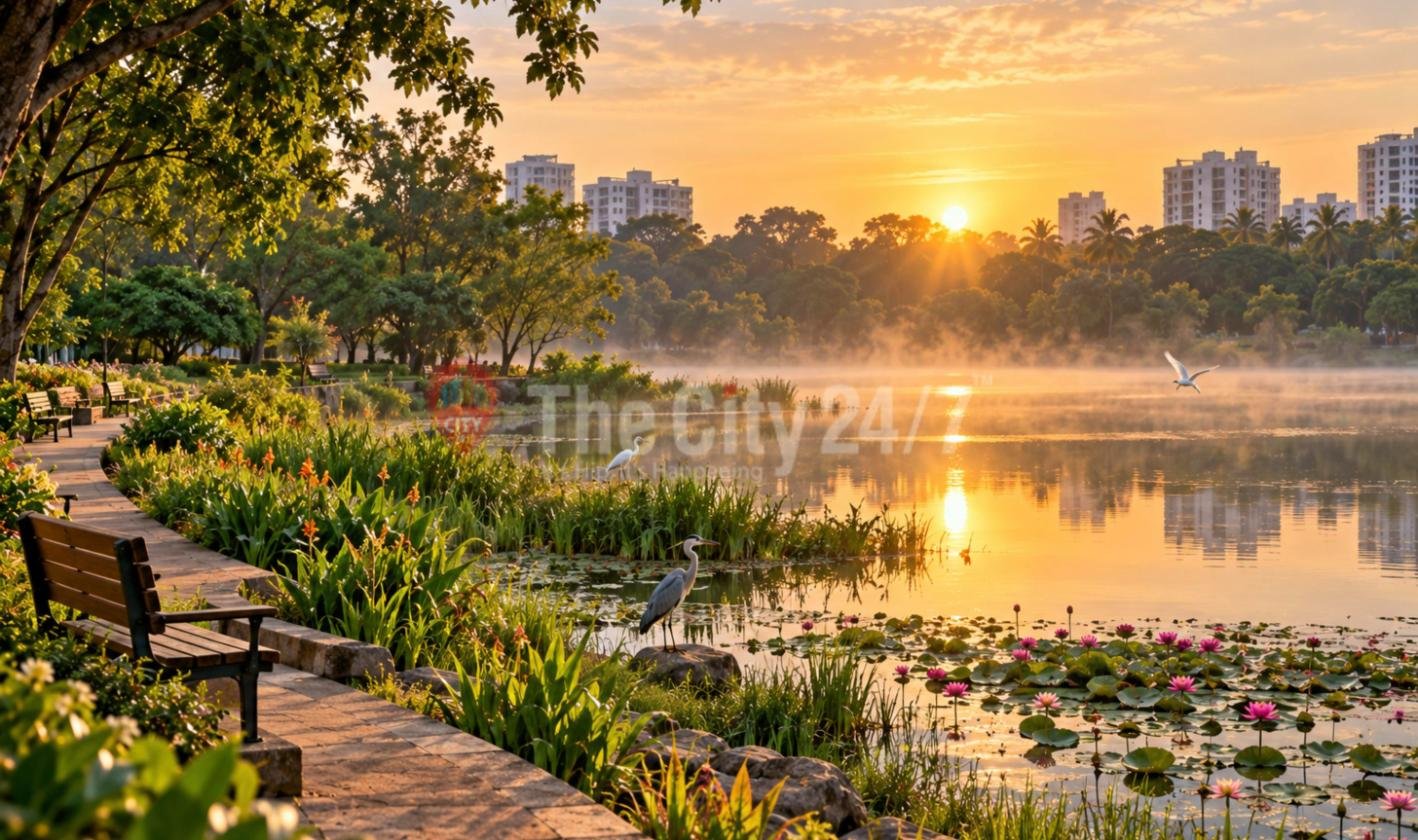
- Sitting. Benches along the promenade, and the eastern side gets good morning light across the water.
- Photography. Dawn, from the western edge looking across at the skyline. The best shot the lake offers.
- What you cannot do. Swim. And do not expect a full unbroken circuit, since sections adjoining army land are restricted.
What Is the Actual Condition of Ulsoor Lake?
Mixed, and honestly reported it has been poor at times. Ulsoor Lake has suffered from sewage inflow, weed growth and periodic fish kill events that made national news, and it has been through multiple rounds of restoration and desilting involving BBMP and other agencies.
- The problems. Untreated sewage inflow, water hyacinth and algal growth, and fish deaths during periods of low oxygen. These are documented and recurring.
- The restoration. Desilting, fencing, sewage diversion and promenade work have been carried out in phases. Conditions improve and then sometimes regress.
- What that means for a visit. The promenade walk is genuinely good. The water is not for contact, and on a bad week there can be odour on the downwind side.
- Citizen groups. As with several Bengaluru lakes, local residents and volunteer groups have driven a lot of the pressure for restoration. Puttenahalli Lake in JP Nagar is the best-known success story of that model.
- The wider point. Bengaluru's lakes are a civic issue, not a scenic one. Visiting them and caring about them is not unrelated.
How Do You Get to Ulsoor Lake?
By metro. Trinity and MG Road stations on the Purple Line are both a short walk or auto ride away, and Halasuru station serves the other side. Parking around the lake is limited and the surrounding streets are narrow and congested.
- Metro. Trinity, MG Road or Halasuru on the Purple Line. All within a five to fifteen minute walk depending on which gate you want.
- Bus. Extensive BMTC service to Ulsoor, Trinity Circle and MG Road.
- Walking. Fifteen minutes from MG Road, ten from Commercial Street, and easily folded into a central Bengaluru morning.
- Car. Limited street parking, enforced, and the approach roads are narrow. Not recommended.
- Entrances. There are multiple access points around the perimeter, and not all are open at all times. The main promenade gates on the Ulsoor side are the reliable ones.
What Else Is Worth Seeing in Ulsoor?
A great deal, and this is the real argument for the trip. Ulsoor is one of the oldest and most layered neighbourhoods in the city, with the Someshwara Temple, a major gurudwara, Tamil and Telugu quarters, and MG Road and Commercial Street within walking distance.
- Someshwara Temple. One of the oldest temples in Bengaluru, dating in parts to the Chola period and expanded under Vijayanagara. Remarkable, and routinely missed.
- Gurudwara Sri Guru Singh Sabha, Ulsoor. A significant Sikh temple in the area, open to visitors with head covering.
- The Kempegowda Tower. One of the four boundary watchtowers of the old city.
- Ulsoor's streets. Old cantonment-era housing, bakeries, and a food culture distinct from both Basavanagudi and Indiranagar.
- MG Road and Commercial Street. Both a short walk, for shopping, coffee and bookshops.
- St Mary's Basilica and Shivajinagar. Fifteen minutes away, and the natural continuation of a central Bengaluru heritage walk.
FAQs
What are Ulsoor Lake timings?
The promenade and walking track are open roughly 6 AM to 8 PM with free entry. Boating has its own hours and operating days, which have changed over the years, so confirm before travelling across the city specifically for a boat ride.
Is there boating at Ulsoor Lake?
Yes, boating is operated on the lake with pedal and rowing options at modest per-person charges. It is pleasant and brief and works well with children. Operating days and hours have varied, so check locally first.
Is Ulsoor Lake clean?
Not consistently. The lake has had persistent problems with sewage inflow, weed growth and periodic fish kill events, and has been through several rounds of restoration. The promenade walk is genuinely pleasant, but the water is not suitable for any contact and there can be odour on a bad week.
Which metro station is closest to Ulsoor Lake?
Trinity and MG Road stations on the Purple Line are both a short walk or auto ride away, and Halasuru station serves the other side. The metro is much better than driving, since parking near the lake is limited and the approach roads are narrow.
How old is Ulsoor Lake?
It is generally traced to Kempe Gowda II in the seventeenth century, as part of the system of man-made tanks that supplied Bengaluru, and was substantially expanded during the British cantonment period in the nineteenth century.
Can you walk around Ulsoor Lake?
Around much of it, yes, on a paved promenade that is popular with walkers and runners from before 6 AM. A full unbroken circuit is not possible, because sections of the shoreline adjoin Madras Engineer Group army land and are restricted.
Is Ulsoor Lake good for birdwatching?
Better than you would expect for a lake this central. Cormorants, egrets, herons, kingfishers and spot-billed ducks are all regular. Go between 6 and 8 AM and walk the quieter eastern stretch.
What else is there to see near Ulsoor Lake?
The Someshwara Temple, one of the oldest in the city with Chola-period elements, the Ulsoor gurudwara, one of Kempe Gowda's four boundary watchtowers, and MG Road and Commercial Street within walking distance.
Contact Details
Civic and official contacts, which matter more for a city lake than for a tourist site.
How Is the Lake Looking This Month?
Ulsoor Lake changes with the season and with whatever restoration work is underway. If the boating has stopped, a gate has closed or the water is looking better or worse than this guide suggests, click the WhatsApp icon at the bottom right of your screen and tell me. That is also the easiest way to reach The City 24/7 about anything at all.
And if you want city guides, weekend plans and neighbourhood notes landing in your inbox, join our ever growing community at thecity247.kit.com/join-the-community. Free, and about ten seconds of your life.
Same city, new stories, always.

Related Stories
 CITY GUIDE
Someshwara Temple, Ulsoor: Probably the Oldest Building You Can Walk Into in Bengaluru
September 22, 2026
 CITY GUIDE
Hebbal Lake: Birdwatching Under a Flyover, and It Works Better Than You Would Think
September 18, 2026
 CITY GUIDE
Agara Lake: HSR Layout's Morning Walk, and One of the City's Better Restorations
September 18, 2026
 CITY GUIDE
Madiwala Lake: The Best Birdwatching in Bangalore Is in BTM Layout
September 18, 2026
 CITY GUIDE
Puttenahalli Lake: How a JP Nagar Residents' Group Brought a Dead Lake Back
September 18, 2026
 CITY GUIDE
Aquarium Paradise, Palace Road: India's Longest Underwater Tunnel Is in Bengaluru
September 22, 2026
