


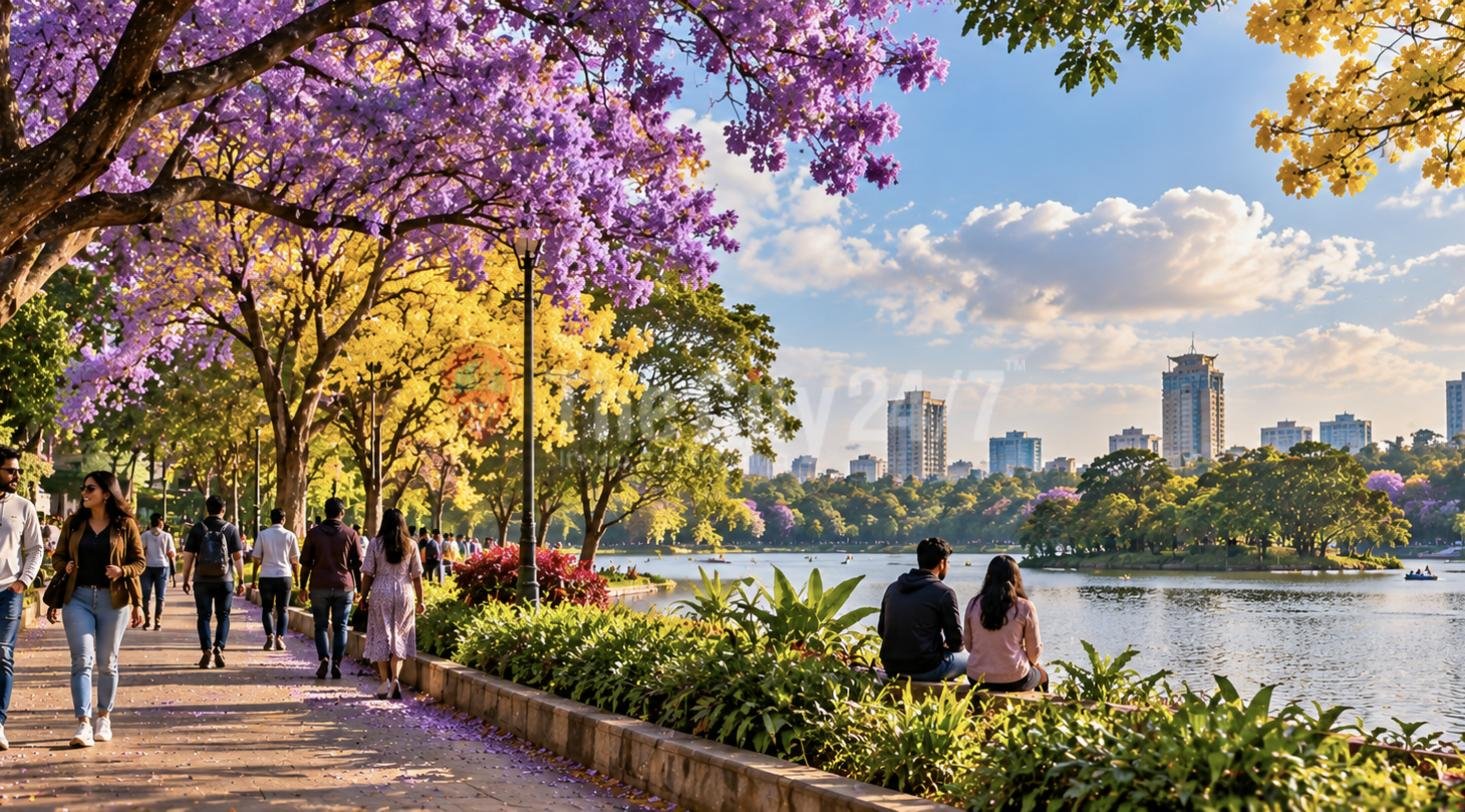
“People move here for the jobs and stay for the weather. Nobody admits this, and everybody knows it.”
• The open secret of Bengaluru
Bangalore has the most pleasant climate of any major Indian city, and the reason is altitude: the city sits at roughly 900 metres above sea level, which keeps temperatures moderate all year. Typical ranges run from around 15 degrees on a winter morning to the mid thirties at the peak of summer.
The year has three clear phases: a dry, cool winter from November to February, a warm summer from March to May, and a long wet season from June to October fed by both the southwest and northeast monsoons.
This guide goes month by month, covers what to pack, and explains how the seasons change daily life here, because they change it more than visitors expect.
Quick Information
The Bengaluru year in one table. The short answer to when to visit is December.
Why Is Bangalore's Weather so Good?
Because of where it sits. The city is on the Deccan plateau at roughly 900 metres above sea level, and that elevation moderates temperatures year round in a way that coastal and northern Indian cities cannot match.
The practical effect is that Bengaluru has no genuinely extreme season. Summer peaks in the mid thirties rather than the mid forties, winter never approaches freezing, and evenings cool down almost every night of the year regardless of how warm the day was.
What Is the Weather Like Month by Month?
- January and February. The best months. Dry, clear, mornings around 15 to 18 degrees and afternoons in the high twenties. A jacket for early mornings and evenings.
- March. Warming up. Pleasant mornings, hot afternoons, still dry.
- April and May. The hottest period, reaching the mid thirties. Mornings and evenings remain manageable. Pre-monsoon thunderstorms bring dramatic relief.
- June. The southwest monsoon arrives. Temperatures drop sharply, and the city turns green.
- July and August. Cool, grey and wet, often in the low to mid twenties. Genuinely pleasant if you do not mind rain.
- September and October. Frequently the wettest period, with heavy evening downpours. Also some of the most beautiful weather of the year between showers.
- November. The rain tails off and the best season begins. Arguably the single best month here.
- December. Cool, dry, clear and busy with the city's cultural calendar. Mornings can be genuinely cold by Indian standards.
Whatever the daytime temperature, Bengaluru evenings are cool. Visitors pack for an Indian summer, go out at eight, and spend the night wishing they had brought a layer. Carry one, every month of the year.
When Is the Best Time to Visit Bangalore?
November to February, without hesitation. The weather is at its best, the city's cultural and events calendar is at its fullest, and the surrounding weekend destinations, from Hampi to the coast, are all at their peak.
- November to February. Peak season. Book accommodation and event tickets early, particularly around December.
- March to May. Fine for the city itself, and the right time for hill station getaways rather than exposed sightseeing.
- June to October. Green, cool and wet. Excellent for the Western Ghats, slower for road travel.
- Any month. Genuinely workable. This is not a city with a bad season, only a best one.
What Is the Monsoon Actually Like?
Two monsoons, heavy short bursts, and a reliable talent for arriving at 5.30 in the evening. Bengaluru receives rain from both the southwest monsoon from June and the northeast monsoon from October, which gives it a longer wet season than much of southern India.
- Short and heavy. Rain here tends to arrive as intense bursts rather than all-day drizzle. An hour later the sky clears.
- Evening timing. Frequently coincides with the evening rush, which turns a bad commute into a much worse one.
- Waterlogging. Heavy downpours cause localised flooding in low-lying parts of the city. Check traffic advisories before travelling.
- What to carry. A compact umbrella permanently, from June to October.
- The upside. The city is at its most beautiful in the monsoon. The trees, the lakes and the light are all better.
What Should I Pack?
- Layers. A light jacket or shawl is useful in every month of the year for evenings.
- An umbrella. Compact, from June to October, and honestly worth having year round.
- Sunscreen. The sun at this altitude is stronger than the temperature suggests.
- Comfortable shoes. The city rewards walking in its older neighbourhoods and parks.
- Something warm for December mornings. Genuinely. Fifteen degrees at 6 AM in a city with no indoor heating feels colder than it sounds.
- Not much else. This is one of the easiest climates in India to dress for.
How Does the Weather Affect Daily Life?
It makes mornings the best part of the day and evenings the worst time to travel. The city organises itself around this whether people notice it or not.
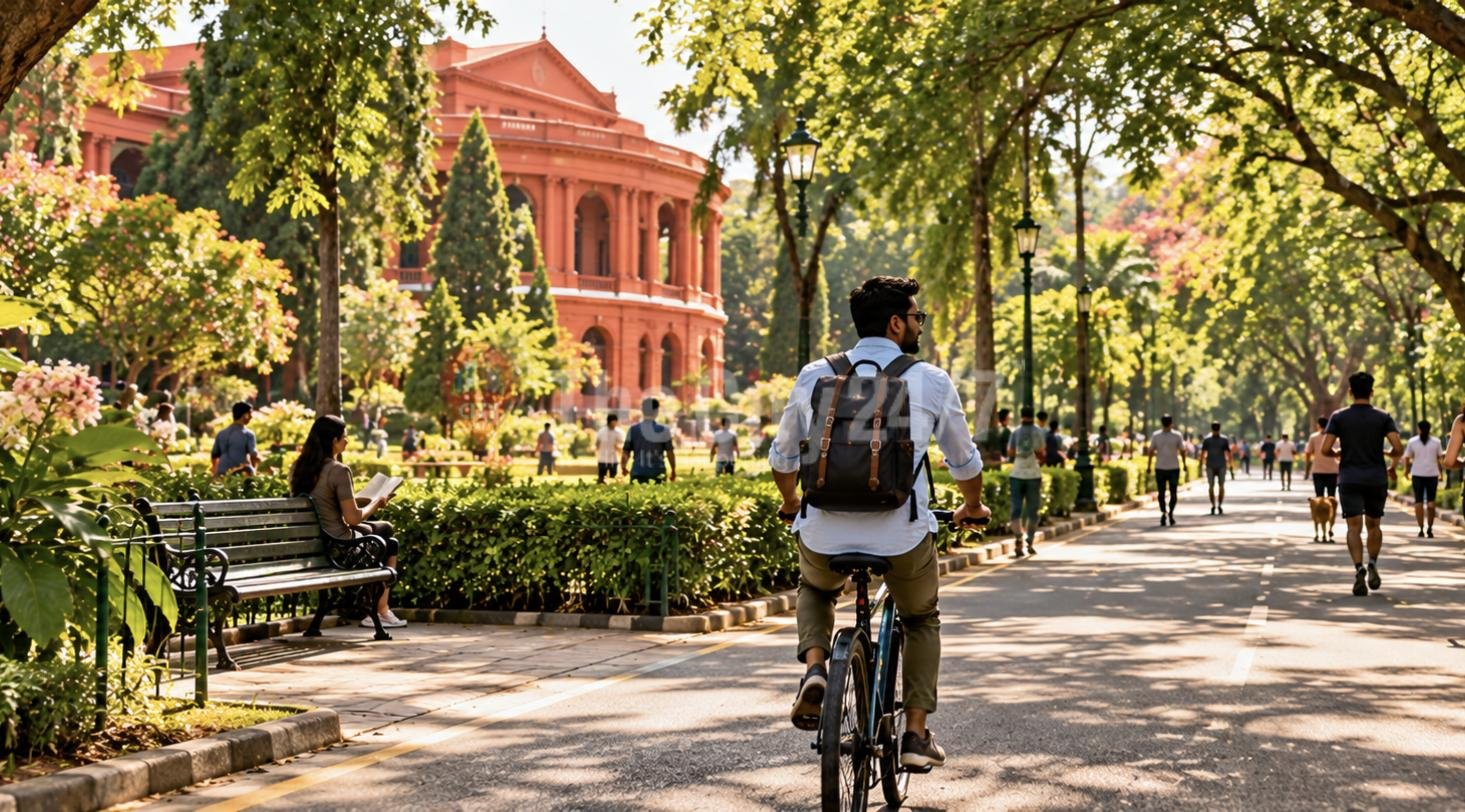
- Mornings. Cool and clear year round, which is why the parks, running groups and cycling clubs are all busiest before eight.
- Evening rain. The most disruptive weather event in the city, because it coincides with peak traffic.
- No heating or cooling season. Most homes need neither, which keeps electricity bills low.
- Outdoor life. Possible in every month, which is unusual in India and shapes the city's food, events and social culture.
- The trees. Bengaluru's tree cover is a large part of why it feels cooler than its temperature readings suggest.
Bangalore Weather: Frequently Asked Questions
Why is Bangalore's weather so pleasant?
Its elevation. The city sits at about 900 metres above sea level on the Deccan plateau, which moderates temperatures throughout the year.
What is the best time to visit Bangalore?
November to February, when the weather is dry, cool and clear and the city's cultural calendar is fullest.
What are the hottest months in Bangalore?
April and May, when temperatures reach the mid thirties. Mornings and evenings remain comfortable even then.
When is the monsoon in Bangalore?
Roughly June to October, with rain from both the southwest monsoon from June and the northeast monsoon from October. September and October are often the wettest.
How cold does Bangalore get?
Winter mornings can drop to around 15 degrees, occasionally lower. There is no indoor heating, so it feels colder than the number suggests.
Do I need a jacket in Bangalore?
Yes, in every month. Evenings are cool year round, which is the detail visitors most consistently underestimate.
Does Bangalore flood?
Heavy downpours cause localised waterlogging in low-lying parts of the city. Check traffic advisories before travelling during heavy rain.
Do I need air conditioning in Bangalore?
Far less than in other Indian cities. Many residents manage with fans alone, with March to May the only period when it is genuinely warm.
What should I pack for Bangalore?
Layers including a light jacket for evenings, a compact umbrella from June to October, sunscreen and comfortable walking shoes.
Is Bangalore's air quality good?
Better than most Indian metros, though noticeably worse alongside arterial roads at peak hours. Parks are cleaner for outdoor exercise.
Contact Details and Useful Links
Forecasts, advisories and civic alerts.
Planning a Visit?
Tell me when you are coming and I will tell you what to pack and what will be on. Click the WhatsApp icon at the bottom right of your screen. That is also the easiest way to reach The City 24/7 about anything at all.
And if you want the city explained one useful thing at a time, join our ever growing community. A weekly email, free, and a lot more reliable than the algorithm.
Same city, new stories, always.

Related Stories
 CITY GUIDE
A Guide to Bangalore's Markets: Go at Six, Leave by Nine
September 11, 2026
 CITY GUIDE
Bannerghatta Butterfly Park: India's First Butterfly Conservatory Is 25 Km From Your Office
September 18, 2026
 CITY GUIDE
Bangalore's Most Interesting Streets, and What Each One Is For
September 11, 2026
 CITY GUIDE
Your First 30 Days in Bangalore: The Week by Week Checklist
September 9, 2026
 CITY GUIDE
The Best Areas to Live in Bangalore: An Honest Comparison
September 8, 2026
 CITY GUIDE
The Best Things to Do in Bangalore, From Someone Who Lives Here
September 8, 2026
