



“At three years old your child does not need a curriculum. They need a safe room, a kind adult who knows their name, and a short journey to get there.”
• On the least complicated education decision, which parents make the most complicated
Preschool is the first education decision most families make and the one where marketing runs furthest ahead of substance. Bengaluru has hundreds of options, from single room neighbourhood play schools at a few thousand rupees a month to branded international early years programmes at several lakhs a year, and the method names attached to them are frequently used loosely.
The sector is also very lightly regulated compared with formal schooling. That places the burden of due diligence on parents, particularly around staff ratios, staff background checks, hygiene and safety, which are the things that actually matter at this age and the things brochures say least about.
So this guide explains what the method labels genuinely mean, what preschool costs here, the safety checks worth insisting on, and how to judge a place in one visit. It leads into our choosing a school and admissions guides for the formal schooling decision that follows.
Quick Information
Methods, fees and the checks that matter. The staff ratio row is the most important line here.
What Is the Difference Between Play School and Montessori?
Play school is a broad term for play led early years care with no particular method. Montessori is a specific pedagogy with defined materials, mixed age classrooms, long uninterrupted work periods and specially trained guides.
A genuine Montessori environment looks distinctive: mixed ages in one room, low shelves with specific graded apparatus, children choosing their own work for extended periods, and an adult observing rather than directing. Teachers hold Montessori training from a recognised body, and the good schools will tell you which. The method is not a brand anybody owns, which is precisely why the word appears on so many signboards that do not practise it.
So the useful questions are practical rather than philosophical: are the classrooms mixed age, how long is the uninterrupted work period, what Montessori training do the guides hold and from where, and may I watch a work cycle. A school running a conventional structured curriculum with a Montessori name will not be able to answer those in detail. That school may still be perfectly good, and it is not Montessori.
What Do Preschools Cost in Bangalore?
Thirty thousand to a lakh a year at a neighbourhood preschool, one to two and a half lakh at a branded chain, and two and a half to six lakh at premium and international early years programmes.
- Neighbourhood preschools: Rs 30,000 to 1 lakh a year. Frequently the best value and sometimes the best care, particularly the long established ones run by people who have been doing it for twenty years. Judge individually rather than by category.
- Branded chains: Rs 1 to 2.5 lakh a year. Consistent processes, recognisable standards and more documentation. Quality still varies substantially by franchise and by the specific centre head.
- Premium and international: Rs 2.5 to 6 lakh a year. Better ratios, purpose built spaces and frequently an IB PYP or similar programme. Sometimes a feeder route into a linked primary school, which is part of what you are buying.
- Daycare: Rs 12,000 to 30,000 a month. Priced by hours rather than curriculum. For working parents this is the binding requirement and it is worth prioritising over method.
- Add the extras. Admission fee, uniform, materials, snacks, transport and activity charges. At the lower end these can be a material proportion of the total.
- Ask about the fee cycle. Monthly, term or annual, and what happens if you withdraw mid year. Refund policies at this level are frequently unfavourable and rarely discussed.
- Do not equate fees with care. At this age, staff ratio, staff retention and warmth matter far more than facilities, and none of those correlate reliably with price.
“Visit unannounced at half past ten and watch what happens when a child cries. That single observation tells you more than the entire tour, the brochure and the method name combined.”
• The only assessment technique that matters here
What Safety Checks Should I Insist On?
Staff background verification, the child to staff ratio, first aid training, the child collection protocol, and the CCTV and access policy. This sector is lightly regulated, so these are your responsibility to verify.
- Staff background verification. Ask directly whether all staff, including support and housekeeping staff and drivers, are background verified, and what that process involves. A good school answers specifically.
- Child to staff ratio, in practice. One to eight or better for two to three year olds. Ask what it is at eleven in the morning and at four in the afternoon, since staffing thins at the edges of the day.
- First aid and emergency training. How many staff are currently first aid trained, what the medical emergency protocol is, and which hospital they would use. Ask for specifics.
- Collection protocol. Who can collect your child, how they are identified, and what happens if somebody unexpected arrives. This should be a firm written policy, not a judgement call.
- CCTV and access. Whether cameras cover classrooms and common areas, who can view footage, how long it is retained, and how the premises are secured during the day.
- Hygiene and toilets. Ask to see the toilets and the kitchen or snack area. This is entirely reasonable and the response tells you a great deal.
- Transport, if you use it. Driver verification, an attendant on board, seat belts or restraints, and route length. A very young child should not be on a bus for forty minutes.
- Illness policy. When they call you, when a child is sent home, and how infections are communicated to other parents. Vague answers here mean vague practice.
How Do I Judge a Preschool in One Visit?
Go unannounced mid morning, watch how staff speak to children, particularly a child who is upset, and count the adults in the room. Nothing in a brochure will tell you what those three observations will.
A scheduled tour shows you the building. An unannounced visit at half past ten shows you the place. Watch whether staff use children's names, whether they crouch to a child's level, whether the room is loud in a happy way or a chaotic one, and above all how an adult handles a crying child. Warmth at that moment is the single best predictor of the care your child will receive for the next two years.
Then ask two questions. How long have the current staff been here, because retention at this level is both a quality signal and a continuity issue for a small child who has attached to somebody. And what does a typical day look like, hour by hour, which will reveal quickly whether there is a thought out rhythm or simply supervision until home time. Neither question needs the word pedagogy in it.
Does Preschool Choice Affect School Admission Later?
Sometimes, and it is worth asking. Some preschools are attached to primary schools and give their children priority or guaranteed progression, which can be genuinely valuable in a competitive admissions market.
If a preschool is linked to a school you would want at class one, that link may be worth more than any difference in method, because it removes the most stressful part of the admissions process described in our admissions guide. Ask explicitly whether progression is guaranteed, prioritised or merely common, and get the answer in writing, because the three are very different.
Where there is no link, preschool choice has little bearing on later admission. Schools assessing a four or five year old are observing the child rather than auditing their preschool's brand. What does help is a child who is settled, communicative and comfortable in a group setting, and that comes from warm care rather than from an early academic push, which at this age is generally counterproductive.
Preschools in Bangalore: Frequently Asked Questions
How much do preschools cost in Bangalore?
Roughly Rs 30,000 to 1 lakh a year at a neighbourhood preschool, Rs 1 to 2.5 lakh at a branded chain, and Rs 2.5 to 6 lakh at premium and international early years programmes. Full day daycare runs roughly Rs 12,000 to 30,000 a month.
What is the difference between play school and Montessori?
Play school is a broad term for play led early years care with no specific method. Montessori is a defined pedagogy with graded materials, mixed age classrooms, long uninterrupted work periods and specially trained guides. Ask whether classrooms are mixed age and what training the guides hold.
At what age should a child start preschool in Bangalore?
Commonly 18 months to 2 years for playgroup and 2.5 to 3 years for nursery, though this varies by school and by child. There is no benefit to starting formal academics early, and warm care matters far more at this stage.
What safety checks should I ask a preschool about?
Staff background verification including support staff and drivers, the actual child to staff ratio through the day, how many staff are first aid trained, the child collection protocol, CCTV coverage and retention, hygiene and toilet standards, and the illness policy.
What is a good child to staff ratio at a preschool?
One to eight or better for two to three year olds. Worse than one to twelve is a concern. Ask what the ratio is at eleven in the morning and at four in the afternoon, since staffing frequently thins at the edges of the day.
How do I judge a preschool in one visit?
Visit unannounced mid morning and watch how staff speak to children, especially a child who is upset, and count the adults in the room. Then ask how long the current staff have been there and what a typical day looks like hour by hour.
Are preschools regulated in Bangalore?
Only lightly, compared with formal schooling. Verify registration, but do not assume it guarantees standards on staffing, safety or hygiene. The due diligence on those falls to parents, which is why the safety questions matter.
Does preschool affect school admission in Bangalore?
Only where the preschool is attached to a primary school and offers priority or guaranteed progression, which can be genuinely valuable. Otherwise schools assess the child rather than the preschool brand, and a settled, communicative child is what helps.
What is the difference between Montessori, Waldorf and Reggio Emilia?
Montessori uses child led work with specific graded materials in mixed age classrooms. Waldorf or Steiner emphasises imaginative play, rhythm and natural materials with later formal academics. Reggio Emilia is project led, following children's own interests with extensive documentation.
How far should a preschool be from home?
Under three kilometres ideally. A two or three year old should not be commuting forty minutes each way, and at this age proximity matters more than method, facilities or reputation.
Looking for a Preschool?
Preschools change staff and standards quickly, and a centre that was excellent two years ago may have a different head and a different feel now. If you have a preschool worth recommending, or a warning worth passing on, click the WhatsApp icon at the bottom right of your screen and tell me. Parent to parent information matters more in this sector than in any other part of education, precisely because the regulation is so light. That is also the fastest way to reach The City 24/7 about anything at all.
And if you want the city explained one useful thing at a time, join our ever growing community. One weekly email, free.
Same city, new stories, always.

Related Stories
 EDUCATION
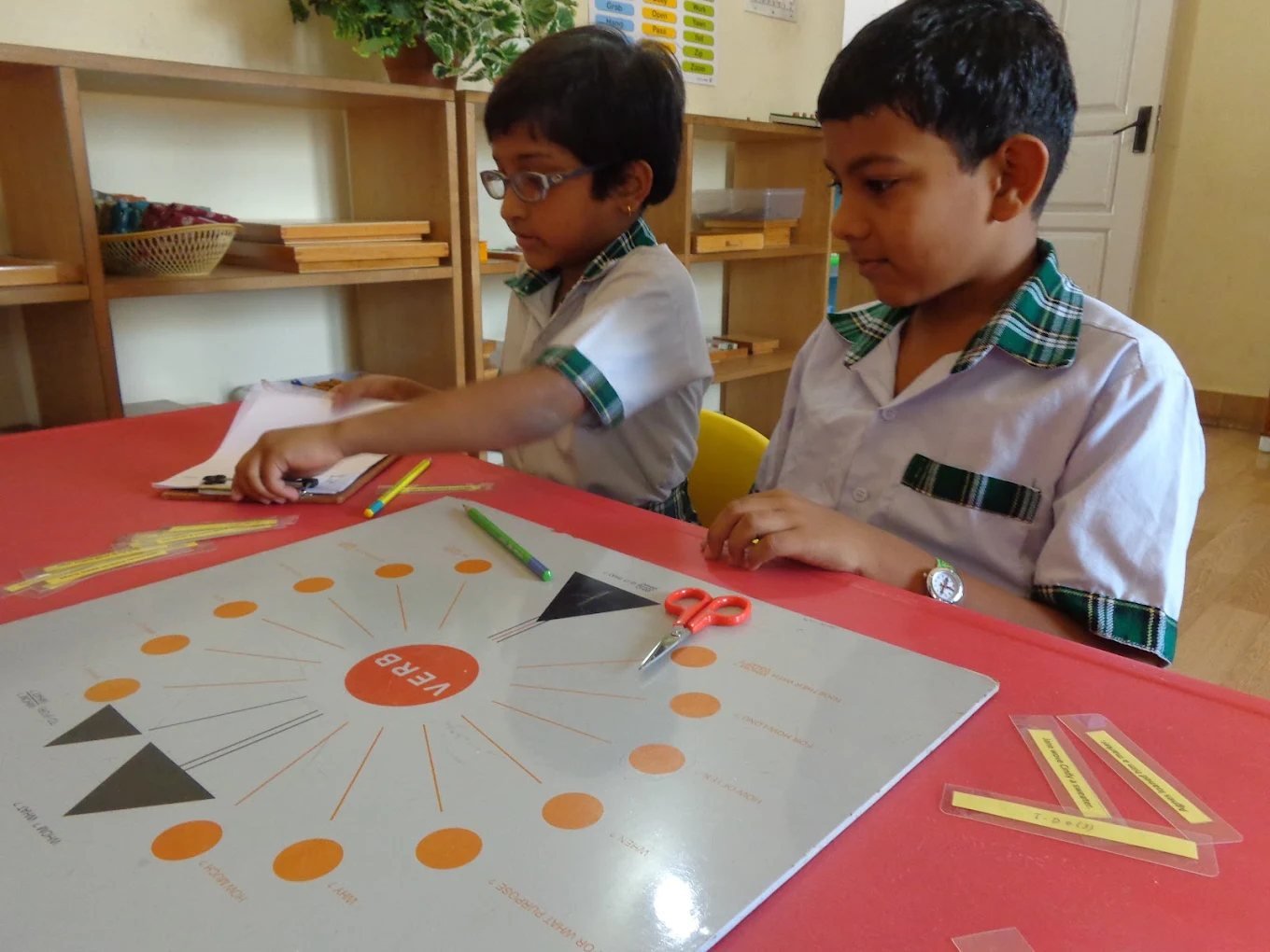
I Toured Vidyaramba Montessori In Bangalore, And Now I Understand Why Parents Turn Into Salespeople For It
October 30, 2026
 EDUCATION
The Top Boys' Schools in Bangalore: Bishop Cotton, Baldwin and What They Actually Cost
August 31, 2026
 EDUCATION
The Top Christian and Convent Schools in Bangalore: Why They Still Dominate the City's Education
August 31, 2026
 EDUCATION
The Top Girls' Schools in Bangalore: The List, and What Happens After Class 10
August 31, 2026
 EDUCATION
International Schools in Bangalore: Fees, Areas and How to Tell a Real One
August 3, 2026
 EDUCATION
How to Choose a School in Bangalore: Boards, Areas, Fees and the Questions to Ask
July 7, 2026
