



“In most cities you choose a house and then a school. In Bengaluru, if schooling matters to you, do it the other way round. Traffic makes the sequence non negotiable.”
• On the most useful piece of planning advice here
Bengaluru's four quadrants developed at different times for different populations, and their school markets reflect that precisely. The old south has established institutions going back decades at moderate fees. The east has newer campuses built for the technology corridor at premium prices. The north is the fastest growing. And the west is the most affordable and the least written about.
That variation is useful, because it means the question is not which school is best in Bengaluru but which area matches your budget, your board preference and where you work. A family that would pay eight lakh a year in Whitefield can get a very good established school in Jayanagar for two, and a family in Rajajinagar has options at a fraction of either.
So this guide covers each quadrant: which boards dominate, the fee range, the commute reality, and who each area suits. Read it alongside our choosing a school guide, which argues that distance matters more than almost anything else, and our best areas to live guide.
Quick Information
Four quadrants compared. Fee ranges are for mainstream private schools unless stated.
What Are Schools Like in East Bangalore?
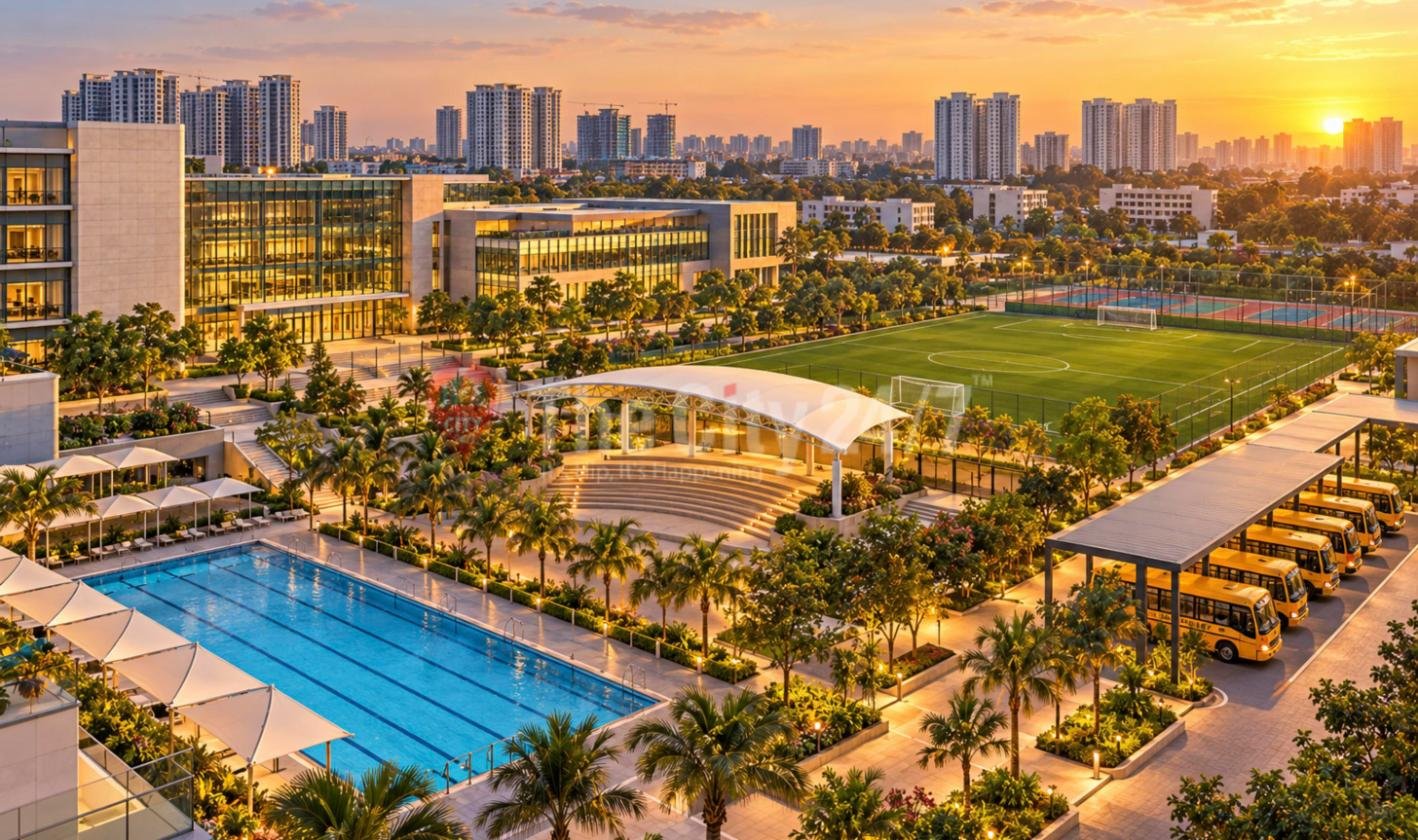
Newest, most expensive and most international. Whitefield, Sarjapur Road and the Marathahalli belt hold the highest concentration of IB and IGCSE schools in the city, at one and a half to twelve lakh rupees a year.
The east's school market was built for the technology corridor, which means large modern campuses on the outskirts, a substantial expatriate and returning diaspora parent base, and pricing to match. If you want IB or IGCSE, this is where the choice is deepest, and our international schools guide covers that segment in detail. There is also a good spread of premium CBSE and ICSE schools serving the same families.
The trade off is the commute, which is a genuine issue here rather than a theoretical one. These campuses sit on the periphery, the roads serving them are the most congested in the city, and school buses start early. A Whitefield school serving a family in Bellandur can mean forty five minutes each way despite a short distance on the map. Drive it at eight in the morning before you commit.
What About North Bangalore?
The fastest growing school market in the city, around Hebbal, Yelahanka, Hennur, Thanisandra and the airport corridor, with a mix of CBSE and international schools at one to eight lakh rupees a year.
- Newer campuses with space. The north had land available later than the east, so campuses here are recent, large and generally well equipped, with several international schools among them.
- Serving new residential development. Hennur, Thanisandra, Yelahanka and the Devanahalli corridor have grown rapidly, and schools followed the housing rather than the reverse.
- Easier roads than the east. The genuine advantage. North Bengaluru traffic, while not good, is materially better than the Outer Ring Road and Whitefield, which shortens the school run.
- Airport corridor convenience. For families working at Manyata or in the airport corridor, this is the obvious quadrant and the commute maths works well.
- Fewer long established institutions. The honest limitation. Unlike the south, the north has fewer schools with a fifty year track record, so you are assessing newer operations.
- Verify before you commit. With newer schools, ask specifically about teacher retention, board affiliation status and how many cohorts have actually completed class twelve there.
“A very good school in Jayanagar at two lakh a year and a ten minute commute will serve most children better than a premium campus forty minutes away. That is not a budget compromise, it is the better choice.”
• On what parents discover in year three
What Are Schools Like in South Bangalore?
Established, proven and moderately priced. Jayanagar, JP Nagar, Basavanagudi and BTM hold institutions running for decades at forty thousand to four lakh rupees a year, with the shortest school commutes in the city.
This is the strongest value in Bengaluru schooling and it is where I would point most families who do not specifically need IB. The old south has schools with fifty and sixty year track records, generations of the same families attending, established teaching staff, and fees that are a fraction of the eastern premium segment. Boards are mostly CBSE, ICSE and State.
The structural advantage is geography. These schools sit inside residential neighbourhoods rather than on the periphery, which means a child can be at school in ten or fifteen minutes and walk or cycle in some cases. Over ten years that is a materially different childhood, and it is the single thing parents in the east most often say they underestimated. Our Jayanagar and Basavanagudi living guide covers the neighbourhoods themselves.
And West and Central Bangalore?
West Bengaluru is the most affordable and the least written about, at twenty thousand to two and a half lakh a year. Central holds the historic convent and mission schools, at sixty thousand to three and a half lakh.
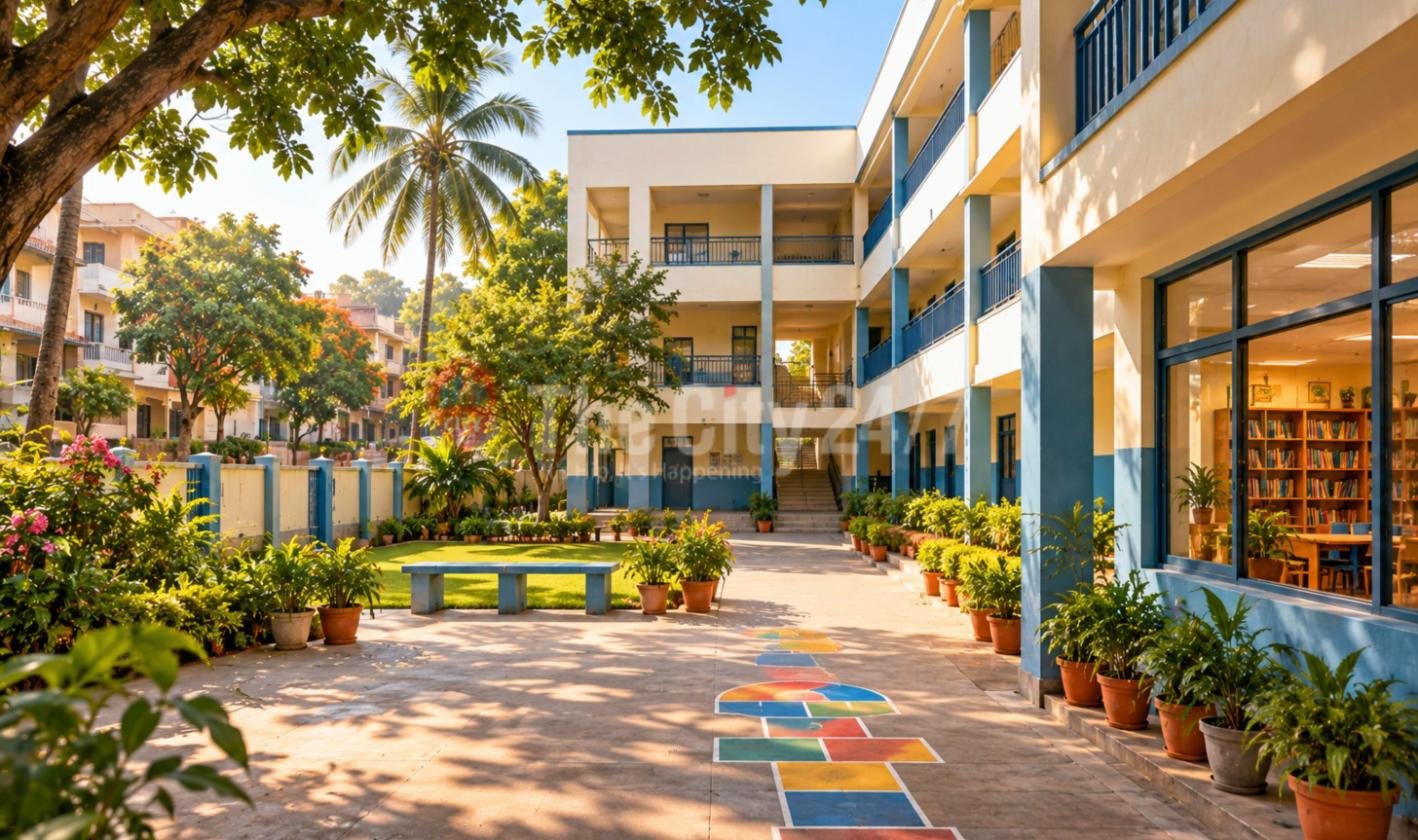
Rajajinagar, Vijayanagar, Basaveshwaranagar and Malleshwaram have strong State board and CBSE options, including good aided schools, at genuinely low fees. This quadrant is overlooked by newer arrivals and is a serious option for families where cost matters, with the same neighbourhood density advantage as the old south: schools inside residential areas and short commutes.
Central Bengaluru, meaning Richmond Town, the Cantonment, Frazer Town and Shivajinagar, holds the city's oldest schools, many of them convent and mission institutions dating from the colonial period. These carry real reputation, tend toward ICSE and CBSE, and sit in the most central and best connected part of the city. The constraints are limited campus space and competitive admissions, since demand for the established names consistently exceeds seats.
Should I Choose the School or the House First?
The school, then rent or buy within five kilometres of it. In a city where twelve kilometres can take an hour, reversing that sequence is the most common and least reversible planning mistake families make here.
- Shortlist schools across two quadrants maximum. Applying across the whole city produces offers you cannot practically accept. Decide which half of Bengaluru your life will sit in first.
- Secure the school place, then sign the lease. Admission offers are the binding constraint, not housing. Rental supply in this city turns over constantly and you will find something.
- Check the bus route, not just the distance. A school five kilometres away can mean a fifty minute bus route if your area is early on the loop. Ask for the actual route and pickup time.
- Factor your own commute too. A school near home and an office forty minutes the other way is workable. A school one way and an office the other is how families end up moving.
- Think about secondary school now. If your chosen school ends at class five or eight, you will do this again. Ask what the natural progression is and whether it is in the same area.
- Consider the sibling problem. Two children at two schools in different quadrants is genuinely difficult in Bengaluru. Ask about sibling admission policy before you need it.
- Rent before you buy. Live in the area for a year and do the school run before committing to a property. Several families have bought in the east and regretted the commute.
Schools by Area in Bangalore: Frequently Asked Questions
Which area of Bangalore has the best schools?
It depends what you want. East Bengaluru around Whitefield and Sarjapur has the most international schools at Rs 1.5 to 12 lakh a year, while south Bengaluru around Jayanagar and JP Nagar has the most established institutions at Rs 40,000 to 4 lakh with much shorter commutes.
Where are the international schools in Bangalore?
Concentrated in east Bengaluru around Whitefield, Sarjapur Road and Marathahalli, followed by the north around Hennur, Yelahanka and the airport corridor. They follow available campus land and the technology corridors where their parent base works.
Which area has the most affordable schools in Bangalore?
West Bengaluru, around Rajajinagar, Vijayanagar and Basaveshwaranagar, at roughly Rs 20,000 to 2.5 lakh a year, with strong State board and CBSE options including good aided schools. The older south is the next most affordable.
Should I choose a school or a house first in Bangalore?
The school, then live within five kilometres of it. In a city where twelve kilometres can take an hour, choosing housing first and schooling second is the most common and least reversible planning mistake families make here.
What are schools like in north Bangalore?
The fastest growing market, around Hebbal, Yelahanka, Hennur and Thanisandra, with newer large campuses and a mix of CBSE and international schools at Rs 1 to 8 lakh a year. Roads are easier than the east, but fewer schools have long track records.
Why do east Bangalore schools cost more?
Because that market was built for the technology corridor, with large modern campuses, a substantial expatriate and returning diaspora parent base, and a high concentration of IB and IGCSE programmes, all of which carry premium pricing.
Which Bangalore schools have the shortest commutes?
Those in south, west and central Bengaluru, where schools sit inside residential neighbourhoods rather than on the periphery, so a child can be at school in ten or fifteen minutes. East Bengaluru has the longest school runs.
Where are Bangalore's oldest schools?
Central Bengaluru, in Richmond Town, the Cantonment, Frazer Town and Shivajinagar, where many convent and mission schools date from the colonial period. South Bengaluru also has institutions with fifty and sixty year track records.
How much does school transport cost in Bangalore?
Roughly Rs 25,000 to 90,000 a year depending on distance, and higher in the east and north where campuses sit on the outskirts. Ask for the actual bus route and pickup time, since a school five kilometres away can still mean a fifty minute journey.
Is it worth paying more for a premium school further away?
Rarely. A very good school ten minutes away generally serves a child better than a premium campus forty minutes away, because the commute costs thousands of hours over ten years and affects sleep, homework and every activity outside school.
Choosing an Area for Schools?
Fee ranges and school quality by area shift as new campuses open, and parents living in each quadrant know the current reality far better than any overview. If your area's picture is different from what I have described, or you have a school worth flagging, click the WhatsApp icon at the bottom right of your screen and tell me. That is also the fastest way to reach The City 24/7 about anything at all.
And if you want the city explained one useful thing at a time, join our ever growing community. One weekly email, free, and useful well before admission season.
Same city, new stories, always.

Related Stories
 EDUCATION
The Best Schools in East Bangalore: The Most Expensive School Belt in the City, and Why
September 1, 2026
 EDUCATION
The Best Schools in North Bangalore: The Airport Corridor Quietly Became a School Belt
September 1, 2026
 EDUCATION
The Best Schools in South Bangalore: Jayanagar to Kanakapura Road, Board by Board
September 1, 2026
 EDUCATION
The Top Christian and Convent Schools in Bangalore: Why They Still Dominate the City's Education
August 31, 2026
 EDUCATION
The Best Schools in West Bangalore: The Cheapest Good Schooling in the City
August 31, 2026
 EDUCATION
Preschools and Montessori in Bangalore: Fees, Methods and Safety Checks
August 2, 2026
