


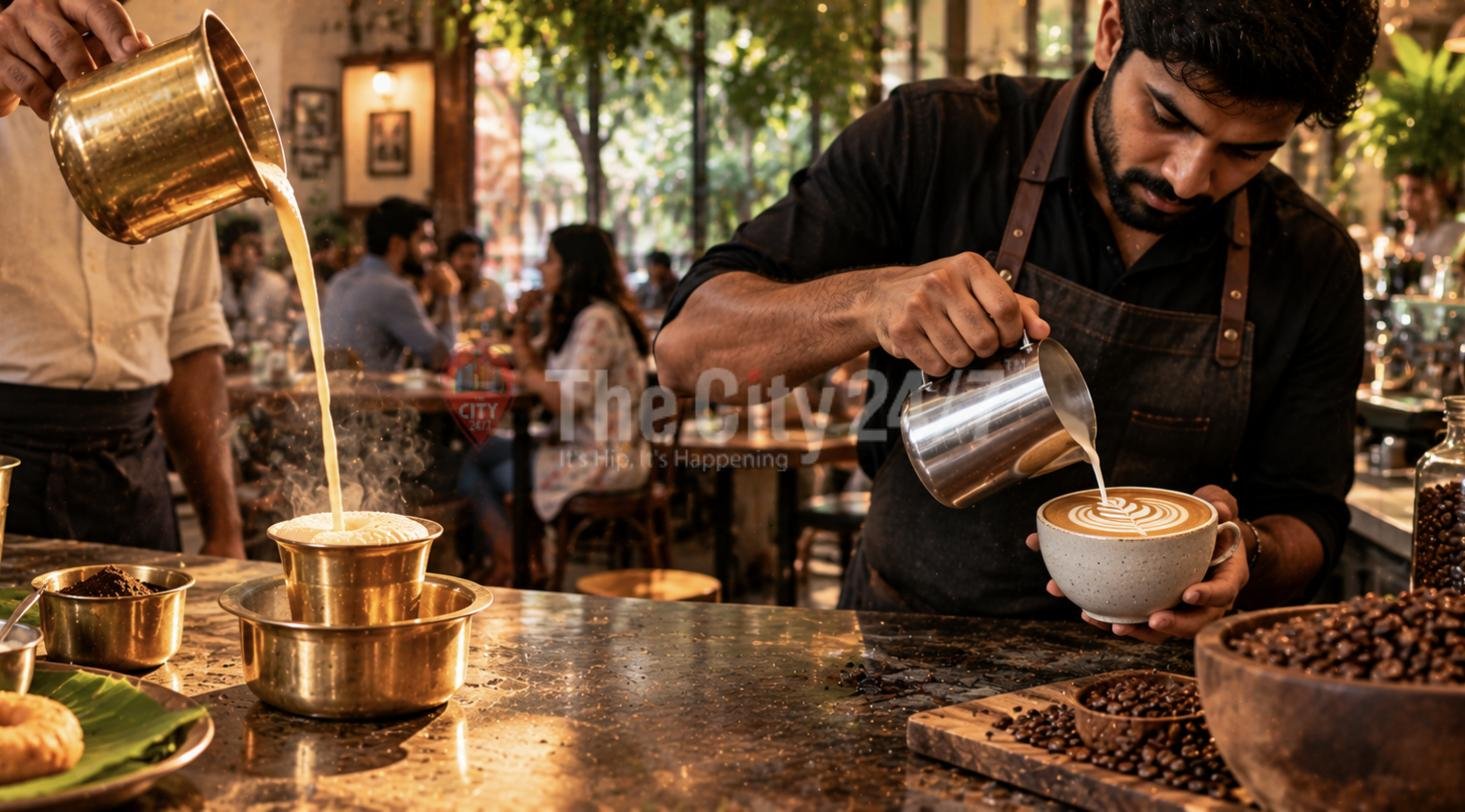
“Bengaluru had a serious coffee culture eighty years before the word barista arrived, and it costs twenty rupees and comes in a steel tumbler.”
• On keeping the specialty scene in perspective
Bengaluru is one of the best coffee cities in the world and it gets almost no credit for it, because the coffee it does best is cheap, traditional and served without ceremony. South Indian filter coffee, made from a dark roast ground with chicory, brewed slowly as a decoction and mixed with hot sweetened milk, is a genuinely great coffee preparation, and this city drinks several million cups of it a day.
There is also a serious specialty scene now, and it has a structural advantage over almost anywhere else: Coorg, Chikmagalur and Sakleshpur are four to six hours away, so roasters here work with estates directly, buy single estate lots and roast within days of collection. Indian coffee, long exported as a commodity, is finally being treated properly at home, and Bengaluru is where that happens.
This guide covers both worlds: how filter coffee is made and where to drink it, how the specialty scene works and what to order, the estate origins behind both, and what to buy to take home. It pairs with our cafes guide for the places themselves.
Quick Information
Two coffee cultures, both excellent. Note the price difference and then note that both are worth it.
What Is South Indian Filter Coffee and How Is It Made?
A dark roast coffee, usually blended with chicory, brewed slowly as a concentrated decoction in a two chamber steel filter, then mixed with hot sweetened milk and poured between a tumbler and a dabarah to cool and aerate it.
The brewing is the interesting part. Finely ground coffee goes into the upper chamber of a steel filter, hot water is added, and it drips slowly into the lower chamber over hours, producing an intensely concentrated decoction. That decoction is then combined with hot milk, typically in a ratio of around one to three or one to four, with sugar. It is closer to a very strong, long extracted brew than to espresso, and the chicory adds body, bitterness and a particular smoothness.
The pouring between the steel tumbler and the wide bowl, the dabarah, is not theatre. It cools the coffee to a drinkable temperature, aerates it and creates a light froth, and a practised server does it from a height that looks alarming and never spills. The whole thing costs fifteen to forty rupees, takes twenty seconds to serve, and is one of the great coffee preparations of the world.
Where Should I Drink Filter Coffee in Bangalore?
At a darshini counter in Basavanagudi, Malleshwaram or Jayanagar, standing up, between seven and ten in the morning. The old establishments in those areas have been making it the same way for decades.
- Basavanagudi and Gandhi Bazaar. The best coffee morning in the city, with several decades old establishments within a few hundred metres, plus sweet shops and the flower market. Combine it with a dosa and a walk around Bugle Rock.
- Malleshwaram, around 8th Cross. The north Bengaluru equivalent, with old coffee houses, traditional powder shops that grind while you wait, and the Green Line to get you there.
- Jayanagar 4th Block and around. Dense with excellent counters serving a demanding local clientele, and the sweet shops nearby are among the best in India.
- Any darshini, anywhere. This is the point: filter coffee at a random counter in a residential street in this city is reliably good. You do not need to travel for it.
- The older Indian coffee house tradition. Sit down, waiter served, unchanged in decades, and a completely different experience from a counter. Worth doing once for the room as much as the coffee.
- Drink it immediately. Filter coffee does not travel and does not wait. It is served at the right temperature for drinking now, which is why nobody carries it away.
“Ask for bitter coffee and you will get a higher decoction ratio and a much better drink. Two words, and most visitors never learn them.”
• The most useful ordering tip in this city
How Do I Order Filter Coffee Properly?
Say coffee and you will get the standard sweet milky version. Ask for bitter coffee or strong coffee for a higher decoction ratio, and less sugar or no sugar if you want it. Those adjustments make a large difference.
The default is calibrated for local taste: quite sweet and quite milky, which is excellent with a dosa and can be underwhelming if you drink coffee black elsewhere. Asking for bitter coffee gets you more decoction relative to milk, which is what most specialty coffee drinkers actually want from the traditional preparation, and it is a completely normal request.
Other useful terms: kaapi is the Tamil and colloquial word you will hear constantly, by two means one serving split into two cups, which is a genuinely civilised institution for sharing, and filter coffee with the milk kept separate is available if you ask. Black decoction alone is not typically served, and if that is what you want, the specialty cafes are the right destination.
How Does Bangalore's Specialty Coffee Scene Work?
Local roasters work directly with estates in Coorg, Chikmagalur and Sakleshpur, four to six hours away, buying single estate lots and roasting fresh. That proximity is a genuine advantage almost no other coffee city has.
The scene is concentrated in Indiranagar, Koramangala, HSR, Jayanagar, Domlur and increasingly Whitefield, with expect to pay roughly a hundred and eighty to four hundred and fifty rupees for a pour over or an espresso drink. The good places roast their own or work with a named local roaster, list the estate and the process on the menu, and will talk to you about it at length if you ask.
What to order: a pour over or filter of a single estate Indian coffee, because that is the specific thing this city can do better than anywhere. Indian arabica from the Baba Budangiri hills, a well processed Coorg lot, or a high grade Indian robusta, which is unusually good and frequently exceptional in espresso. Monsooned Malabar, aged in monsoon air on the coast, is India's signature process coffee: low acid, heavy bodied and genuinely unlike anything else.
What Coffee Should I Buy to Take Home?
Single estate beans from a local roaster at roughly five hundred to twelve hundred rupees for two hundred and fifty grams, or traditional filter coffee powder ground to order at an old coffee shop, which costs considerably less.
- For filter coffee at home. Buy from an old coffee shop in Basavanagudi, Malleshwaram or Jayanagar, where they grind to order. Specify your chicory percentage, commonly 10, 20 or 30 percent, and ask for a filter grind.
- For a brewer or espresso machine. A single estate roast from a local specialty roaster, dated. Ask for the roast date rather than a best before, and buy small quantities often.
- Monsooned Malabar, as a gift. Distinctive, uniquely Indian and hard to find abroad. Low acidity and heavy body, which suits people who like dark roasts.
- Indian robusta, if you use espresso. Better than its reputation and frequently excellent here, with real sweetness and body. A good roaster will guide you.
- Buy a steel filter and a tumbler set. A two chamber filter, a tumbler and a dabarah cost very little and are the entire equipment list for making this at home.
- Check the grind. Traditional filter coffee needs a fine grind, finer than drip. Buying whole bean and grinding coarse is the most common mistake people make at home.
Can I Visit a Coffee Estate From Bangalore?
Yes, and it is the best weekend trip from this city. Coorg and Chikmagalur are four and a half to six hours west, with estate homestays at roughly eight to fifteen thousand rupees for two over two nights.
The coffee country homestay is a Bengaluru institution: you stay on a working estate, walk the plantation, see the processing, eat food cooked by the family and sleep in the quiet. Many estates will show you the whole chain from cherry to drying yard, and the good ones sell their own coffee. Chikmagalur is the quieter alternative to Coorg with better hills, and Sakleshpur and the Baba Budangiri range sit alongside.
Go between October and February for the best weather, or during the monsoon specifically if you want the Ghats at their most spectacular, which is a legitimate and underrated choice. Harvest runs roughly November through February depending on elevation and variety, which is the most interesting time to see an estate working. Book well ahead for any long weekend, when the whole district effectively sells out.
Coffee in Bangalore: Frequently Asked Questions
What is South Indian filter coffee?
A dark roast coffee, usually blended with chicory, brewed slowly as a concentrated decoction in a two chamber steel filter, then mixed with hot sweetened milk and poured between a steel tumbler and a dabarah to cool and aerate it. It costs Rs 15 to 40 and is served in about twenty seconds.
Why is chicory added to filter coffee?
It adds body, bitterness and a particular smoothness, and it is traditional to the preparation rather than an adulteration. Blends typically run 10 to 30 percent chicory, and you can specify the percentage when buying powder from a traditional coffee shop.
Where can I drink the best filter coffee in Bangalore?
At darshini counters and the decades old establishments in Basavanagudi and Gandhi Bazaar, Malleshwaram around 8th Cross, and Jayanagar 4th Block. Go between seven and ten in the morning or four and half past six in the evening, when the decoction is freshest.
How do I order filter coffee if I do not want it sweet?
Ask for bitter coffee or strong coffee, which gets you a higher decoction to milk ratio, and less sugar or no sugar. Both are completely normal requests and make a large difference if you usually drink coffee black.
What does by two mean when ordering coffee?
One serving split between two cups, a long standing institution for sharing a coffee. You will also hear kaapi, the colloquial word for filter coffee, used constantly.
How much does specialty coffee cost in Bangalore?
Roughly Rs 180 to 450 for a pour over or espresso drink at a third wave cafe, concentrated in Indiranagar, Koramangala, HSR, Jayanagar, Domlur and Whitefield. Filter coffee at a darshini is Rs 15 to 40 and is a different and equally good drink.
What coffee is India known for?
Arabica from Coorg, Chikmagalur and the Baba Budangiri hills, unusually good robusta, and Monsooned Malabar, a process coffee aged in monsoon air on the coast producing a low acid, heavy bodied cup unlike anything else.
What should I order at a specialty coffee shop in Bangalore?
A pour over or filter of a single estate Indian coffee, which is the specific thing this city does better than anywhere else, given that the estates are four to six hours away and roasters buy directly. Indian robusta in espresso is also worth trying.
Where can I buy coffee beans in Bangalore?
Local specialty roasters sell single estate beans at roughly Rs 500 to 1200 for 250g, and you should ask for the roast date rather than a best before. For traditional filter coffee, the old coffee shops in Basavanagudi, Malleshwaram and Jayanagar grind to order at far lower prices.
Can I visit a coffee estate near Bangalore?
Yes. Coorg and Chikmagalur are four and a half to six hours west, with estate homestays at roughly Rs 8000 to 15000 for two over two nights. Harvest runs around November to February, which is the most interesting time to see an estate working.
How do I make filter coffee at home?
You need a two chamber steel filter, a fine filter grind coffee with your chosen chicory percentage, and a tumbler and dabarah. Brew the decoction slowly, then mix roughly one part decoction to three or four parts hot milk with sugar to taste. The equipment costs very little.
Serious About Coffee Here?
Bengaluru's coffee scene runs from a twenty rupee tumbler to a single estate pour over and both ends are worth defending. If you have a filter coffee counter, a roaster or an estate worth knowing about, click the WhatsApp icon at the bottom right of your screen and tell me. Coffee recommendations from people who take it seriously are always welcome. That is also the fastest way to reach The City 24/7 about anything at all.
And if you want the city explained one useful thing at a time, join our ever growing community. One weekly email, free, and best read with a coffee.
Same city, new stories, always.

Related Stories
 DINING
The Best Bakeries in Bangalore: Iyengar, Cantonment and the New Sourdough
September 11, 2026
 DINING
The Best Dosas in Bangalore: Every Type, and How to Judge a Good One
September 11, 2026
 DINING
The Ultimate Bangalore Food Guide: What to Eat, Where, and When
September 9, 2026
 DINING
The Best Biryani in Bangalore: Five Styles, One City, Endless Arguments
September 8, 2026
 DINING
The Best Breakfast in Bangalore: A Complete Guide to the City's Finest Meal
September 8, 2026
 DINING
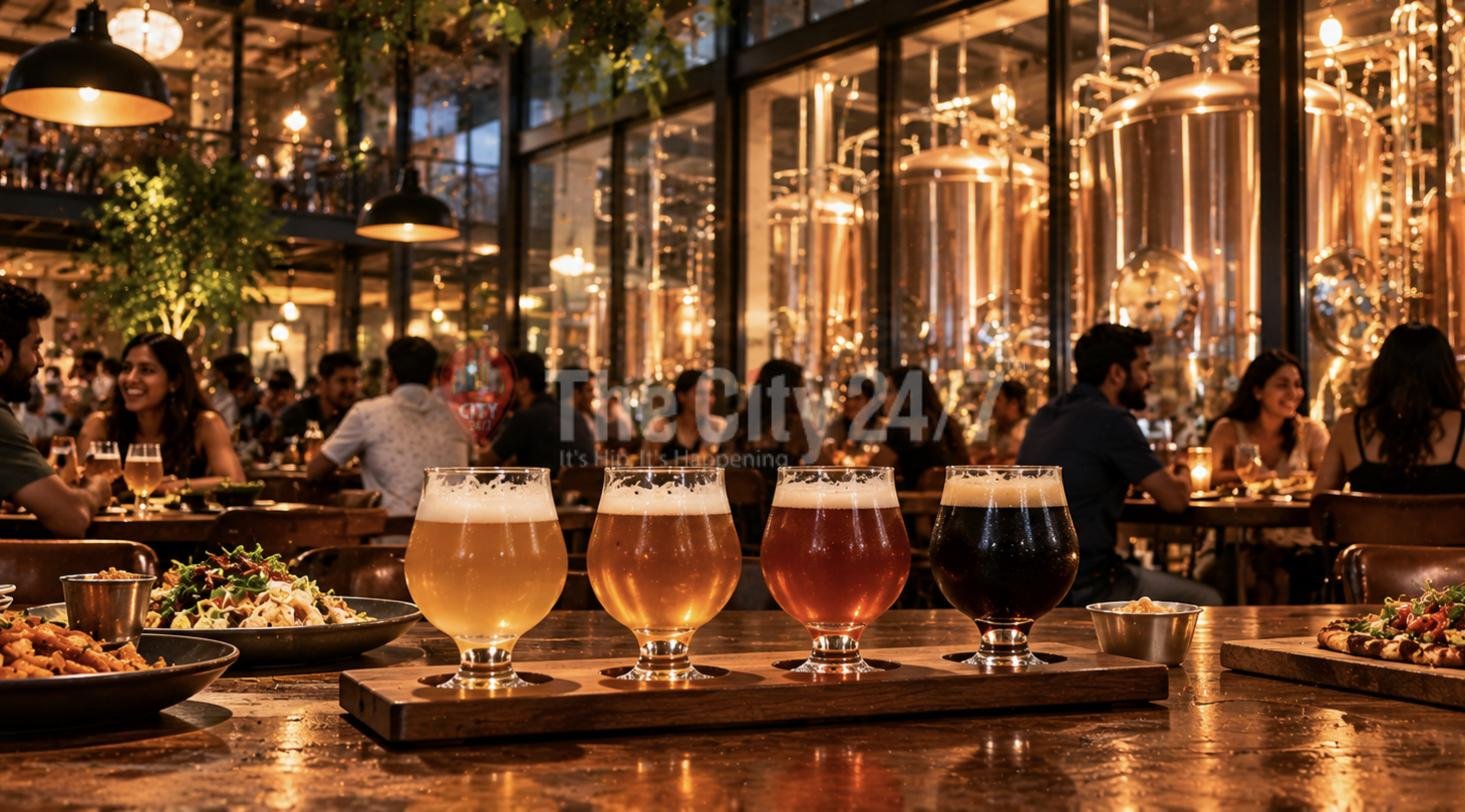
The Best Breweries in Bangalore: Why This City Owns India's Beer Scene
September 8, 2026
