


“Ask what you are actually buying: the object, or the ability to return the object. That answer picks the channel for you.”
• On the decision underneath every shopping trip
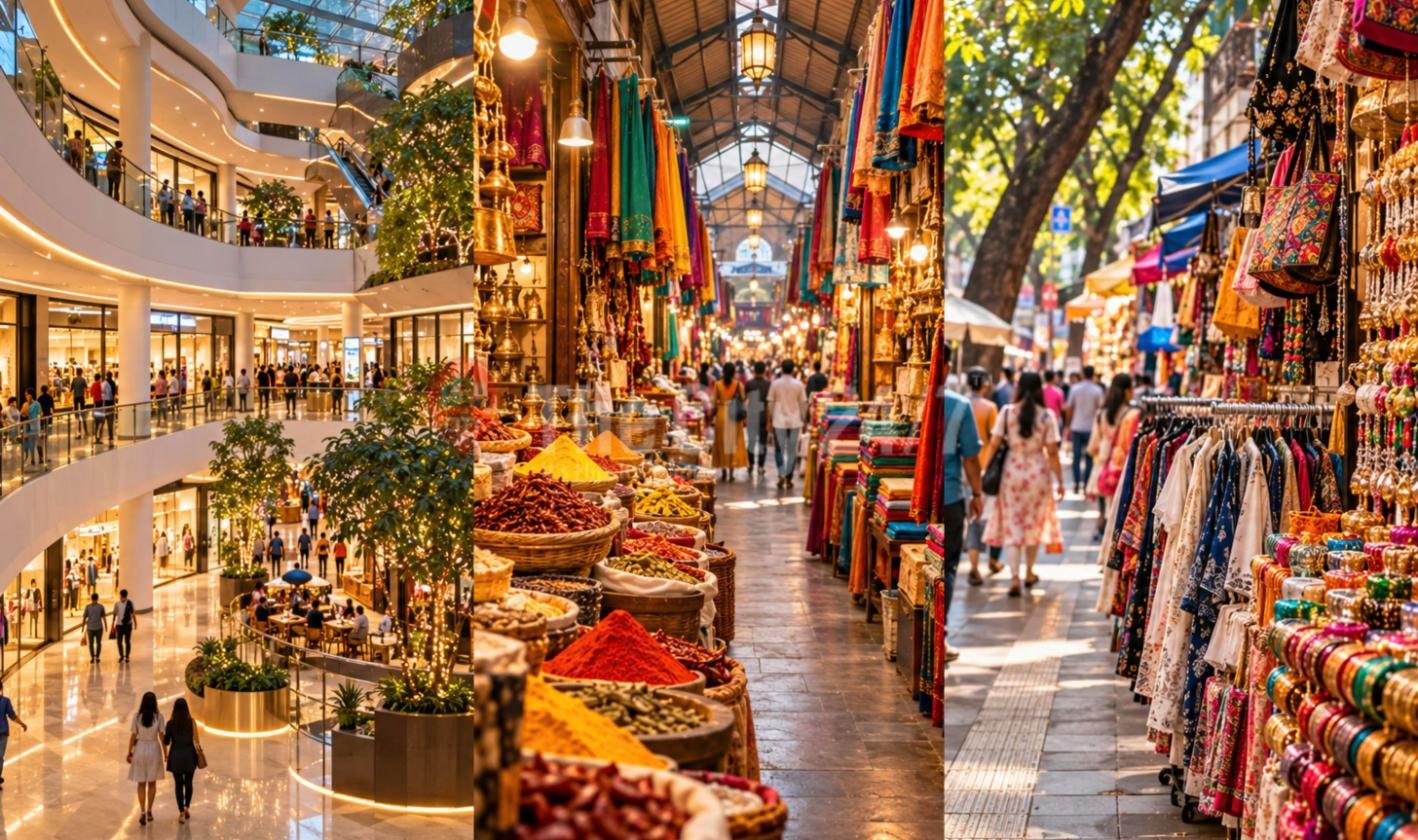
Bengaluru runs three shopping economies in parallel, and most people pick between them out of habit rather than on the merits. The malls, which sell convenience, brands and recourse. The markets, both the traditional produce markets and the wholesale trade quarter, which sell price and range. And the street, which sells price, speed and the chance of finding something nobody else has.
None of them is better. They are priced differently because they are selling different bundles, and the mall premium is not a con. You are paying for parking, air conditioning, a trial room, a returns policy, a warranty and somebody to complain to. For some purchases that is worth a great deal and for others it is worth nothing at all.
This is a straight comparison across the things that actually matter: price, quality, range, returns, time cost, comfort and risk, followed by a category by category verdict and a simple decision rule you can use in the moment.
Quick Information
The whole argument in one table, so you can win it at the dinner table without reading the rest.
Which Is Actually Cheaper in Bangalore?
Street and market shopping, substantially, for anything unbranded. The same kurta, bag, length of fabric or kilo of vegetables can cost a third of the mall or supermarket price, and in the wholesale quarter less than that.
The reason is structural rather than mysterious. A mall retailer pays rent per square foot in a serviced building, employs trained staff, absorbs returns and carries brand margin. A lane shop in Commercial Street pays a fraction of that, and a wholesale shop in Chickpet is selling at trade level. None of that difference is quality, it is overhead.
Where malls genuinely compete on price is the end of season sales in January and July, when brand clearances close most of the gap on comparable goods, and on branded electronics and appliances during festive offers, where exchange deals and bank discounts can beat anything on the street.
“You are not paying more in the mall for a better shirt. You are paying more for the building, the trial room and the person who will take it back.”
• On where the money goes
What Do Malls Do Better?
- Recourse. Returns, exchanges, warranty claims and a manager to escalate to. On the street this simply does not exist, and for anything expensive that is the whole argument.
- Trial rooms and consistent sizing. You can try it, and next time the same size will fit. Street sizing is not consistent with itself, let alone with anything else.
- Comfort and facilities. Air conditioning, clean toilets, feeding and changing rooms, lifts, seating. In a hot city with poor pavements this is not a small thing.
- Parking. The single biggest practical advantage, given what parking near Commercial Street or Chickpet involves.
- Speed for a known brand. If you want a specific product from a specific label, a mall gets you in and out in twenty minutes.
- Children and family trips. Play zones, food courts and corridors wide enough for a pram. Markets are hostile to all three.
- Monsoon. Four months of the year this decides the question on its own.
- One trip, many categories with facilities. Clothes, groceries, a haircut, a film and dinner without moving a vehicle.
What Do Markets and the Trade Quarter Do Better?
Price, range and expertise. A wholesale lane gives you thirty shops in the same category within two hundred metres, staffed by people who deal in that one product all day, at prices the retail layer buys at.
- Price on unbranded goods. Not marginally cheaper, categorically cheaper. This is the entire reason the quarter survives.
- Range within a category. Chickpet has more saree and fabric options in one lane than every mall in the city combined.
- Seller knowledge. A shop that sells only shirting fabric knows shirting fabric. A mall floor assistant knows the stock list.
- Produce quality. Market vegetables and fruit move fast and are fresher than supermarket equivalents, which is why most households here still buy produce from a market or a vendor.
- Bulk and volume. Weddings, events, furnishing a house. The wholesale layer is built for quantity and prices accordingly.
- Things that do not exist in retail. SP Road components, specific trims, particular rice varieties, obscure spare parts.
- Bargaining and relationships. A regular customer gets a better rate and better stock, which is a form of loyalty programme that actually works.
- It is interesting. A morning in the Pete or at KR Market is worth having. Nobody remembers an afternoon in a mall.
What About Street Shopping Specifically?
Street shopping sits between the two: market prices with retail finished goods, and the best odds of finding something unusual. The compromise is the total absence of recourse and the variability of quality.
Bengaluru's street trade is unusually good because of the garment industry next door, which feeds export surplus, overruns and seconds into the pavement economy continuously. That means the clothing on a footpath here is often the same product the brands sell, which is not true in most cities.
The rule for the street is to buy things where the value is in the material rather than the guarantee. Clothes, bags, footwear, fabric, accessories and books, yes. Electronics, chargers, cosmetics and anything you may need to return, no.
“The street is excellent at objects and terrible at promises. Buy the first and never the second.”
• On the boundary line
So Which Should I Use, by Category?
- Everyday clothes: street and surplus. Best value in the city, and the mall version is the same garment with a label and a markup.
- Office and formal: market fabric plus a tailor. Or mall brands if you want it solved today with alterations included.
- Sarees and ethnic wear: markets, then showrooms. Chickpet for price and range, established houses for service and documentation.
- Gold and jewellery: showrooms. Hallmarking, invoicing and buyback terms matter far more than any saving.
- Electronics with warranty: authorised stores. Malls and brand outlets. The trade quarter is for parts and repairs.
- Groceries: split it. Staples in bulk from a supermarket or hypermarket, produce from a market or vendor. Never produce in a supermarket.
- Furniture: showrooms or a carpenter. Buy ready made if it must move house, get it built if it must fit a space.
- Gifts and craft: the emporia. Fixed price, verified provenance, and a bill that matters for regulated items.
- Anything with children in tow: malls. The facilities decide this regardless of price.
- Anything in the monsoon: malls. See above.
Is There a Simple Rule?
Yes. Buy the object on the street or in the market, and buy the guarantee in the mall. If what you need is a physical thing whose quality you can judge by looking at it, go where it is cheap. If what you need is a promise about the future, warranty, returns, service, fit, go where somebody is contractually on the hook.
The second rule is about your own time. A market trip costs travel, heat, crowds and an hour of walking, and it saves real money. If your Saturday is worth more than the difference on a single shirt, the mall is the rational choice and there is nothing virtuous about the harder route.
Most people in this city end up with the same sensible mix: markets for produce and fabric, the street for everyday clothes, malls for brands, electronics and family outings, and the emporia for anything they intend to keep. That is not indecision, it is the correct answer arrived at by experience.
Frequently Asked Questions
Is shopping cheaper in Bangalore markets or malls?
Markets and street shopping are substantially cheaper for anything unbranded, often a third of the mall price, and the wholesale quarter is cheaper still. The difference is overhead rather than quality: rent, staff, returns and brand margin. Malls compete on price mainly during the January and July end of season sales and festive electronics offers.
Are Bangalore malls worth it?
For brands, warranties, returns, trial rooms, parking, family outings and the monsoon, yes. They sell convenience and recourse alongside the product, which is worth real money on expensive purchases and on anything you may need to exchange. For unbranded clothing, fabric, produce and accessories they are simply the expensive option.
What should I buy from street shops rather than malls?
Clothes, bags, footwear, fabric, accessories, imitation jewellery and books, where the value is in the material and you can judge quality by inspection. Avoid electronics, chargers, cosmetics and anything whose worth depends on a warranty or return policy, since street purchases come with no recourse at all.
Where do locals in Bangalore actually shop?
Most households use all three channels deliberately: produce from a neighbourhood market or vendor, staples in bulk from a supermarket, everyday clothes from surplus shops and street lanes, fabric and sarees from Chickpet, brands and electronics from malls and authorised stores, and craft or silk from the emporia and established houses.
Is supermarket produce worse than market produce in Bangalore?
Generally yes on both price and freshness. Neighbourhood markets and pushcart vendors turn over produce faster and sell it considerably cheaper, which is why most Bengaluru households buy vegetables and fruit outside supermarkets even when they do the rest of their shopping inside one.
Do malls in Bangalore have better quality than markets?
Not inherently. Much of the clothing sold in malls is made in the same garment units that feed the export surplus and street trade in this city. What malls reliably provide is consistency, sizing, and the ability to return or claim against a purchase, which is a different kind of assurance from quality.
Can you bargain in Bangalore malls?
No. Mall stores and chain showrooms work on fixed pricing, and the equivalent of bargaining there is timing your purchase for the end of season sales in January and July or the festive offer period from Dussehra to Diwali. Bargaining belongs to street stalls, market vendors and small independent shops.
What is the best shopping strategy in Bangalore?
Buy the object where it is cheap and the guarantee where it is enforceable. Use markets and the wholesale quarter for produce, fabric and bulk, the street for everyday clothing, malls and authorised stores for brands, electronics and anything warranted, and the government emporia for craft and silk you intend to keep.
Useful Links
Transport, verification and complaints across all three channels.
Where Do You Land on This?
Everybody in this city has a fixed opinion about malls and markets, usually formed by one very good or very bad experience. Click the WhatsApp icon at the bottom right of your screen and tell me yours, and which channel you would defend. That is also the easiest way to reach The City 24/7 about anything at all.
And if you want the city explained one useful thing at a time, join our ever growing community. One weekly email, free.
Prices, sale periods and store policies change, so treat the comparisons here as the general shape rather than a fixed rule. Same city, new stories, always.

Related Stories
 SHOPPING
Bangalore's Shopping Districts Explained, One Street at a Time
August 24, 2026
 SHOPPING
The Best Places to Shop in Bangalore, Ranked by What You Need
August 20, 2026
 SHOPPING
The Best Places to Shop for Kids in Bangalore, Without Losing the Day
August 20, 2026
 SHOPPING
Shopping in Bangalore: Which Street for What, and When to Go
July 17, 2026
 SHOPPING
Street Shopping in Bangalore: The Complete Guide to Paying Less
August 22, 2026
 SHOPPING
The Best Shopping Places in Bangalore for Men, Without the Guesswork
August 20, 2026
