


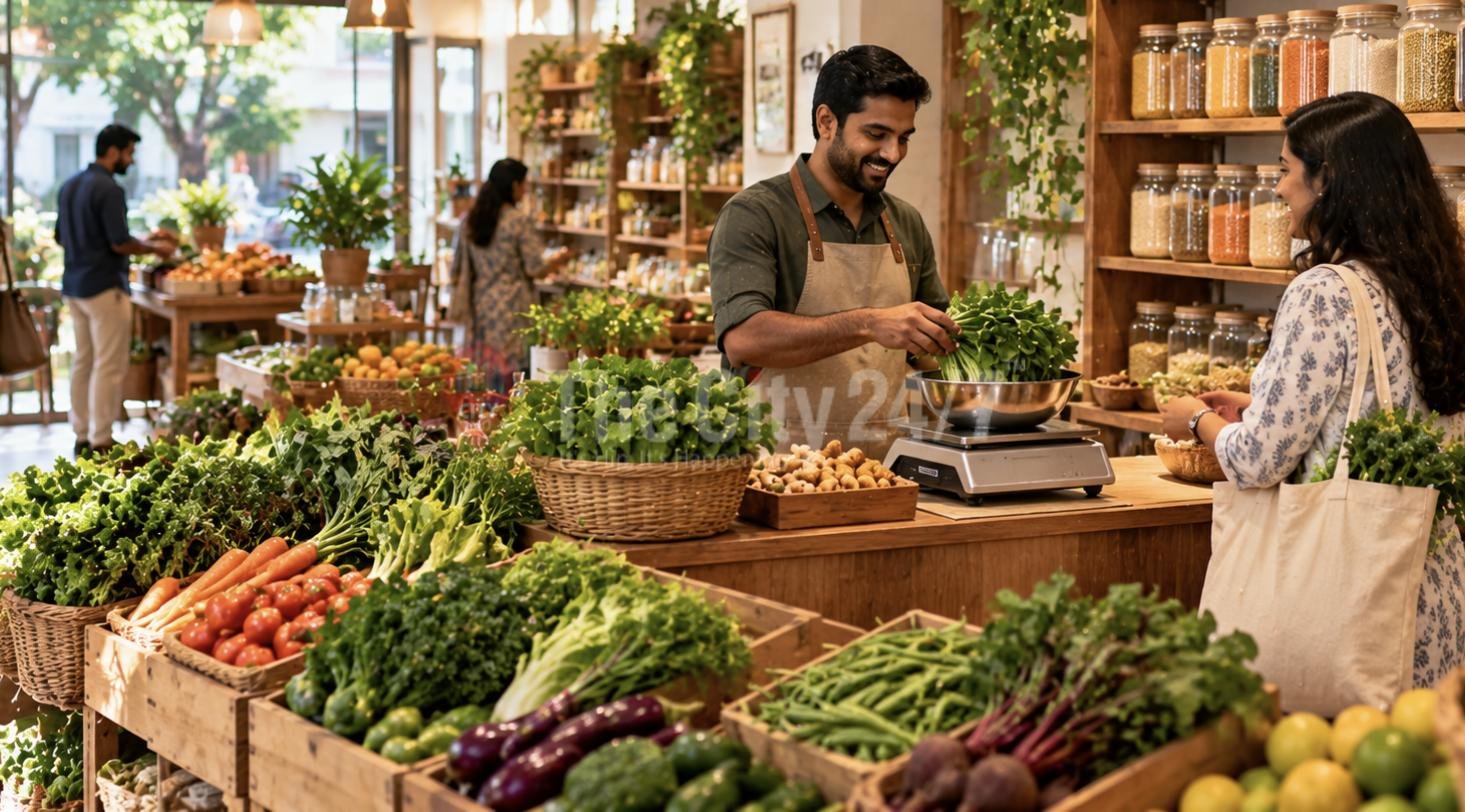
“Organic is a claim until somebody can tell you the name of the farm. The best shops in this city can, and the ones that cannot charge more.”
• On the only test that consistently works
Karnataka is a serious agricultural state. It grows millets that the rest of the country is now rediscovering, coffee in Coorg and Chikmagalur, pepper, cardamom, and a wide range of pulses and traditional grains. Bengaluru sits in the middle of that, which is why the city's organic scene is genuinely good rather than merely fashionable.
It also means the label is heavily used. Organic, natural, farm fresh, chemical free and pesticide free are not the same thing, and only some of them are regulated. Knowing which is which turns an expensive weekly shop into a reasonable one.
This guide covers the store types worth using, the farmers markets and farm box subscriptions that cut out the middle layer entirely, where to buy millets and traditional grains properly, what certification marks actually mean, and how to build an organic basket that does not cost three times a regular one.
Quick Information
Organic shopping, distilled. Read it before you pay four hundred rupees for a kilo of something your grandmother grew in a field for free.
Where Should I Buy Organic Food in Bangalore?
Start with a farmers market or a farm box subscription for produce, then use a dedicated organic store for staples. That combination gets you the best quality and the smallest premium, in that order.
Dedicated organic stores exist across the city, with strong concentrations in Jayanagar, Malleshwaram, Indiranagar, Koramangala, HSR Layout and Whitefield. The good ones carry grains, millets, pulses, cold pressed oils, jaggery, spices and local produce, and their staff can usually tell you where things came from. The weaker ones are gift shops for packaged goods with a wellness aesthetic.
Supermarket organic aisles are convenient and fine for branded staples, but they are the most expensive route per kilo and the furthest from the farm. Use them to fill gaps rather than as the main channel.
What Do the Organic Certification Marks Mean?
India Organic under the National Programme for Organic Production is the main certification for organic produce, Jaivik Bharat is the unified identity mark used on certified organic food, and PGS India is a participatory system designed for smallholder farmers. Everything else on the packet is marketing.
- India Organic and NPOP. Third party certification against the national organic standard, used widely on packaged and exported organic products.
- Jaivik Bharat. The unified organic identity mark that appears on certified organic food, making the claim legible at a glance.
- PGS India. A participatory guarantee system built for small farmers and local groups, where peer verification replaces expensive third party audit. Common at farmers markets, and credible when the group is real.
- Natural and chemical free. Not regulated terms. They may be entirely true and there is no verification behind the words themselves.
- Farm fresh. Means nothing in particular. Ask when it was harvested and where.
- Organic by default. Some smallholders farm without chemicals but cannot afford certification. This is common in Karnataka and is where knowing the seller matters more than the label.
- The practical test. Can the shop or stall name the farm, the region and roughly when it was harvested. Real supply chains can. Repackagers cannot.
“A certification mark tells you a process was followed. A farmer who tells you which field it came from tells you rather more.”
• On what to trust at a weekend market
Which Farmers Markets and Farm Subscriptions Are Worth It?
Bengaluru has an active farmers market circuit, running mostly at weekends and monthly at various venues across the city, plus a mature farm box subscription scene delivering weekly vegetables direct from farms on the city's outskirts.
- Weekend organic markets. Held at community spaces, parks and venues across the city, usually on Saturday or Sunday mornings. Dates and venues move, so follow the organisers rather than relying on a fixed schedule.
- Monthly santhes and organic melas. Larger periodic events bringing farmer groups into the city, often with millets, jaggery, oils and seeds you will not find in shops.
- Farm box subscriptions. Weekly vegetable boxes from farms around Bengaluru. You cook to what arrives, which is either the appeal or the problem depending on your temperament.
- Community supported agriculture. Some groups let you subscribe to a farm's output for a season, which is the closest thing to buying direct that exists here.
- Farmer producer organisations. Collectives selling directly, often at markets and online, with better prices for both sides than any retail chain.
- Farm visits. Several farms around the city welcome visitors, which is the most convincing verification of an organic claim available.
Where Do I Buy Millets and Traditional Grains?
From Karnataka's millet specialists and the organic stores that stock them properly, because this state is one of the country's significant millet regions and the range available here is far wider than the two or three varieties supermarkets carry.
Ragi is the everyday staple, and beyond it are foxtail, little, kodo, barnyard, proso and browntop millets, each with a different texture and cooking behaviour. Buy small quantities of several before committing, because the difference between them in a dosa batter or an upma is substantial.
Traditional rice varieties, unpolished dals, cold pressed oils, jaggery and natural sweeteners follow the same logic: the state grows them, the direct channels sell them well, and the supermarket versions cost more for less provenance. Store everything airtight, because grains without preservatives attract weevils quickly in Bengaluru's humidity.
How Do I Keep an Organic Basket Affordable?
- Buy direct wherever possible. Farmers markets, farm boxes and producer collectives cut out the layers that create the premium.
- Prioritise by exposure. Spend the extra on the things you eat most of and the ones that carry most residue risk. Not everything needs to be organic on day one.
- Buy staples in bulk. Grains, millets, pulses and oils are far cheaper per kilo in larger quantities, and they are what you use most.
- Skip processed organic. Organic biscuits and snacks are where the premium is highest and the benefit is smallest.
- Seasonal produce only. Out of season organic vegetables cost the most and travel the furthest, which defeats most of the point.
- Compare with the market. Some local produce at your regular vendor is grown with minimal inputs and costs a third of the organic store price. Ask questions before assuming.
- Grow something. Curry leaves, mint, coriander and chillies grow readily on a Bengaluru balcony, which covers the herbs you buy most often.
“Spend the organic premium on what you eat every day, not on what makes the nicest photograph in the cupboard.”
• On where the money should go
Frequently Asked Questions
Where can I buy organic food in Bangalore?
Dedicated organic stores across the city, with strong clusters in Jayanagar, Malleshwaram, Indiranagar, Koramangala, HSR Layout and Whitefield, plus weekend farmers markets and farm box subscriptions delivering direct from farms around the city. Supermarket organic aisles are convenient but the most expensive route per kilo.
How do I know if organic food in Bangalore is genuine?
Look for the India Organic mark under the National Programme for Organic Production, the Jaivik Bharat identity mark, or PGS India certification for smallholder groups. Terms like natural, chemical free and farm fresh are not regulated. The most reliable practical test is whether the shop or stall can name the farm, the region and roughly when it was harvested.
Is organic food expensive in Bangalore?
It carries a noticeable premium in stores, but buying direct narrows the gap considerably. Farmers markets, farm box subscriptions and producer collectives cut out the retail layers, and staples like millets, pulses, jaggery and cold pressed oils bought in bulk are far better value than packaged organic snacks, which is where the premium is highest.
Where are the farmers markets in Bangalore?
The city has an active circuit of weekend and monthly organic markets held at community spaces, parks and event venues in different neighbourhoods. Venues and dates move, so follow the organisers rather than assuming a fixed schedule. Larger periodic organic melas bring farmer groups in with millets, seeds, oils and jaggery you will not find in shops.
Where can I buy millets in Bangalore?
From millet specialists and the better organic stores, which carry foxtail, little, kodo, barnyard, proso and browntop millets alongside the everyday ragi, in far greater range than supermarkets. Karnataka is one of India's significant millet regions, so the direct channels and farmer collectives are particularly good here. Buy small quantities of several varieties before committing to any one.
What is PGS India certification?
PGS India is a participatory guarantee system designed for smallholder farmers, where groups of farmers verify each other's practices against organic standards instead of paying for third party audit. It is common at farmers markets in Bengaluru and is credible when the farmer group is genuine and identifiable, which is another reason to buy where you can ask who grew the food.
Are farm box subscriptions worth it in Bangalore?
For households who cook regularly and do not mind cooking to what arrives, yes. Weekly vegetable boxes from farms around the city deliver fresher produce at better prices than organic retail, with the trade off that you do not choose the contents. They work less well for people who plan meals strictly or travel often.
Where can I buy organic coffee in Bangalore?
From the roasters and estate outlets that source directly from Karnataka plantations in Coorg and Chikmagalur, rather than from supermarket packets. The city has a strong specialty coffee scene and several roasters sell beans with the estate and harvest details printed on the bag, which is exactly the traceability worth paying for.
Useful Links
Certification and official agricultural sources.
Know a Farm or a Shop Worth Naming?
The best organic sources in this city are small, local and almost never advertised, which makes reader recommendations the only reliable directory. Click the WhatsApp icon at the bottom right of your screen and tell me where you buy and why you trust it. That is also the easiest way to reach The City 24/7 about anything at all.
And if you want the city explained one useful thing at a time, join our ever growing community. One weekly email, free.
Market schedules, store locations and certification rules change, so verify the current position before planning a trip or a subscription. Same city, new stories, always.

Related Stories
 SHOPPING
The Best Furniture Stores in Bangalore, and When to Just Get It Made
August 21, 2026
 SHOPPING
The Best Places to Shop for Kids in Bangalore, Without Losing the Day
August 20, 2026
 SHOPPING
The Best Shopping Places in Bangalore for Men, Without the Guesswork
August 20, 2026
 SHOPPING
The Best Supermarkets in Bangalore, and What Each One Is Good For
August 19, 2026
 SHOPPING
The Best Shopping Places in Bangalore for Women, Budget by Budget
August 19, 2026
 SHOPPING
The Best Home Decor Stores in Bangalore, From Craft to Concept
August 21, 2026
