


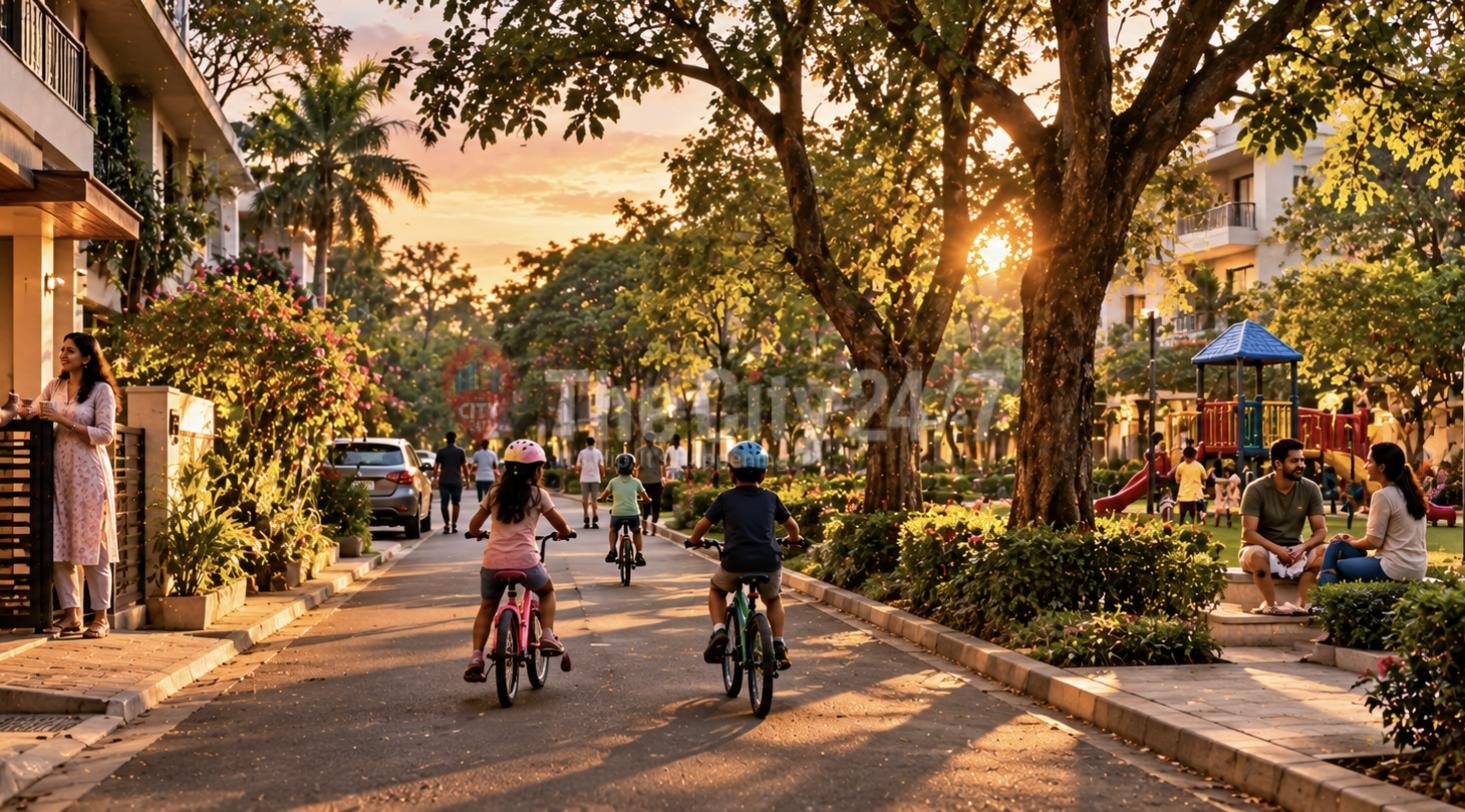
“A family neighbourhood in Bengaluru is one where the school run is under twenty minutes and there is somewhere green within walking distance. Everything else is a bonus.”
• On the two variables that shape a childhood here
Families weigh different things from young professionals. A walkable bar strip matters less than a park; a short commute to a tech park matters less than a short school run; and the question of whether children can move around safely outdoors becomes central in a way it simply is not for somebody living alone.
Bengaluru's quadrants differ substantially on all of that. The old south has trees, established schools and neighbourhood density. The east has the newest schools and the worst traffic. The north is newer and quieter. And gated communities across the city offer something the streets frequently cannot, which is safe unsupervised outdoor space.
This guide compares the main family areas on schools, green space, healthcare, safety and daily logistics. Our schools by area guide covers education in depth, and our choosing a school guide argues that the school decision should come before the housing one.
Quick Information
Six family areas compared. Rents are for a typical 3BHK, which is the family unit.
Which Areas Are Best for Families in Bangalore?
Jayanagar and JP Nagar for established family life, Malleshwaram for the same in the north west, HSR Layout for planning and amenities, and Whitefield or north Bengaluru if you need international schools or work in those corridors.
- Jayanagar and JP Nagar. The classic family answer: planned layouts, tree canopy, parks, markets, established schools with long track records, and short internal commutes. Three bedroom rents roughly Rs 35,000 to 80,000. Our Jayanagar guide covers the area in depth.
- Malleshwaram and Rajajinagar. The north west equivalent, with the same neighbourhood density, excellent food, Green Line metro and generally lower costs. Underrated by families moving from other cities.
- HSR Layout. Better planned than most of the east, with parks, wide roads, good amenities and reasonable access to both the ORR offices and Electronic City. Popular with young families for exactly those reasons.
- Whitefield and Brookefield. The strongest concentration of international schools, substantial gated community supply, and self contained daily life. The trade off is traffic if you ever need to cross the city.
- North Bengaluru: Hebbal, Thanisandra, Yelahanka. Newer housing, materially easier roads than the east, growing school supply and airport proximity. The strongest case for families moving to the city now.
- Sarjapur Road. Large family oriented housing supply and a good spread of schools, with the genuine caveat that infrastructure has lagged development considerably. Check water carefully.
- Sadashivanagar and the central pockets. The premium option: mature trees, large plots, central access and proximity to the best healthcare. Expensive, and the quality of life is genuinely different.
“Choose the school first, then live within five kilometres of it. Families who do it the other way round spend a decade in a car and regret it every morning.”
• The planning sequence that matters most
How Much Does the School Run Matter?
Enormously, and it is the single most underweighted factor. A school five kilometres away in this city can mean a child on a bus from half past six in the morning, every school day, for ten years.
The arithmetic is stark. A forty minute each way school run is roughly two hundred and sixty hours a year of your child's life, and it comes out of sleep, homework, play and everything else. Over a full school career that is thousands of hours. Parents who have lived through it consistently identify it as the thing they most wish they had weighted differently.
The structural advantage of the old south and west is precisely this: schools there sit inside residential neighbourhoods rather than on campuses at the city's edge, so a child can be at school in ten or fifteen minutes and in some cases walk or cycle. The east has newer and more international schools on larger campuses, which are further away by design. Both are legitimate choices and the trade off should be made deliberately, which is what our schools by area guide sets out.
What Else Should Families Check?
- Green space within walking distance. A public park, a lake or a decent playground your child can reach without crossing an arterial road. Our parks guide covers timings, which are typically morning and evening only.
- Healthcare proximity. A good paediatrician and a hospital with emergency care within a reasonable drive. The central and southern areas are best served, and this matters more than people expect until it does.
- Water supply, building by building. Cauvery connection or borewell, and whether tankers are used in April. With children at home this is a daily quality of life issue rather than an abstraction.
- Footpaths and traffic separation. Whether a child can walk anywhere safely. This is the real safety question in Bengaluru rather than crime, and it varies enormously street by street.
- Air quality relative to arterial roads. Better away from the main corridors. Worth weighing with young children, and an argument for interior streets over main road facing flats.
- Everyday amenities within reach. Groceries, a pharmacy, a paediatric clinic and a park. The old neighbourhoods do this well; some newer developments do not, despite the amenity lists.
- Gated community versus street. The genuine advantage of a gated community for families is safe unsupervised outdoor space, which most Bengaluru streets cannot offer. Our communities guide covers what else to check.
- Activities and classes nearby. Sports academies, music and dance schools, swimming. Our hobby classes and sports guides cover what each area offers.
Gated Community or Independent Neighbourhood?
A gated community if you want safe unsupervised outdoor space and amenities on site. An established neighbourhood if you want trees, walkable markets and the social texture of a real locality.
This is the genuine choice families make in Bengaluru and both answers are reasonable. A gated community in Whitefield, Sarjapur or the north gives children a place to cycle and play without an adult standing over them, a pool and play areas, and a peer group inside the gates. That is difficult to replicate on most city streets and it is why so many families choose it.
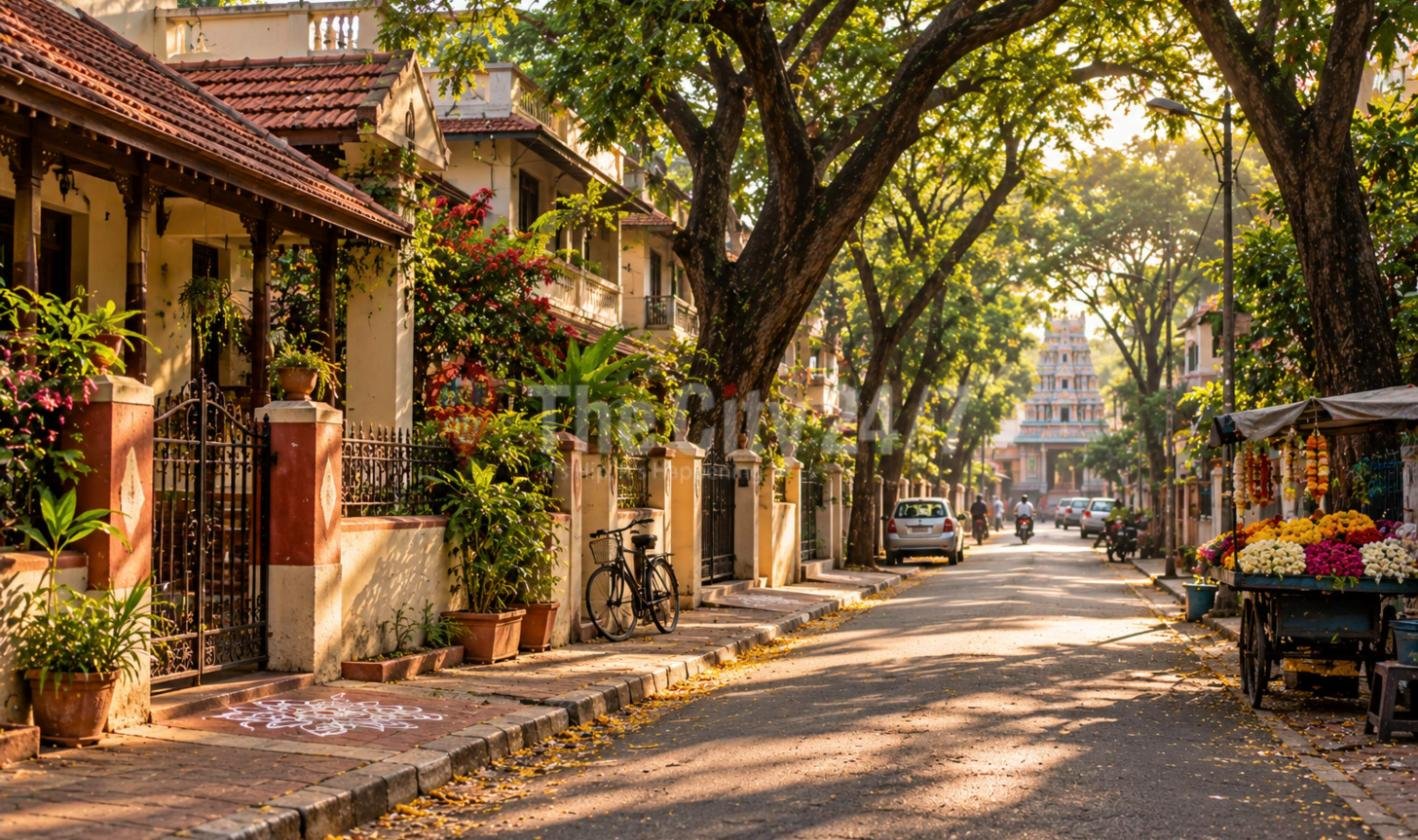
An established neighbourhood in Jayanagar, Malleshwaram or Basavanagudi offers something different: children who know shopkeepers, a park everybody uses, festivals on the street, and a sense of place that a compound cannot manufacture. Commutes are shorter and the food is better. The trade off is that outdoor independence comes later and with more supervision, because the streets are shared with traffic.
Family Areas in Bangalore: Frequently Asked Questions
Which is the best area for families in Bangalore?
Jayanagar and JP Nagar for established family life with trees, parks and short school runs, HSR Layout for planning and amenities, Whitefield for international schools and gated communities, and north Bengaluru around Hebbal and Yelahanka for newer housing and easier roads.
Should I choose a school or a home first in Bangalore?
The school, then live within five kilometres of it. A forty minute each way school run costs a child roughly 260 hours a year, and it is the factor parents most consistently say they weighted wrongly.
What is a good rent for a 3BHK for a family in Bangalore?
Roughly Rs 30,000 to 90,000 a month depending on area. Malleshwaram and north Bengaluru at the lower end, Jayanagar and Whitefield in the middle, and HSR Layout and central areas at the upper end.
Is a gated community better for families in Bangalore?
It depends what you value. A gated community offers safe unsupervised outdoor space, amenities and a peer group inside the gates, which most city streets cannot. An established neighbourhood offers trees, walkable markets and a genuine sense of place, with shorter commutes.
Which areas have the best schools for families?
The east around Whitefield and Sarjapur for international schools, the old south around Jayanagar and Basavanagudi for established institutions with long track records and short commutes, and north Bengaluru for newer campuses with growing supply.
What should families check about water before renting or buying?
Whether the building has a Cauvery connection or depends on borewells, and whether tankers are used in summer. Ask residents rather than the agent, and ask about April specifically, since it varies enormously between adjacent buildings.
How safe is Bangalore for families?
Generally good by Indian city standards, and the real safety question is traffic rather than crime. Judge a street by its footpaths, lighting and whether a child could walk to a park without crossing an arterial road.
Which areas have the best parks for children?
Jayanagar, JP Nagar, Malleshwaram and Sadashivanagar have the best neighbourhood park networks and tree canopy. Note that most city corporation parks open only in the morning and evening and close in the middle of the day.
Is north Bangalore good for families?
Increasingly, yes. Newer housing stock, materially easier roads than the east, growing school supply around Hennur, Yelahanka and Thanisandra, and airport proximity. Check water and road access for the specific location rather than the corridor.
How important is healthcare proximity when choosing an area?
More than people expect until they need it. A good paediatrician and a hospital with emergency care within a reasonable drive matters with children, and the central and southern areas are the best served in the city.
Moving With a Family?
Choosing an area with children involves trade offs that are specific to your school, your work and your children's ages, and parents who have made the same choice are the best source. If you are weighing up areas, click the WhatsApp icon at the bottom right of your screen and tell me your situation. If you already live somewhere with children and the picture here does not match, that correction is equally welcome. That is also the fastest way to reach The City 24/7 about anything at all.
And if you want the city explained one useful thing at a time, join our ever growing community. One weekly email, free.
Same city, new stories, always.

Related Stories
 PROPERTY
Bangalore's Emerging Corridors: Where the City Grows Next
September 13, 2026
 PROPERTY
Living in Jayanagar and Basavanagudi: Old Bengaluru, and Why Families Stay
September 9, 2026
 PROPERTY
Embassy Group in Bangalore: Luxury Built Around the Office You Work In
September 19, 2026
 PROPERTY
20 Top Builders in Bangalore: Who Actually Delivers, and Who Just Advertises
September 19, 2026
 PROPERTY
Gated Communities and Builders in Bangalore: How to Choose Both Well
September 13, 2026
 PROPERTY
East vs North vs South Bangalore: Where Should You Buy?
September 13, 2026
