


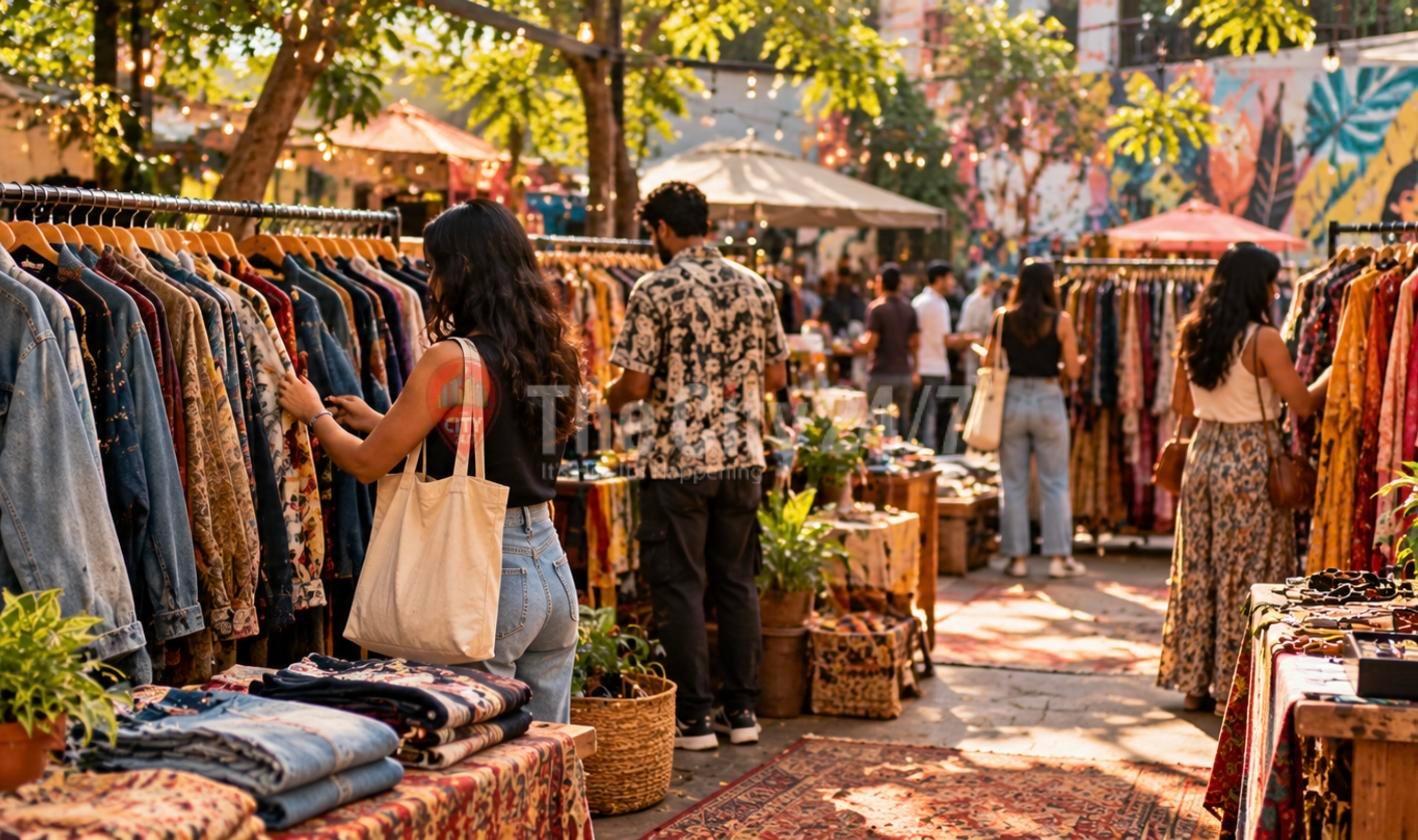
“People come here looking for a charity shop on a corner. What Bengaluru has instead is a surplus trade, a drop culture and a flea market circuit.”
• On why the thrift scene is hard to find
Thrifting in Bengaluru looks nothing like thrifting in London or New York, and newcomers spend months looking for the wrong format. There is no dense network of charity shops. What exists instead is arguably better for the buyer: an export surplus trade that puts near new branded stock on racks for a few hundred rupees, a very active online resale and thrift culture that runs on drops rather than shopfronts, and a flea market circuit where pre loved stalls sit next to independent makers.
There is also a large and underappreciated secondhand economy in furniture, books, electronics and baby equipment, driven by how frequently this city relocates. Somebody is always leaving, and their two year old washing machine is priced to go this weekend.
This guide covers each channel, what to expect on price, how to check used clothing properly, how to sell your own things, and the etiquette of a scene that largely runs on trust between strangers.
Quick Information
The whole secondhand scene at a glance, for those of you who have been searching Maps for thrift store and getting three cafes.
Where Are the Thrift Stores in Bangalore?
Mostly online, and mostly on Instagram, where a large community of thrift accounts posts curated drops of pre loved and vintage clothing that sell within minutes. The physical equivalent is the export surplus trade, which is a different thing but scratches the same itch.
The online scene works on a drop model: an account posts a set of pieces at a fixed time, usually with measurements and flaw notes, and buyers claim in comments or direct messages. It is fast, it rewards being ready, and the good accounts build reputations on honest condition descriptions. Prices are higher than surplus but the pieces are individual rather than bulk stock.
Physically, the surplus shops in the Commercial Street lanes, across Jayanagar 4th Block and scattered through most residential neighbourhoods are the closest thing to a thrift store the city offers. The stock is unworn rather than secondhand, from garment units supplying international brands, and it is cheap for exactly that reason.
- Online thrift accounts, for curation. Vintage, Y2K, denim, western wear and occasional designer, in single pieces with measurements listed. Follow a few and be quick.
- Export surplus shops, for volume. Near new branded stock at a fraction of retail, in the Commercial Street lanes, Jayanagar and neighbourhood shops across the city.
- Flea market pre loved stalls. The weekend and periodic markets usually have several sellers clearing wardrobes alongside the independent makers.
- Resale marketplaces. Best for furniture, appliances, electronics and bulky items, which the clothing focused channels do not handle.
- Neighbourhood and apartment groups. Extremely active in Bengaluru's large gated communities, and the cheapest source of everything from prams to bookshelves.
- Charity and NGO stores. A small number operate in the city, usually tied to specific causes. Worth supporting when you find one.
- Swap events. Clothing swaps run periodically through sustainability groups and cafes, where the currency is what you bring rather than money.
“The thrift scene here lives on your phone, not on a high street. Follow ten accounts, set a notification, and you will do better than any shop crawl.”
• On finding the good stuff
How Do I Buy Secondhand Clothes Safely?
Work from measurements rather than size labels, ask for flaw disclosure in writing, and treat every purchase as final because in this scene it almost always is.
- Know your measurements in inches. Chest, shoulder, waist, hip, length and sleeve. Thrift sellers list garment measurements, which is the only reliable way to buy without trying.
- Ask for flaws explicitly. Stains, holes, pilling, missing buttons, broken zips, altered hems. Good sellers volunteer these. Ask anyway.
- Request daylight photographs. Colour, wear and fabric condition are invisible under indoor light and filters.
- Clarify the return policy before paying. Most online thrift sales are final. Know that going in rather than discovering it afterwards.
- Check the seller's history. Reviews, tagged photos from buyers, how long the account has run. Reputation is the only enforcement mechanism here.
- Pay in a traceable way. UPI to an identifiable account, not to an anonymous number with no record.
- Wash everything before wearing. Non negotiable. Hot wash where the fabric allows, and dry clean structured or delicate pieces.
- Inspect physical purchases fully. Unfold, hold to the light, run the zips, check underarms and hems, where wear shows first.
What Is Worth Buying Secondhand in Bangalore?
- Denim and outerwear. The best thrift categories anywhere. Heavy cotton and jackets outlast several owners, and the fit improves.
- Branded basics through surplus. Shirts, t-shirts and trousers from the export trade, effectively new at a fraction of retail.
- Furniture. The city's relocation churn keeps good furniture on the resale market constantly, usually at a third of new prices.
- Appliances. Washing machines, refrigerators and air conditioners from people leaving the city. Check age, service history and that it runs before paying.
- Baby and children's equipment. Prams, cots, carriers and high chairs, used for months and then outgrown. The most rational secondhand category there is.
- Books. Blossom and the Avenue Road trade, at prices that make reading in volume affordable.
- Avoid: mattresses and upholstered soft goods. Hygiene and hidden damage. Not worth the saving.
- Careful: laptops and phones. Buy only with a bill, a verifiable serial and ideally some remaining warranty, and test thoroughly before paying.
How Do I Sell or Donate My Own Things?
Resale marketplaces and apartment groups for furniture and appliances, thrift accounts that buy wardrobes in bulk for clothing, and NGOs for donations, particularly around festival and winter drives.
For clothing, several online thrift sellers will buy a wardrobe outright or take pieces on consignment, which is much less work than listing individually. Photograph everything in daylight, be honest about condition, and price to move rather than to recover what you paid.
For donations, NGOs across the city collect clothing, books, toys and household items, with the highest demand around festivals and during the cold months. Donate things you would still be willing to wear, wash everything first, and ask what a specific organisation actually needs rather than assuming.
“Price it to move. A sofa in a city where everybody relocates is worth exactly what somebody will pay this weekend.”
• On selling into the churn
Frequently Asked Questions
Are there thrift stores in Bangalore?
Not in the western high street sense. Bengaluru's thrift scene runs mostly online, through Instagram thrift accounts that post curated drops of pre loved and vintage clothing, alongside a large export surplus trade in physical shops, pre loved stalls at the flea markets, and very active resale marketplaces for furniture, appliances and electronics.
Where can I buy secondhand clothes in Bangalore?
Online thrift accounts are the main source for genuine pre loved and vintage clothing, sold as single pieces with measurements listed. For near new branded stock, the export surplus shops in the Commercial Street lanes, Jayanagar 4th Block and neighbourhood shops across the city are cheaper and physically browsable. Flea markets usually have several pre loved sellers too.
What is the difference between thrift and export surplus?
Thrift is genuinely secondhand, previously owned and usually sold as single pieces. Export surplus is unworn stock from garment units that supply international brands, released locally as overruns, cancelled orders or seconds. Bengaluru has a lot of the latter because of the garment industry around it, which is why surplus shops are far easier to find here than thrift stores.
How do I buy from Instagram thrift stores in Bangalore?
Follow accounts whose style matches yours, watch for scheduled drops, and be ready to claim quickly because good pieces sell within minutes. Always buy on listed garment measurements rather than size labels, ask for explicit flaw disclosure and daylight photographs, check the seller's buyer reviews, pay by UPI to an identifiable account, and assume the sale is final.
Is it safe to buy used clothes?
Yes, with basic precautions. Buy from sellers with a visible reputation and buyer feedback, get flaws and measurements in writing before paying, use traceable payment, and wash everything before wearing, with a hot wash where the fabric allows and dry cleaning for structured or delicate pieces. Avoid used mattresses and heavily upholstered soft goods entirely.
Where can I sell my old clothes in Bangalore?
Several online thrift sellers buy wardrobes outright or take pieces on consignment, which is far less work than listing individually. Resale marketplaces and apartment community groups work well for bulkier items. Photograph everything in daylight, describe flaws honestly and price to move rather than to recover the original cost.
Where can I donate clothes in Bangalore?
NGOs and charitable organisations across the city collect clothing, books, toys and household items, with the highest demand around festivals and in the cold months. Wash everything first, donate only what you would still be willing to wear, and ask the specific organisation what they currently need rather than dropping off whatever is in the cupboard.
What is worth buying secondhand in Bangalore?
Denim and outerwear, which outlast several owners, furniture and appliances, which appear constantly because of how often the city relocates, baby and children's equipment, which is outgrown within months, and books through the secondhand trade. Avoid used mattresses, and be cautious with laptops and phones unless there is a bill, a verifiable serial number and ideally some remaining warranty.
Useful Links
Buying, selling and donating safely.
Running a Thrift Store I Should Know About?
The thrift scene here moves fast and lives on reputation, and the sellers doing it well deserve to be found by more people. Click the WhatsApp icon at the bottom right of your screen and tell me who you buy from and what they are good at. That is also the easiest way to reach The City 24/7 about anything at all.
And if you want the city explained one useful thing at a time, join our ever growing community. One weekly email, free.
Online sellers come and go and market dates change, so verify before travelling or transferring money. Same city, new stories, always.

Related Stories
 SHOPPING
The Best Places for Clothes Shopping in Bangalore, by Budget
August 20, 2026
 SHOPPING
The Best Places to Shop for Kids in Bangalore, Without Losing the Day
August 20, 2026
 SHOPPING
The Best Shopping Places in Bangalore for Men, Without the Guesswork
August 20, 2026
 SHOPPING
The Best Shopping Places in Bangalore for Women, Budget by Budget
August 19, 2026
 SHOPPING
The Best Bookstores in Bangalore, From Church Street to Avenue Road
August 21, 2026
 SHOPPING
The Best Home Decor Stores in Bangalore, From Craft to Concept
August 21, 2026
