


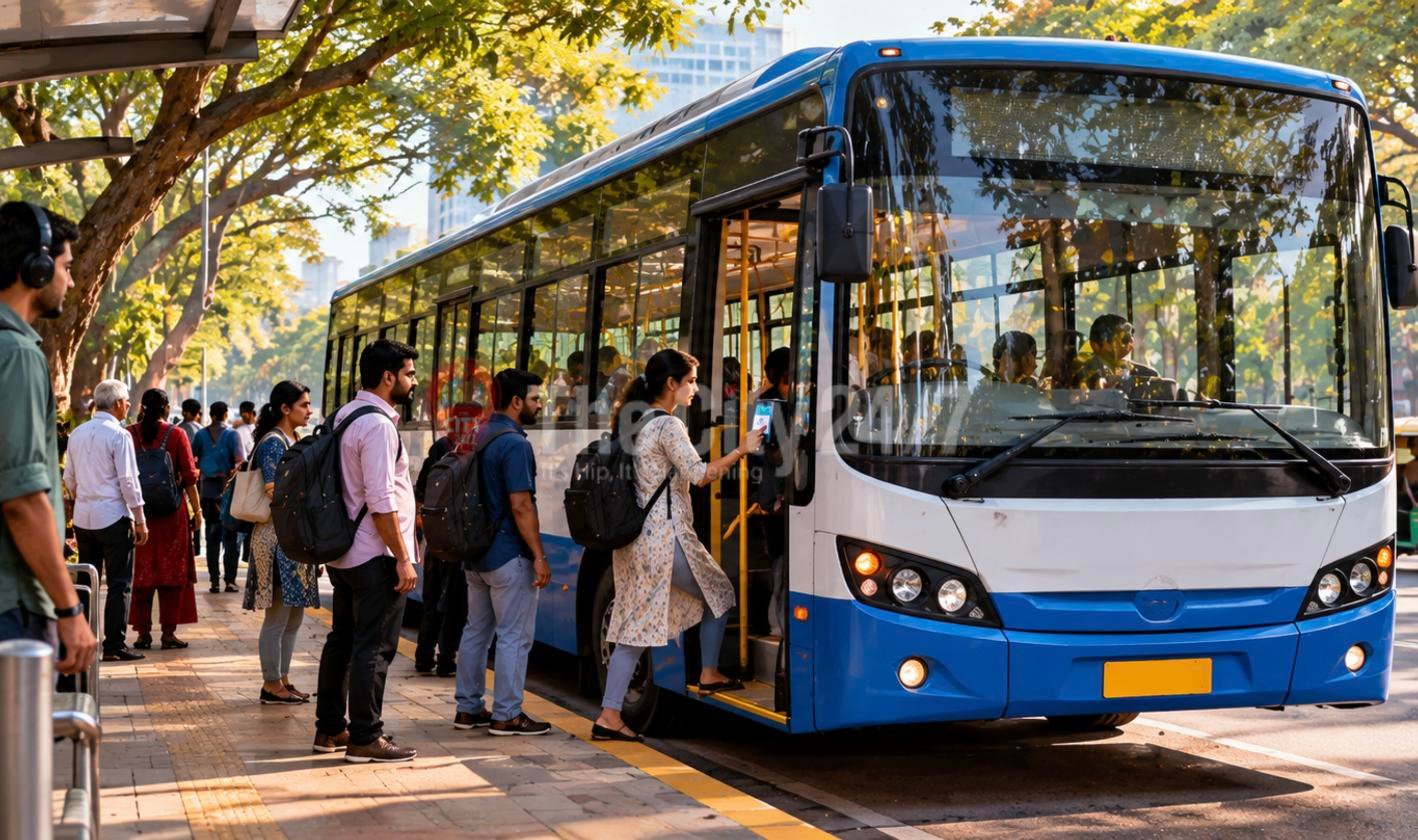
“Everyone in Bengaluru complains about transport and then books a cab. The bus was there the whole time, and it costs about the same as a samosa.”
• On the city's blind spot
The Bangalore Metropolitan Transport Corporation runs one of the largest city bus fleets in India, carrying several million passengers a day across a network that reaches almost every corner of Bengaluru, including a great many places the metro will not touch for a decade. It is cheap, extensive, and almost entirely ignored by people who move here from elsewhere.
The reason is legibility rather than quality. A metro map has three lines and is learnable in a minute; BMTC has thousands of route variations and a numbering system nobody explains to you. Once you understand the numbering and pick up one app, the network becomes genuinely useful, and for a large number of trips in this city it is both faster and dramatically cheaper than a cab.
This guide covers how the route numbers work, the service types and what each costs, passes, the Shakti free travel scheme, the apps worth having, the major bus stands, and honest advice on when to take a bus and when not to.
Quick Information
The whole BMTC system in one table. Read the route numbering row and you will understand more about this network than most residents do.
How Does BMTC Route Numbering Work?
The number tells you which corridor out of the city the bus travels, and the suffix tells you which variation of that corridor. This is the single most useful thing to learn about BMTC, and once you have it, a route number stops being random and starts being information.
- The leading number. Routes are grouped by the radial corridor they serve out of the centre. Buses in the same numeric family run broadly the same direction, which means a 300-series and another 300-series bus will get you to roughly the same part of the city.
- The suffix letters. A letter after the number marks a variation on that corridor: a different terminus, a deviation through a specific layout, or a shorter run. Two buses with the same number but different letters are not interchangeable at the far end.
- The G prefix. Marks services running to or from the Kempegowda bus station area on certain corridors.
- V and KIAS prefixes. Vajra air-conditioned services and the Vayu Vajra airport routes respectively.
- The practical rule. Match the full number including letters. Getting the family right gets you to the right side of the city; getting the suffix right gets you to your stop.
Do not memorise routes. Put your destination into a map app, which reads BMTC's live data, and it will give you the bus number, the stop and the walking legs. Then note that number down, because you will use the same one for years.
What Are the Different Types of BMTC Bus?
Four categories matter, and the difference is comfort and price rather than coverage. Ordinary services carry the vast majority of passengers and reach the most places.
- Ordinary services. Non air-conditioned, the backbone of the network, fares from about Rs 5 to Rs 30. Crowded at peak hours and by far the widest coverage.
- Vajra. Air-conditioned services on major corridors, particularly the tech routes and the Outer Ring Road. Fares roughly Rs 20 to Rs 80, and worth it in April and in monsoon.
- Vayu Vajra. The airport service, running from points across the city to Kempegowda International Airport. Fares roughly Rs 150 to Rs 400, with luggage space and a fixed route.
- Electric buses. A growing part of the fleet on city and corridor routes, quieter and generally newer than the ordinary stock.
- Corridor and feeder services. Including the Outer Ring Road tech corridor routes and metro feeder services that connect stations to surrounding layouts.
How Much Do BMTC Buses Cost, and Are Passes Worth It?
Individual fares run from about Rs 5 to Rs 30 on ordinary services, and the daily pass is worth buying if you make more than two trips. A daily ordinary pass at around Rs 80 gives unlimited travel on non-air-conditioned services, and the Vajra version at around Rs 140 plus GST includes the air-conditioned routes.
- Daily pass. The best value in Bengaluru transport. Two or three trips pays for it, and after that the network is effectively free for the day.
- Monthly passes. Available for ordinary and Vajra services, and the obvious choice for a daily bus commuter. Buy through the app or at a terminal counter.
- Student and senior concessions. BMTC runs concessional passes for students and senior citizens. Check the current list and documentation requirements on the official site.
- Shakti scheme. Women and transgender residents of Karnataka travel free on non-premium BMTC services under the state's Shakti scheme, which has substantially changed ridership across the network.
- Paying on board. Cash to the conductor still works everywhere. Carry small notes, because change for a five hundred at 9 AM is a negotiation you will lose.
Fares and pass prices are revised periodically, so treat these as indicative and check mybmtc.karnataka.gov.in for the current figures.
How Do I Get to the Airport by Bus?
Take a Vayu Vajra, and it is the single most underused travel option in this city. BMTC runs air-conditioned airport services from points across Bengaluru to Kempegowda International Airport, with luggage space, fixed routes and fares from roughly Rs 150 to Rs 400 depending on distance.
Compared with a cab at two to four times the price, and given that both sit in the same traffic, the Vayu Vajra is usually the rational choice for one or two passengers with normal luggage. Services run through the night on the main corridors, which matters for early departures. Routes cover Majestic, Whitefield, Electronic City, Silk Board, HSR, Koramangala, Jayanagar, Banashankari, Marathahalli and others.
Our airport guide covers terminals, transport options and timing in full, including how long to actually allow from each part of the city.
Which Apps Should I Use for BMTC?
One official app for tickets and passes, and a mainstream map app for routing. Together they cover everything, and neither requires you to learn the network.
- The official BMTC app. For digital tickets, daily and monthly passes, and route information. This is where you buy a pass without queuing at a counter.
- Mainstream map apps. BMTC publishes live vehicle data, so the major map apps give reliable bus routing, live arrival estimates and walking legs. This is how most people actually use the network.
- What to check. Live arrival times are good on high-frequency corridors and less reliable on low-frequency routes. On a route with four buses a day, plan around the timetable, not the app.
- Offline habit. Once you find your route, note the number and the stop name. Apps fail, and a conductor who knows the number will point you at the right bus.
Where Are the Major Bus Stands in Bengaluru?
Kempegowda bus station at Majestic is the hub, and around a dozen other terminals distribute traffic across the city. Knowing your nearest terminal is useful because terminal-origin services are less crowded and more predictable than mid-route boarding.
- Kempegowda bus station, Majestic. The central hub, adjacent to the city railway station and the Majestic metro interchange. Almost everything passes through here.
- Shivajinagar and KR Market. The two other central terminals, serving the north-east and the old city and south respectively.
- Shantinagar. The BMTC headquarters terminal, serving central and southern corridors, and where many pass and administrative matters are handled.
- Jayanagar 4th Block and Banashankari. The main southern terminals, both busy and both well connected to the metro.
- Yeshwanthpur and Kengeri. The northern and western terminals, with rail interchange at both.
- Whitefield, Marathahalli and Electronic City. The eastern and southern corridor terminals serving the tech parks, including the ORR corridor services.
When Should I Take a Bus, and When Should I Not?
Take the bus for corridor journeys and anything the metro does not reach. Do not take it if you are in a hurry across the city at peak hour with luggage, which is the one scenario where it fails clearly.
- Take the bus when. You are travelling along a major corridor, going somewhere the metro does not reach, travelling off-peak, or making several trips in a day on a pass.
- Take the bus to the airport. Vayu Vajra with normal luggage is comfortable, cheap and sits in exactly the same traffic as a cab costing three times more.
- Combine with the metro. The strongest option in Bengaluru: metro for the long cross-city leg, bus or feeder for the last few kilometres. Cheaper and often faster than a single cab.
- Do not take the bus when. You have heavy luggage, you are on a tight deadline at peak hour, or your route requires two changes across corridors.
- Peak hour reality. Ordinary buses on tech corridors between 8 AM and 10 AM are extremely crowded. Vajra services are the civilised alternative if available on your route.
Our getting around Bangalore guide compares buses, metro, autos, cabs and rentals for different kinds of trip, and the Namma Metro guide covers the rail network in full.
BMTC Buses: Frequently Asked Questions
How do BMTC route numbers work?
The leading number indicates the radial corridor the bus serves out of the city centre, and letter suffixes mark variations on that corridor, such as a different terminus or a deviation through a particular layout. Match the full number including letters.
How much does a BMTC bus ticket cost?
Roughly Rs 5 to Rs 30 by distance on ordinary services, Rs 20 to Rs 80 on air-conditioned Vajra services, and Rs 150 to Rs 400 on Vayu Vajra airport routes. Fares are revised periodically.
Is the BMTC daily pass worth it?
Yes if you make more than two trips in a day. The ordinary daily pass costs around Rs 80 for unlimited non-AC travel and the Vajra version around Rs 140 plus GST, including air-conditioned services.
What is the Shakti scheme?
A Karnataka government scheme under which women and transgender residents of the state travel free on non-premium BMTC services. It has significantly increased bus ridership across Bengaluru.
How do I get to Bengaluru airport by bus?
Take a BMTC Vayu Vajra air-conditioned airport service. Routes run from Majestic, Whitefield, Electronic City, Silk Board, HSR, Koramangala, Jayanagar, Marathahalli and other points, with fares from about Rs 150 to Rs 400.
Which app should I use for BMTC buses?
The official BMTC app for digital tickets and passes, and a mainstream map app for live routing and arrival times, since BMTC publishes live vehicle data.
What are BMTC operating hours?
Broadly 5 AM to 11 PM across the network, with limited night services on major corridors and round-the-clock Vayu Vajra services on the main airport routes.
Where is the main bus station in Bengaluru?
Kempegowda bus station at Majestic, next to the city railway station and the Majestic metro interchange. Shivajinagar, KR Market and Shantinagar are the other central terminals.
Are BMTC buses better than autos or cabs?
For corridor journeys and off-peak travel, yes, at a fraction of the cost. For heavy luggage, tight deadlines at peak hour, or routes needing two changes, a cab or auto wins.
Do BMTC buses serve the tech parks?
Yes, extensively. There are dedicated Outer Ring Road corridor services, Vajra routes to the Whitefield and Electronic City corridors, and metro feeder services connecting stations to surrounding layouts.
Official BMTC Contacts and Links
Use these for current routes, fares and pass details rather than any third-party listing, including this one.
What Is Your Route Number?
Everyone in this city has one bus they know intimately and I would like to collect them. If a fare or a route here has changed, or if you have a BMTC tip worth passing on, click the WhatsApp icon at the bottom right of your screen and tell me. That is also the fastest way to reach The City 24/7 about anything at all.
And if you want the city explained one useful thing at a time, join our ever growing community. One weekly email, free, and a lot more reliable than the algorithm.
Same city, new stories, always.

Related Stories
 CITY GUIDE
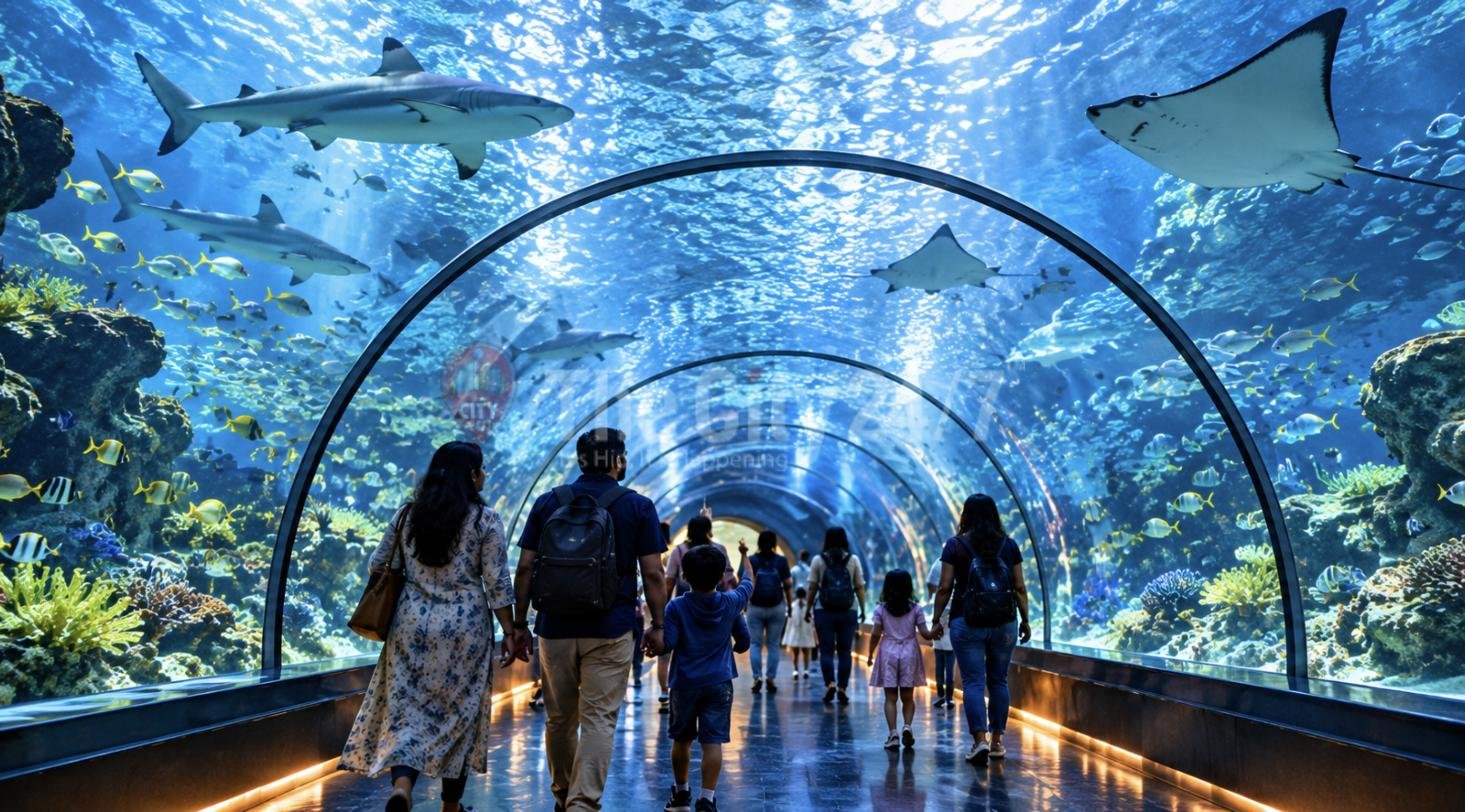
Aquarium Paradise, Palace Road: India's Longest Underwater Tunnel Is in Bengaluru
September 24, 2026
 CITY GUIDE
Fun World, Palace Road: The Amusement Park in the Middle of the City
September 23, 2026
 CITY GUIDE
HAL Aerospace Museum: India's First Aerospace Museum Is Fifteen Minutes From Indiranagar
September 22, 2026
 CITY GUIDE
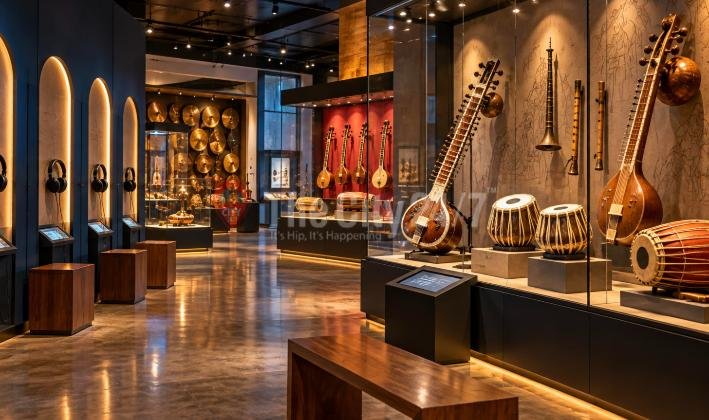
The Indian Music Experience Museum: Bengaluru's Most Underrated Two Hours
September 19, 2026
 CITY GUIDE
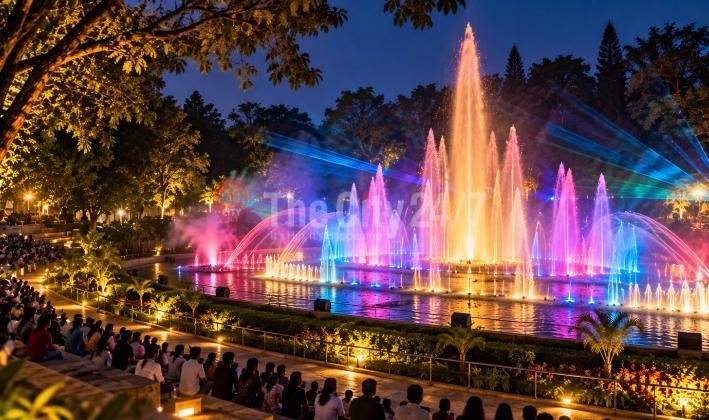
The Musical Fountain, Sadashivanagar: Bengaluru's Most Charmingly Dated Evening Out
September 19, 2026
 CITY GUIDE
Wonderla Bengaluru: Tickets, Timings and the Queue Trick Nobody Tells You
September 18, 2026
