


“Our assets walk out of the door every evening. We have to make sure they come back the next morning.”
• A line widely attributed to N R Narayana Murthy
N R Narayana Murthy is the co-founder of Infosys, the software company that did more than almost any other to make Bengaluru India's technology capital. Born in 1946 in Sidlaghatta, a town north of the city, he co-founded Infosys in Pune in 1981 with six colleagues and moved it to Bengaluru in 1983. Infosys became the first Indian company listed on NASDAQ in 1999, and Murthy received the Padma Shri in 2000 and the Padma Vibhushan in 2008.
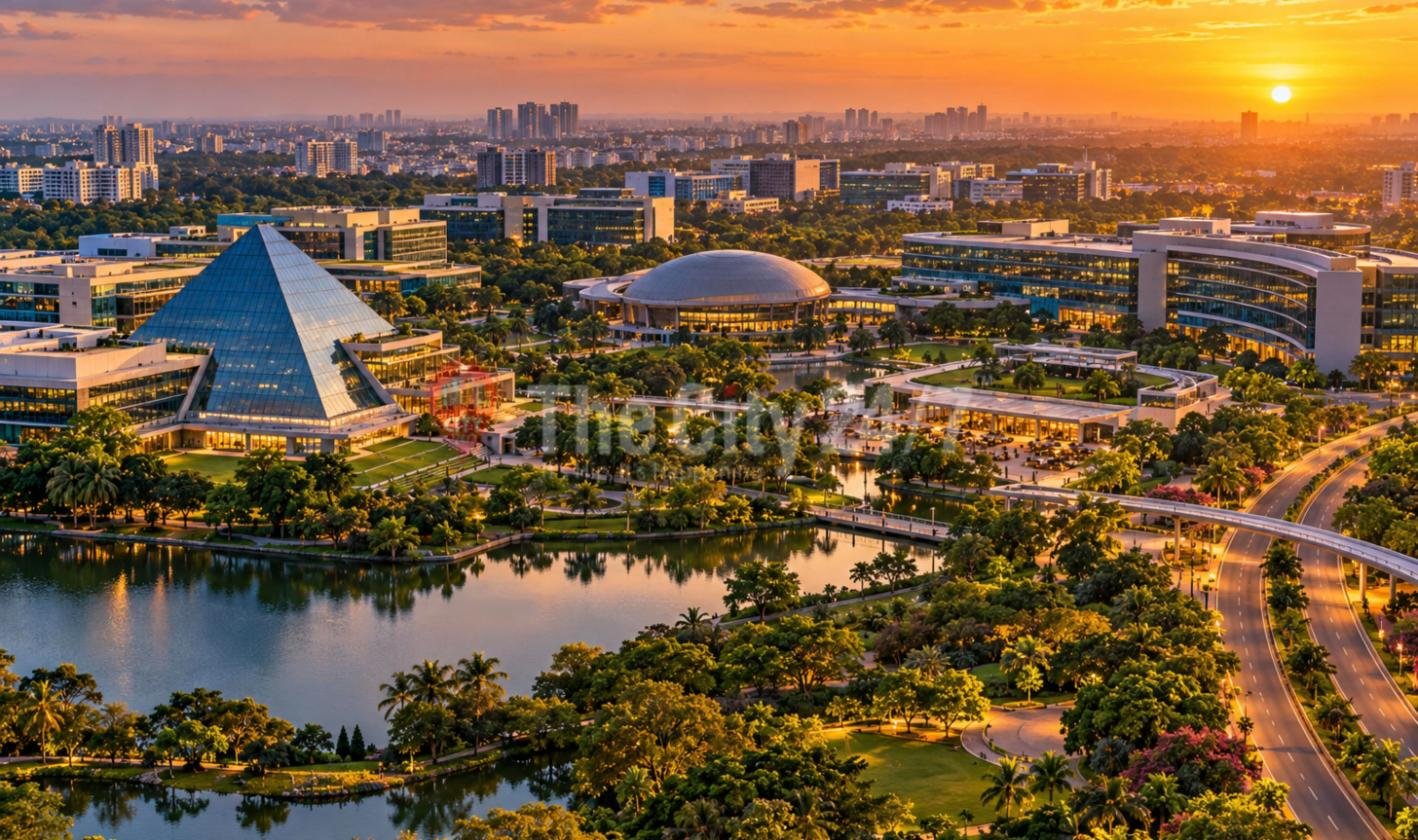
If you have driven down Hosur Road to Electronics City, you have seen the result: a campus that for a long time was the single most photographed symbol of Indian IT. It is easy to forget how improbable it was. In the early 1980s, getting a computer imported or a phone line connected could take months. Infosys was built in that environment, in this city, by people who had mostly borrowed the money to start.
This profile sticks to his well-documented story. It is his Bangalore story: the move, the campus, the culture and the city that grew around them.
Quick Information
Seven founders, one borrowed Rs 10,000 and a move to a pensioners' paradise that became India's software capital. The traffic arrived a little later.
Who Is N R Narayana Murthy?
He is an engineer from Karnataka who co-founded Infosys and led it as chief executive for two decades. He studied electrical engineering in Mysuru and computer science at IIT Kanpur, worked on computer systems at IIM Ahmedabad and then at Patni Computer Systems in Mumbai, and started Infosys with a group of colleagues who shared his belief that Indian engineers could build software for the world.
- Sidlaghatta. His hometown, in Chikkaballapur district, about an hour north of Bengaluru.
- Mysuru. He studied at the National Institute of Engineering, graduating in 1967.
- IIT Kanpur. His master's degree, and his first real exposure to computing.
- The idea. A company run on transparency, merit and professional management, which in 1981 was far from the Indian norm.
Why Did Infosys Move to Bengaluru?
Infosys was founded in Pune but moved its headquarters to Bengaluru in 1983. The city offered a strong pool of engineers from local colleges, a pleasant climate, public sector technology companies like HAL, BEL and ITI that had built up technical skills, and a growing government push towards electronics. Electronics City, set up in the late 1970s by R K Baliga and the state government, gave technology firms a dedicated place to build.
“Bengaluru already had the engineers. Infosys gave them a reason to stay.”
• On the 1983 move
How Did Infosys Change Bengaluru?
It helped turn the city from a quiet public sector and pensioners' town into a global technology hub. Infosys's success, along with Wipro and others, drew multinational firms, created hundreds of thousands of jobs and changed what the city looked like, what it cost to live here and who came to live here.
- The campus. The Electronics City campus became a model for corporate campuses across India, with its landscaping, buildings and facilities.
- Employee wealth. Stock options made many ordinary engineers wealthy, which in turn fuelled the city's startup and angel investment culture.
- Global delivery. The model of doing software work in India for clients abroad became the backbone of Bengaluru's economy.
- The alumni. Former Infosys employees went on to found or lead many companies in the city.
- The side effects. Traffic, rising rents and stretched infrastructure are also part of the story, and the city is still catching up.
What Was Bengaluru Like When Infosys Arrived in 1983?
Much smaller, much quieter and much harder to do business in. Bengaluru was known as a garden city and a retirement town, dominated by public sector giants like HAL, BEL, ITI and HMT. Software was not yet an industry in India, importing a computer required government approvals, and international phone and data links were expensive and slow. Infosys's early years involved long waits for basic infrastructure that today's startups take for granted.
- Public sector skills. The big state-run technology companies had trained thousands of engineers, which gave firms like Infosys a talent pool to hire from.
- Colleges. Karnataka's large number of engineering colleges kept that pool growing every year.
- Liberalisation. The economic reforms of 1991 removed many of the barriers, and Infosys, already established in Bengaluru, was well placed to grow.
- Software Technology Parks. Government-backed data links and export schemes in the early 1990s made it far easier to serve clients abroad from the city.
“The hardest part in 1983 was not writing software. It was getting a phone line.”
• On the early Infosys years
What Was Special About Infosys's Culture?
A deliberate emphasis on transparency, frugality and corporate governance. Murthy was known for simple personal habits, insisting on high standards of disclosure, and treating the company's reputation as its most important asset. Infosys's early annual reports and governance practices were widely studied.
Infosys became the first Indian company to list on NASDAQ in 1999. For a company that had struggled to get a telephone connection in the early 1980s, it was a remarkable journey, and much of it happened from Bengaluru.
What Is Narayana Murthy's Connection to Sudha Murty?
They are married, and she lent him the Rs 10,000 that helped start Infosys. Sudha Murty went on to chair the Infosys Foundation and become one of India's best-loved authors, which is why this series gives her a profile of her own. Their daughter Akshata Murty and son Rohan Murty grew up in Bengaluru.
Where Can You See Narayana Murthy's Legacy in Bengaluru?
Most visibly on Hosur Road. The Infosys campus in Electronics City is the obvious landmark, but the wider legacy is the technology industry that surrounds it, and the thousands of Infosys alumni who now run companies across the city.
- Infosys, Electronics City. The company's global headquarters on Hosur Road.
- Electronics City. The industrial township where Infosys built its home, and a profile of the city's IT boom in one place.
- The startup ecosystem. Many founders and angel investors in Bengaluru began their careers at Infosys.
- Philanthropy. The Infosys Foundation, chaired for many years by Sudha Murty, has funded work across Karnataka.
What Can Bangaloreans Learn From Narayana Murthy?
That values scale. Infosys grew from seven people to a global company without abandoning the ideas it started with: transparency, merit and doing what you say you will do. For a city full of founders, it is a reminder that culture is decided early.
Why Does Narayana Murthy Belong in People of Bangalore?
He is from Karnataka, moved Infosys to Bengaluru in 1983, and built the company that did as much as any to make this the technology capital of India. Every IT park, every commute to Electronics City and every startup pitch in the city owes something to that decision.
I haven't interviewed N R Narayana Murthy for this piece. It's pieced together from online research: published interviews, news reports, books and official records, cross-checked against each other. If you know N R Narayana Murthy and spot something I've got wrong, tap the WhatsApp icon at the bottom right and tell me, and I'll fix it.
FAQs
Who is N R Narayana Murthy?
N R Narayana Murthy is the co-founder of Infosys, one of India's largest software companies. He led it as chief executive for two decades and received the Padma Shri in 2000 and the Padma Vibhushan in 2008.
When was Infosys founded?
Infosys was founded on July 2, 1981, in Pune, by Narayana Murthy and six co-founders. The company moved its headquarters to Bengaluru in 1983.
Who are the co-founders of Infosys?
The co-founders were N R Narayana Murthy, Nandan Nilekani, Kris Gopalakrishnan, S D Shibulal, K Dinesh, N S Raghavan and Ashok Arora.
How much money was Infosys started with?
Infosys was started with Rs 10,000, lent to Narayana Murthy by his wife Sudha Murty.
Where is the Infosys headquarters?
Infosys is headquartered at Electronics City on Hosur Road in Bengaluru.
Where is Narayana Murthy from?
He was born on August 20, 1946, in Sidlaghatta, in the Chikkaballapur district of Karnataka, about an hour north of Bengaluru.
When did Infosys list on NASDAQ?
Infosys listed on NASDAQ in 1999, becoming the first Indian company to do so.
Why did Infosys move to Bengaluru?
Bengaluru offered a strong pool of engineers, a pleasant climate, public sector technology companies and a government focus on electronics, including the new Electronics City township.
Contact Details
The Bengaluru institutions connected to his story.
Were You One of the Early Infoscions?
If you joined Infosys in its early Bengaluru years, or you have a story about the Electronics City campus being built, Click the WhatsApp icon at the bottom right of your screen and tell me. That is also the easiest way to reach The City 24/7 about anything at all, including nominating someone for People of Bangalore.
And if you want one story about the people who make this city, every Sunday, join our ever growing community at thecity247.com/newsletter. Free, and about ten seconds of your life.
Same city, new stories, always.

Related Stories
 FOUNDERS
Byju Raveendran: The Rise and Fall of an Edtech Giant From Bengaluru
October 13, 2026
 FOUNDERS
Kiran Mazumdar-Shaw: The Brewer Who Built Biocon in a Bengaluru Garage
October 20, 2026
 FOUNDERS
Captain Gopinath: The Bengaluru Man Who Made Flying Cheap
October 17, 2026
 FOUNDERS
Nandan Nilekani: From Infosys to Aadhaar, via Bengaluru's Potholes
October 17, 2026
 FOUNDERS
Kunal Shah: CRED, FreeCharge and Bengaluru's Favourite Startup Philosopher
October 14, 2026
 FOUNDERS
Mohandas Pai: Bengaluru's Loudest Voice on Infrastructure
October 5, 2026
