



“Every other Indian city is trying to build what Bangalore accidentally spent forty years building before anybody knew what it was for.”
• The honest answer to why here
Bangalore is India's startup capital because the engineering talent was already here before the startups arrived. That is the single most important fact, and almost every other explanation, the weather, the pubs, the cosmopolitan culture, is a consequence of it rather than a cause.
The city hosts the largest concentration of technology companies, venture capital activity and startup employment in the country, and the density of that ecosystem is now self-reinforcing. Founders move here because investors are here, investors stay because founders are here, and engineers move here because both are.
This piece explains how that happened, what the ecosystem actually looks like today, and the real pressures on it, because the story of Bangalore's dominance is more interesting and more fragile than the usual telling.
Quick Information
The whole argument in one table, for the founder who is deciding where to base a company this quarter.
Why Did the Technology Industry Choose Bangalore in the First Place?
Because the engineers were already here, trained by institutions the national government had spent forty years building. The Indian Institute of Science was established in 1909. From the 1940s onward, Hindustan Aeronautics, Indian Telephone Industries, Bharat Electronics, HMT and later ISRO built enormous campuses across the city.
Those institutions did three things that mattered. They trained several generations of engineers. They created a supply chain of precision workshops and component suppliers. And they built a professional middle class comfortable with technical work, English-language business and long-horizon projects.
When Texas Instruments established an Indian operation in the mid 1980s, and when the software services industry scaled through the 1990s, they were hiring into a labour market that no other Indian city had. That head start is the whole story.
What Does the Bangalore Startup Ecosystem Actually Look Like Today?
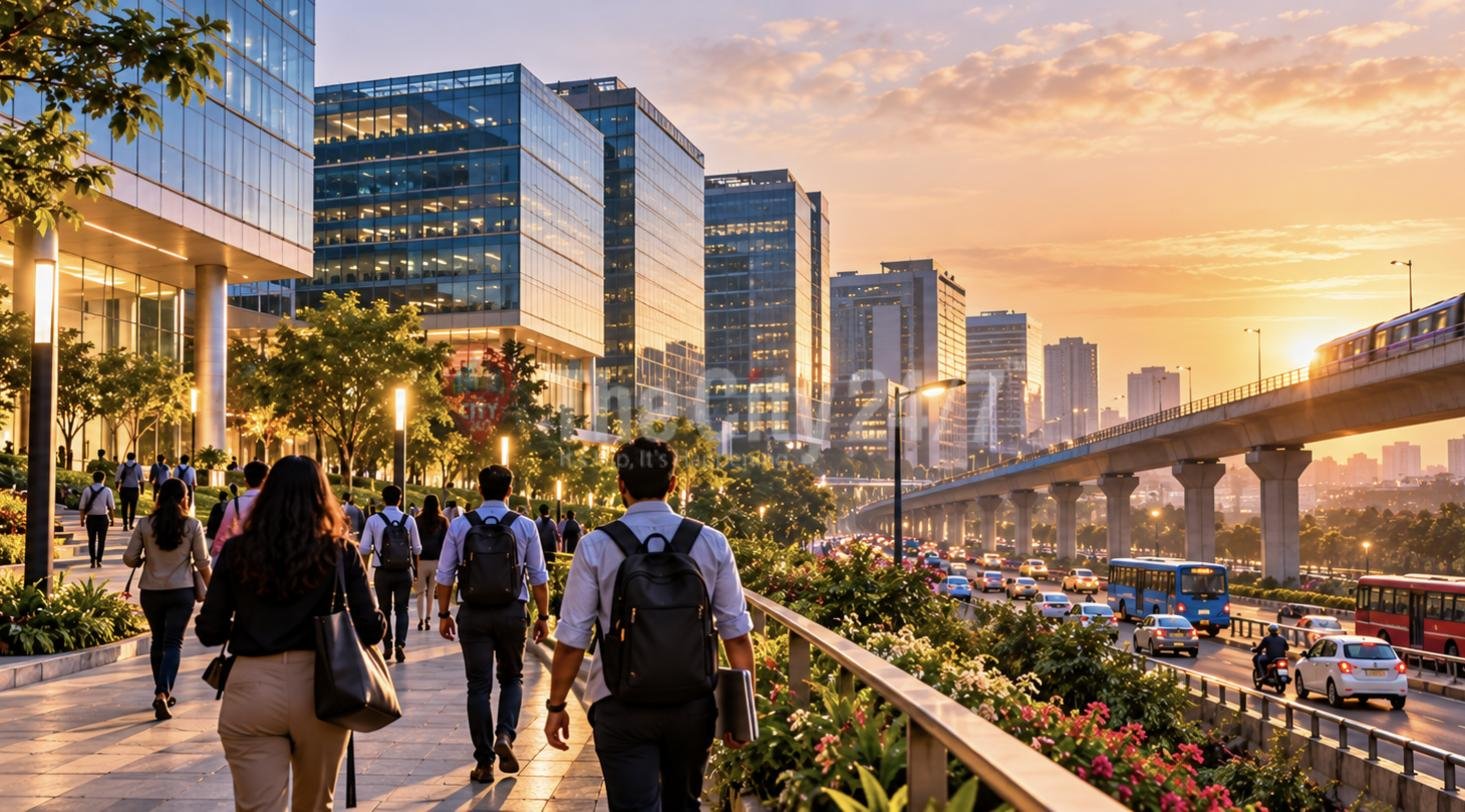
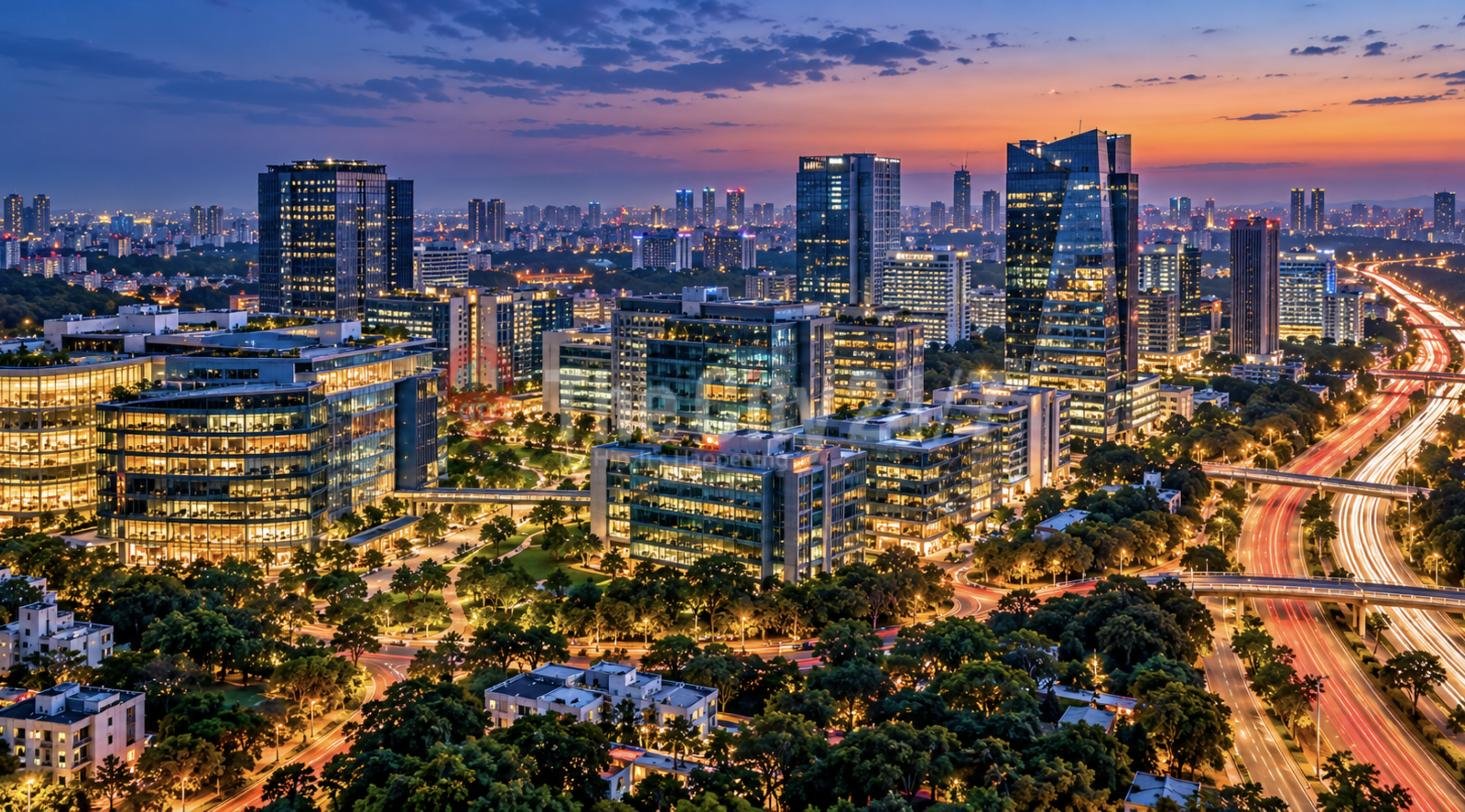
A dense cluster centred on Koramangala, HSR Layout and the Outer Ring Road corridor, with deep specialisation in software. The city's strengths run across SaaS, fintech, e-commerce, mobility, deep tech, spacetech, agritech and increasingly AI.
What distinguishes it from other Indian ecosystems is not any single sector but the density of everything a company needs in one place: engineers who have built at scale, product designers, growth marketers, early-stage investors, specialist lawyers and accountants, and a peer group of founders solving the same problems six months ahead of you.
- Talent. The deepest pool of experienced product and engineering talent in India, including people who have scaled companies from ten to a thousand.
- Capital. The largest concentration of venture capital activity in the country, with most major funds maintaining a Bengaluru presence.
- Customers. A dense B2B market. Selling software to Indian technology companies is easiest where they all are.
- Suppliers. Specialist service providers who have done startup work hundreds of times, from ESOP structuring to compliance.
- Peer effect. The most underrated factor. Proximity to other founders shortens every learning curve.
Which Neighbourhoods Make up Bangalore's Startup Belt?
Koramangala first, HSR Layout second, with Indiranagar and the Outer Ring Road corridor supporting them. Koramangala's role is historical and cultural: a very large share of India's best known startups either began or grew there, and the cafes and coworking spaces still function as an informal marketplace.
- Koramangala. The historic heart. Dense, central, and where a founder can have four coffee meetings in an afternoon without a car.
- HSR Layout. Quieter, greener, increasingly the residential and small-office choice for founders and senior engineers.
- Indiranagar. Central, well connected on the Purple Line, and a growing base for smaller teams and studios.
- Outer Ring Road corridor. Bellandur, Marathahalli and Sarjapur Road. Where the scaled companies are, and where the tech workforce lives.
- Whitefield and ITPL. The enterprise and global capability centre belt, rather than the early-stage belt.
Where you put an office in this city determines who will work for you. A Whitefield office and a Koramangala office draw from different halves of the talent pool, because nobody wants to cross the city twice a day.
What Support Does the Government Offer Startups in Karnataka?
A state startup policy administered through the IT, BT and Science and Technology department, alongside national Startup India registration. Karnataka was among the earliest Indian states to publish a dedicated startup policy, and it has maintained programmes for funding support, incubation and procurement access.
- Startup India recognition. National registration through the Startup India portal, which unlocks tax and compliance benefits.
- Karnataka startup policy. State-level support administered by the IT, BT and S&T department, including grants and incubation schemes.
- Incubators and accelerators. A large number operate in the city, both government-backed and private.
- Udyam registration. For MSME classification, which affects credit access and procurement eligibility.
- Do the paperwork early. Recognition and registration take time and are prerequisites for most schemes. Founders consistently leave this too late.
What Are the Real Weaknesses of the Bangalore Ecosystem?
Infrastructure, cost and complacency, in that order. The city's traffic and civic infrastructure have not kept pace with its economic growth, and that is a genuine competitive risk rather than a grumble.
- Commutes. The Outer Ring Road corridor imposes a real productivity cost on tens of thousands of workers every day.
- Cost. Rents and salaries in Bengaluru are the highest in the Indian technology market, which matters most for early-stage companies.
- Water and civic strain. Summer water supply remains a live issue in parts of the city and affects where companies and employees choose to locate.
- Distributed work. Remote and hybrid work weakened the geographic argument for being here, though the density effect has largely reasserted itself.
- Rival incentives. Hyderabad, Pune, Chennai and Gurugram all compete aggressively on cost, land and state support.
“The moat is density, and density is the one thing that erodes quietly. Nobody announces the day the best engineer chose a different city.”
• On what Bengaluru should actually worry about
Should I Start a Company in Bangalore?
If you are building software and hiring engineers, yes, and the decision is rarely close. The talent, capital and customer density outweigh the cost and infrastructure disadvantages for almost every software business.
The honest exceptions: if your business is capital-light and fully remote, the cost argument for a cheaper city is real. If you are building for a specific regional market, being in that market may matter more. And if your work is manufacturing or hardware-heavy, the calculation involves land and logistics rather than engineer density.
Bangalore as India's Startup Capital: Frequently Asked Questions
Why is Bangalore called India's startup capital?
Because it has the country's deepest pool of experienced engineering and product talent, the highest concentration of venture capital activity, and the greatest density of startups, which reinforce each other.
How did Bangalore become a technology hub?
Through decades of public institution building. The Indian Institute of Science from 1909, then HAL, ITI, BEL, HMT and ISRO from the 1940s onward, created the engineering talent pool the software industry later hired from.
Which areas are Bangalore's startup hubs?
Koramangala and HSR Layout above all, with Indiranagar and the Outer Ring Road corridor through Bellandur and Sarjapur Road.
What sectors are strongest in Bangalore?
SaaS, fintech, e-commerce, mobility, deep tech, spacetech, agritech and AI.
What government support is available for startups in Karnataka?
National Startup India recognition, plus state schemes administered by Karnataka's IT, BT and Science and Technology department, including grants and incubation support. MSMEs can also register under Udyam.
What are the disadvantages of starting a company in Bangalore?
High rents and salaries, severe traffic on the tech corridors, civic infrastructure strain including summer water supply, and aggressive incentives from competing states.
Which cities compete with Bangalore for startups?
Hyderabad, Pune, Gurugram, Chennai and Mumbai, each competing on cost, state incentives or sector specialisation.
Is Bangalore still the best place to start a company in India?
For software businesses hiring engineers, yes, and it is usually not a close decision. For fully remote or hardware-heavy businesses, the cost calculation can favour other cities.
How do I register a startup in Bangalore?
Incorporate through the Ministry of Corporate Affairs portal, register for GST if applicable, then apply for Startup India recognition and, if eligible, Udyam MSME registration.
Contact Details and Useful Links
The official portals founders in Bengaluru actually need.
Building Something Here?
If you are running a startup in this city and want it covered, or you disagree with any of the above, click the WhatsApp icon at the bottom right of your screen and tell me. That is also the easiest way to reach The City 24/7 about anything at all.
And if you want Bengaluru's business stories, openings and opportunities landing in your inbox each week, join our ever growing community. Free, ten seconds, and a lot more reliable than the algorithm.
Same city, new stories, always.

Related Stories
 BUSINESS
Bangalore's IT and Technology Ecosystem: How It Works and Why It Is Here
July 30, 2026
 BUSINESS
Bangalore's Most Successful Homegrown Businesses, and What They Teach
July 29, 2026
 BUSINESS
Bangalore's Startup Ecosystem: A Complete Guide to Plugging Into It
July 28, 2026
 BUSINESS
Bangalore for Entrepreneurs: The Networks, Resources and Real Costs
July 31, 2026
 BUSINESS
How Much Does It Cost to Run a Business in Bangalore? Three Worked Budgets
July 27, 2026
 BUSINESS
Bangalore's Business Districts Explained: Who Is Where, and What It Costs
July 31, 2026
