



“Nobody in Chickpet is trying to sell you an experience. They are trying to move volume before the next lorry arrives, and your saree is incidental to that.”
• On the character of the quarter
Chickpet has been selling cloth since the sixteenth century, when Kempegowda laid out the Pete with one trade per street. Chikka Pete means little market, and it has grown into one of the largest textile trading quarters in South India, feeding retail showrooms across several states.
For a shopper, that history translates into one number: the price. A saree, a length of shirting or six metres of curtain fabric here costs a fraction of what the same thing costs in a showroom, because you are buying at or near the level the showroom buys at.
The trade off is everything else. Narrow lanes, no air conditioning, no styling advice, occasional minimum quantities and an atmosphere of pure commerce. This guide explains how the quarter is organised, what to buy, how to handle prices and minimums, what the surrounding trade streets sell, and how to survive a morning there with your patience and your budget intact.
Quick Information
The cloth quarter in one screen, for anyone about to walk in cold with a wedding list and no plan.
What Can I Buy in Chickpet?
Textiles in every form: sarees, dress material, unstitched sets, shirting and suiting, blouse pieces, lining, lace, borders and trim, plus ready made garments in the surrounding lanes.
- Sarees, at every level. From inexpensive cotton and synthetic to silk and heavy wedding pieces. The range is the point, and shops tend to specialise, so ask rather than wandering.
- Dress material and unstitched sets. Where wedding and festival buying makes the most sense, because stitching locally costs a fraction of buying ready made.
- Shirting and suiting. For anybody building a formal wardrobe through a tailor, this is the best value in the city by a distance.
- Blouse pieces, lining and trim. Lace, borders, buttons, hooks and everything else a tailor will otherwise charge you a markup to source.
- Furnishing fabric. Curtains, upholstery and cushion material at a fraction of the furnishing showroom price, and almost nobody thinks to look here.
- Ready made garments. The surrounding lanes carry ready made clothing wholesale, useful if you are buying for a family or an event.
- Festival and wedding supplies. Return gifts, decorative items and bulk requirements, sold in the trade streets around the cloth market.
“If you have a tailor, Chickpet is dangerous. Six metres of good cotton costs less than a mediocre shirt and comes back fitting properly.”
• On the real opportunity here
How Do Prices and Minimum Quantities Work?
Prices are wholesale, which means they are already low and the margin available for negotiation is small. The right question is about the bulk rate rather than about a discount, and some shops have minimum purchase quantities.
- Ask about minimums before falling in love. Some shops sell by the piece, some by the bundle, some only in dozens. It is a reasonable first question and saves everybody time.
- Ask for the rate, not a reduction. Wholesale shops quote differently for different quantities. Framing it as volume rather than sentiment gets you a real number.
- Expect thin margins. This is not a tourist market with inflated opening prices. Aggressive bargaining here reads as rude and gets you nowhere.
- Compare within the lane. Shops cluster by category, so three doors down is a genuine comparison rather than a different market.
- Buy the whole requirement at once. Returning for two more metres of the same fabric next month is a lottery. Dye lots and stock change constantly.
- Get the bill. For anything significant, particularly silk, where composition and price matter later.
- Check the fabric in daylight. Step to the shop entrance. Interior lighting flatters everything, and colour matching matters for a trousseau.
What Are the Surrounding Trade Streets?
Chickpet sits inside a grid of specialised trade lanes, and walking between them is the most productive shopping morning available in Bengaluru.
- Cottonpet. Cotton, yarn and textile trade, the supply side of the same industry.
- Balepet. Historically bangles and brassware, now also the city's musical instrument street.
- Nagarthpet. The goldsmiths' quarter, where jewellery manufacturing and wholesale happen.
- Avenue Road. Books, stationery, paper and hardware, in shops the width of a doorway.
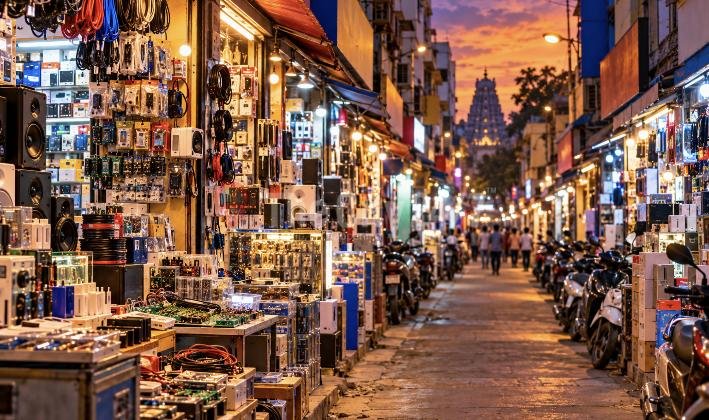
- SP Road. Electronics components, cables, tools and everything technical.
- BVK Iyengar Road. More textile trade, running into the surrounding wholesale grid.
- KR Market. The city's great wholesale produce and flower market, a short walk or one metro stop away, and best before nine in the morning.
How Do I Actually Shop Chickpet Without Being Overwhelmed?
Go early on a weekday, take the metro, carry a written list, and accept that this is a working trade quarter rather than a leisure destination.
- Take the metro to Chickpete station. It opens into the quarter. Driving here is not a plan, it is a mistake with a duration.
- Arrive by ten or eleven. The productive window is late morning to early afternoon. By late afternoon the lanes are congested and everybody is tired.
- Carry a list with quantities. Fabric type, metres, colour, purpose. Vague requests in a wholesale market get vague results.
- Go with somebody who knows fabric. The single biggest advantage you can have here, and the reason families bring an aunt.
- Photograph with prices. After twenty shops nothing is distinguishable. Photographs with the rate noted save the second trip.
- Dress for it. Narrow lanes, handcarts, dust, no seating. Comfortable shoes and a bag you can carry across your body.
- Keep valuables secure. Crowded working lanes. Ordinary city sense, applied consistently.
- Plan lunch elsewhere. There are small eateries in and around the quarter, and the more comfortable options are towards Avenue Road and Majestic.
“Take the metro, take a list, take an aunt who knows fabric. In that order of importance, roughly.”
• On preparing for the cloth quarter
Is Chickpet Worth It If I Am Only Buying One Thing?
For one saree or one length of fabric, honestly, only if you also want to see the quarter. The saving on a single item may not justify the trip if you live far away and the experience is not something you want.
For a wedding trousseau, a set of curtains, a formal wardrobe through a tailor, or anything involving several pieces, it is comfortably the best value in the city and the difference funds a great deal else.
There is also a good argument for going once regardless. It is one of the oldest continuously trading parts of Bengaluru, it explains how the city's retail works, and an hour walking between Chickpet, Balepet and Avenue Road tells you more about this place than any museum.
Frequently Asked Questions
What is Chickpet famous for?
Textiles. Chickpet is one of the largest wholesale cloth and saree trading quarters in South India, selling sarees, dress material, shirting and suiting, blouse pieces, lace and trim, and supplying retail showrooms across several states. It dates back to the sixteenth century layout of Bengaluru's Pete, where each street was assigned a single trade.
Is Chickpet cheaper than showrooms?
Significantly, because it is a wholesale quarter and you are buying at or near the level the showrooms buy at. The trade off is no styling help, crowded working lanes, limited comfort and sometimes minimum purchase quantities. For a wedding trousseau or bulk fabric buying, the difference is substantial.
How do I reach Chickpet?
Take the Green Line metro to Chickpete station, which opens directly into the quarter. Driving is not practical, because parking is effectively unavailable and the lanes are too narrow for vehicles anyway. Buses serve the surrounding area heavily and Majestic is a short distance away.
What are Chickpet timings?
Most shops run from around 10 or 10.30am to about 8pm on weekdays, and the quarter is largely quiet or closed on Sundays. The productive window is late morning to early afternoon, after which the lanes become congested and difficult to move through.
Can I buy retail quantities in Chickpet?
In many shops yes, though some sell only by the piece, the bundle or the dozen, so ask before choosing. It is a normal opening question in a wholesale market and saves time on both sides. Buy your full requirement in one visit, because stock and dye lots change and returning for two more metres rarely works.
Can you bargain in Chickpet?
There is some room, but margins are wholesale and thin, so the effective approach is to ask for the rate at your quantity rather than to request a discount. Aggressive bargaining reads as out of place here. Comparing three shops within the same lane, which cluster by category, is a better strategy than pushing one shopkeeper hard.
What else can I shop for near Chickpet?
The surrounding trade lanes each specialise: Cottonpet for cotton and yarn, Balepet for musical instruments and traditional bangles and brassware, Nagarthpet for gold, Avenue Road for books and stationery, SP Road for electronics components, and BVK Iyengar Road for more textiles. KR Market, the city's great wholesale produce and flower market, is a short walk away and best before nine in the morning.
Is Chickpet safe for shoppers?
Yes, with ordinary city sense. It is a busy working trade quarter with constant movement of goods and people rather than a place with a safety problem. Keep valuables secure in crowded lanes, watch for handcarts, wear comfortable shoes, and go during the day on a weekday when the quarter is at its most orderly.
Useful Links
Getting there and verifying what you buy.
Have a Shop in the Quarter You Trust?
Chickpet has hundreds of shops and finding the right one is entirely a matter of who told you about it. Click the WhatsApp icon at the bottom right of your screen and tell me which shop, which lane and what they are good for. That is also the easiest way to reach The City 24/7 about anything at all.
And if you want the city explained one useful thing at a time, join our ever growing community. One weekly email, free.
Timings, minimums and prices vary shop to shop and change over time, so confirm before travelling across the city. Same city, new stories, always.

Related Stories
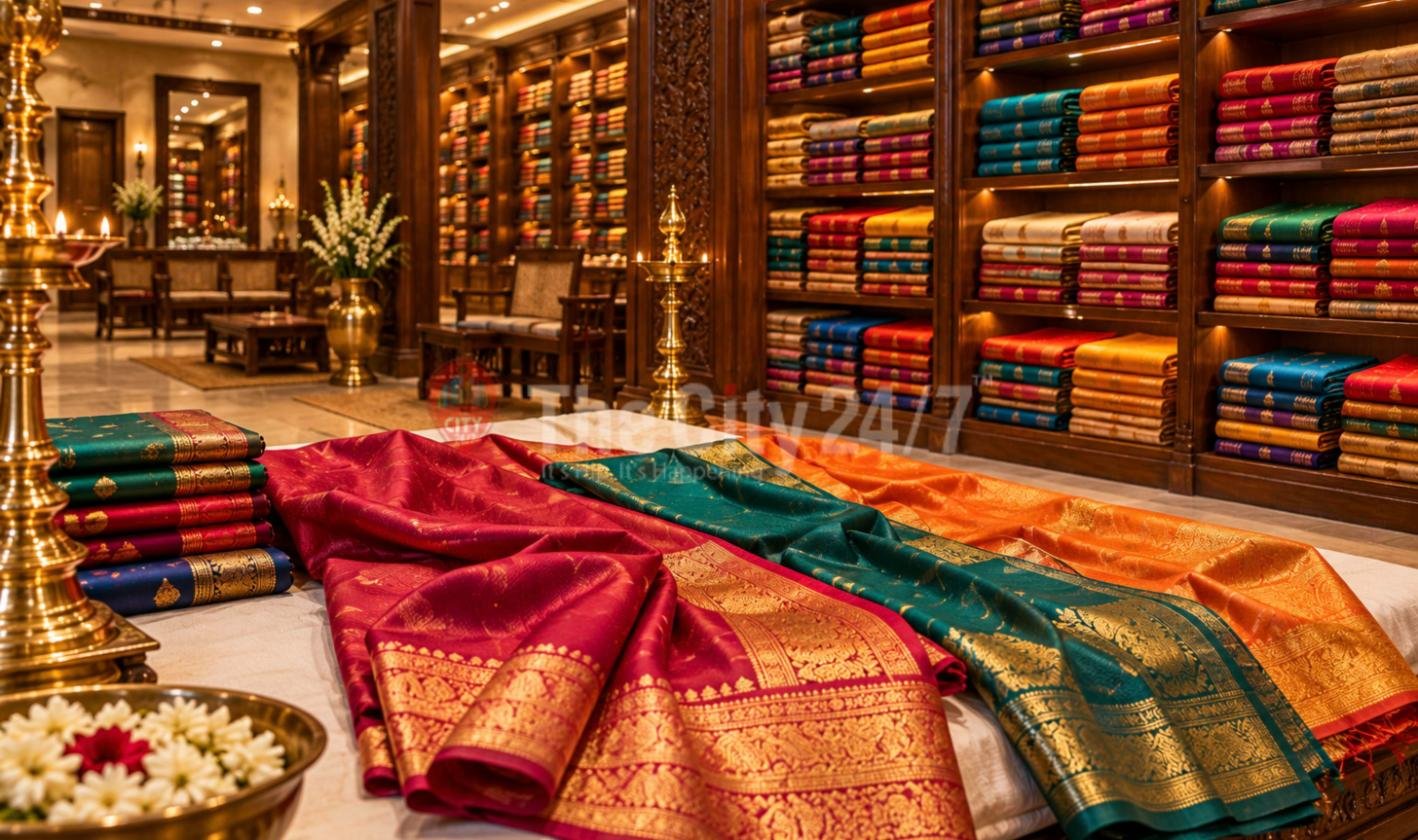 SHOPPING
Saree Shopping in Bangalore: Where to Buy, and How Not to Overpay
September 15, 2026
 SHOPPING
Gandhi Bazaar: The Market That Explains Old Bengaluru Better Than Any Museum
September 22, 2026
 SHOPPING
The Best Home Decor Stores in Bangalore, From Craft to Concept
September 15, 2026
 SHOPPING
Brigade Road Shopping Guide: Still the City's Best Walk
September 15, 2026
 SHOPPING
Electronics Shopping in Bangalore: SP Road and When Not to Use It
September 15, 2026
 SHOPPING
Jewellery Shopping in Bangalore: Making Charges Are the Whole Game
September 15, 2026
