


“Every visitor to this city gets offered sandalwood on a footpath. Almost nobody gets sold sandalwood on a footpath. Walk into Cauvery instead and pay the sticker price.”
• The single most useful shopping tip in Bengaluru
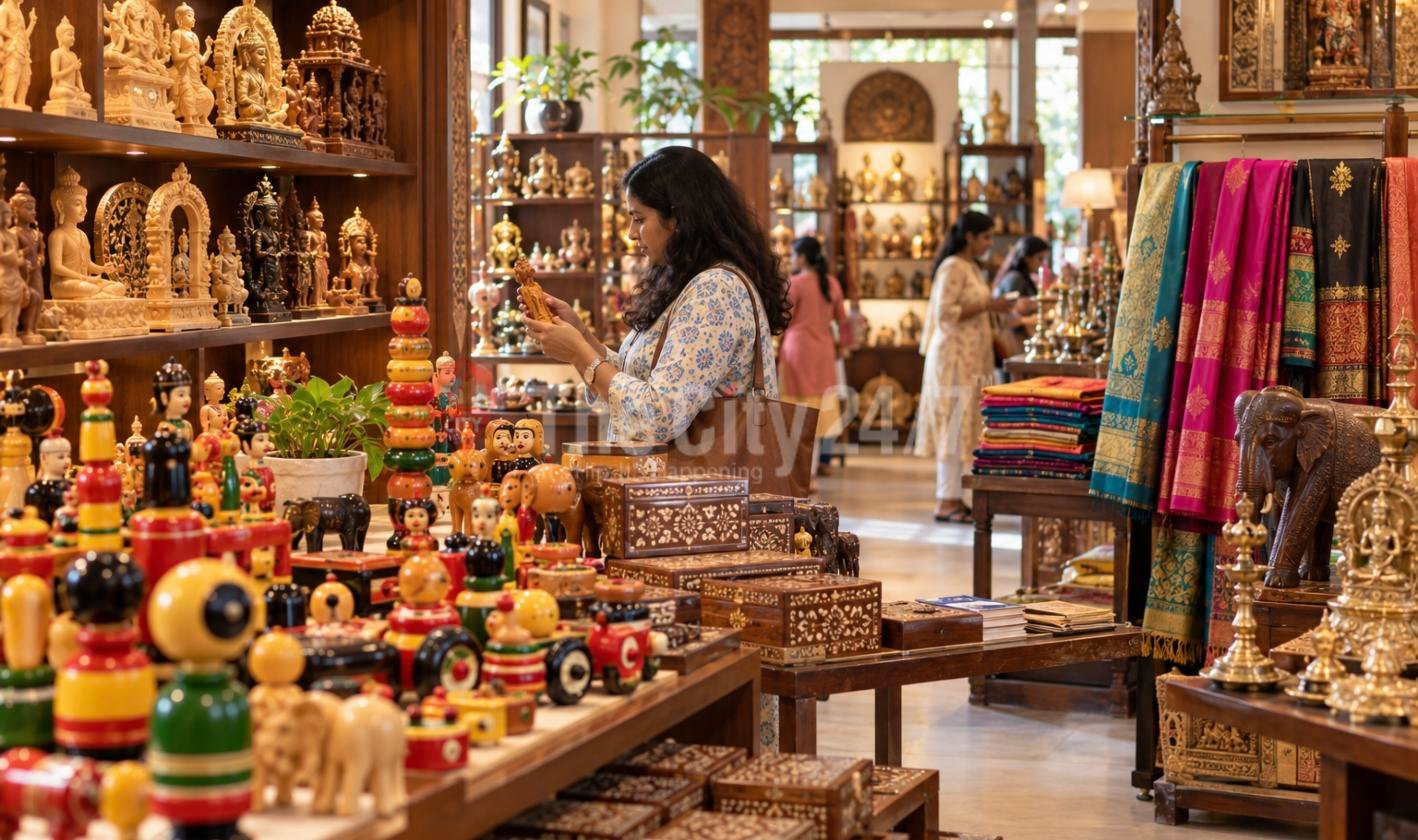
Cauvery Arts and Crafts Emporium on MG Road is the Karnataka state government's handicrafts showroom, run by the Karnataka State Handicrafts Development Corporation, and it is the most reliable place in Bengaluru to buy sandalwood, rosewood, Mysore silk, Bidriware, Channapatna toys and Ilkal and Molakalmuru saris. Prices are fixed and displayed, there is no bargaining and no commission agents, and staff will pack and arrange shipping for larger pieces.
I send every visiting friend here, and not because it is charming. It is a government emporium, so the lighting is flat, the display cases are old fashioned and nobody will compliment your taste. What you get instead is authenticity and a bill, which in the handicrafts trade is worth more than atmosphere.
The thing to understand about Karnataka crafts is that the good stuff is regulated. Sandalwood is a controlled commodity in this state, Mysore silk carries its own mark, and several crafts hold geographical indication tags. A state emporium is the shortest route to all of that without learning the trade yourself.
This guide covers what to buy, what it costs, what to skip, how to tell real sandalwood from scented pine, timings, shipping abroad and where else to shop on the same afternoon.
Quick Information
A government shop with no charm and no cheating. Here is the crux before you go.
What Is Cauvery Handicrafts and Why Does It Matter?
It is the Karnataka government's own retail showroom for the state's crafts, on MG Road in the centre of the city. The corporation behind it exists to buy from registered artisans and cooperatives and sell at fixed prices, which cuts out the layer of middlemen that makes the rest of the souvenir trade so unreliable.
Why that matters is simple. Sandalwood in Karnataka is legally controlled, adulteration is common in the open market, and most tourists cannot tell a sandalwood elephant from a pine elephant sprayed with oil. Nor can most of us verify Mysore silk by touch. The emporium settles both questions with a tag and a bill.
There is a second reason I keep going back. Because the stock comes from artisan cooperatives across the state, the range is wider than any private shop bothers to carry. Bidriware from Bidar, Channapatna toys from the highway to Mysore, Ilkal saris from Bagalkot, Kasuti embroidery from Dharwad. It is the closest thing to a survey of Karnataka's craft map under one roof.
What Should You Actually Buy?
Buy the things Karnataka makes better than anywhere else, and ignore the generic Indian handicrafts you could find in any state emporium. That narrows it usefully.
The Things Worth Your Money
- Sandalwood, small pieces. A carved Ganesha, a comb, a box, or sandal oil and soap. Real sandalwood is expensive by weight, so small is honest. If a large carving is cheap, it is not sandalwood.
- Mysore silk. Saris and stoles with the correct mark. The single best gift you can carry out of this state, and the safest place in the city to buy it.
- Channapatna toys. Lacquered wooden toys in vegetable dyes, made on the Mysore road. Cheap, beautiful, child safe and the best gift for anyone with kids.
- Bidriware. Blackened alloy inlaid with silver, from Bidar in north Karnataka. Vases, boxes and jewellery. Nothing else looks like it.
- Rosewood inlay. Mysore style inlay work, from small trays to large panels. This is where the serious money goes, and where the shipping desk earns its keep.
- Ilkal and Molakalmuru saris. Handloom weaves from the north and the Chitradurga belt. Ask the staff, because these are easy to walk past in favour of silk.
- Stone and brass. Soapstone carving and temple brass. Heavy, so buy it last and let them pack it.
If your budget is a few hundred rupees and you want something unmistakably from here, buy Channapatna toys and a bar of Mysore sandal soap. Between them they are the best value souvenir in the state, and both travel well in hand baggage.
How Do You Tell Real Sandalwood From a Fake?
The honest answer is that most buyers cannot, which is precisely why the emporium exists. What you can do is apply three checks before you part with money anywhere else in the city.
Three Checks
- Price. Sandalwood is one of the most expensive woods in the world and legally controlled in Karnataka. A large carving at a small price is sprayed pine. There is no bargain version of this material.
- Scent depth. Genuine sandalwood smells faintly and persistently, from the wood itself. Fakes announce themselves loudly and fade within weeks. A very strong smell is a warning, not a feature.
- Paperwork. Buy where there is a tagged price and a printed invoice naming the material. If you are carrying it out of the country, that bill is the only thing that will help you at customs.
And the rule for the footpath: nobody standing outside a metro station with a bag of sandalwood elephants is selling you sandalwood. That is not cynicism, it is arithmetic.
What Are the Timings and When Should You Go?
Standard retail hours, generally from mid morning to about 8 PM, with the caveat that this is a government undertaking and public holidays can shorten or close the day. Call before you travel across the city, particularly around national holidays.
For the best experience go on a weekday afternoon. The floor is calm, the staff have time, and if you are buying silk or a large wooden piece you will want somebody's full attention for twenty minutes. Saturday evening on MG Road is the opposite of that.
Can They Ship It Home, and What About Customs?
Yes for the big things. Packing and dispatch, including overseas, can be arranged at the counter for furniture, large carvings and panels, which is the usual reason people buy from an emporium rather than a private dealer. Get the quote in writing before you commit, and confirm the timeline.
On customs, two practical notes. Keep the invoice with the item rather than in your suitcase, because it names the material and the seller. And check your own country's rules on wood and plant products before buying anything large in sandalwood or rosewood, since several countries restrict them regardless of how legitimately you bought it here.
Is It Better Than Commercial Street or the Private Shops?
For crafts, yes. For everything else, no, and that is the right way to use it. This is a specialist shop for verified Karnataka craft at fixed prices, not a general shopping destination, and it does not try to be one.
Where to Go for What
- Verified crafts, silk and sandalwood. Cauvery on MG Road. Fixed price, real material, invoice in hand.
- Volume, variety and bargaining. Commercial Street, ten minutes away, for fabric, clothes, footwear and accessories.
- Street shopping and haggling. Commercial Street's side lanes and the Chickpet and KR Market belt for wholesale prices.
- Gifting under 500 rupees. Cauvery's toys and soap counter. Cheaper and more distinctive than a mall.
- Luxury and brands. UB City or the big malls. Different trip entirely.
How Do You Build an Afternoon Around It?
Take the Purple Line to MG Road or Trinity and do not bring a car, because parking on MG Road is a tax on optimism. The whole central shopping and walking district is within fifteen minutes on foot from the shop's door.
Within Walking Distance
- Commercial Street. The city's oldest shopping street, for everything Cauvery does not sell.
- Church Street. Bookshops, coffee and the best lunch options in the area.
- Cubbon Park. Twelve minutes away, and the right place to recover from shopping.
- The state museum and NGMA. On Kasturba Road. If you liked the crafts, these give you the context.
- MG Road boulevard. The walk under the metro line, which is a better street than it was a decade ago.
One last piece of advice. Go here first, before the markets. Once you have seen what real sandalwood costs and what proper Mysore silk feels like, the rest of the city's souvenir trade becomes much easier to read.
“No charm, no bargaining, no fakes. For crafts in Bengaluru, that is the whole review.”
• The verdict
Frequently Asked Questions
Where is Cauvery Handicrafts in Bangalore?
It is on MG Road in central Bengaluru, a short walk from the MG Road and Trinity metro stations on the Purple Line. It is the Karnataka state emporium, run by the Karnataka State Handicrafts Development Corporation.
What are the Cauvery Emporium timings?
Broadly mid morning to around 8 PM through the week. Because it is a government undertaking, public holidays can change or close the day, so call before travelling across the city.
Can you bargain at Cauvery Handicrafts?
No. Prices are fixed and tagged, which is the main reason to shop here. There are no commission agents and no negotiation, and the trade off is that you get a printed invoice naming the material.
What is the best thing to buy at Cauvery Handicrafts?
Sandalwood in small pieces, sandal oil and soap, Mysore silk, Channapatna lacquer toys, Bidriware from Bidar and Mysore style rosewood inlay. For a low budget gift, Channapatna toys and Mysore sandal soap are the best value souvenirs in the state.
Is the sandalwood at Cauvery genuine?
Yes, and that is the point of buying at the state emporium. Sandalwood is a controlled commodity in Karnataka and adulteration is common in the open market. A tagged price and an invoice naming the material is the only practical assurance most buyers can get.
How can I tell if sandalwood is fake?
Check the price first, because sandalwood is expensive by weight and a large cheap carving is almost always sprayed pine. Genuine sandalwood has a faint, long lasting scent from the wood itself, while fakes smell strong and fade fast. Always take a printed bill naming the material.
Does Cauvery ship items abroad?
Packing and dispatch, including overseas shipping, can be arranged at the counter for large items such as furniture, carvings and panels. Get the quote and timeline in writing, and check your own country's import rules on wood products before buying.
Is Cauvery Emporium expensive?
It is not cheap and it is not overpriced. You pay the real price for genuine material rather than a negotiated price for something uncertain. The range runs from a few hundred rupees for toys and soap to lakhs for large rosewood and sandalwood pieces.
What else can I shop for nearby?
Commercial Street is about ten minutes away for fabric, clothes, footwear and accessories, and Church Street is next door for books and lunch. Cubbon Park, the state museum and NGMA are all a short walk if you want to make an afternoon of it.
Contact Details
Stock, prices and holiday hours change, and this is a government showroom, so a quick call saves a wasted trip.
Bought Something Good?
If the timings have changed, a craft has appeared or vanished from the floor or you have a price worth reporting, click the WhatsApp icon at the bottom right of your screen and tell me. I will update this guide. That is also the easiest way to reach The City 24/7 about anything at all.
And if you want shopping guides, craft finds and weekend plans landing in your inbox, join our ever growing community at thecity247.kit.com/join-the-community. Free, and about ten seconds of your life.
Same city, new stories, always.

Related Stories
 SHOPPING
MG Road Shopping Guide: Silk, Sandalwood and the Old City Centre
September 15, 2026
 SHOPPING
Bangalore Central, Residency Road: India's First Seamless Mall, Two Decades Later
September 22, 2026
 SHOPPING
Brigade Road Shopping Guide: Still the City's Best Walk
September 15, 2026
 SHOPPING
Garuda Mall: Bengaluru's First Big Mall, Twenty Years on and Still Full
September 22, 2026
 SHOPPING
The Best Bookstores in Bangalore, From Church Street to Avenue Road
September 15, 2026
 SHOPPING
Commercial Street Bangalore: The Complete Shopping Guide
September 15, 2026
