


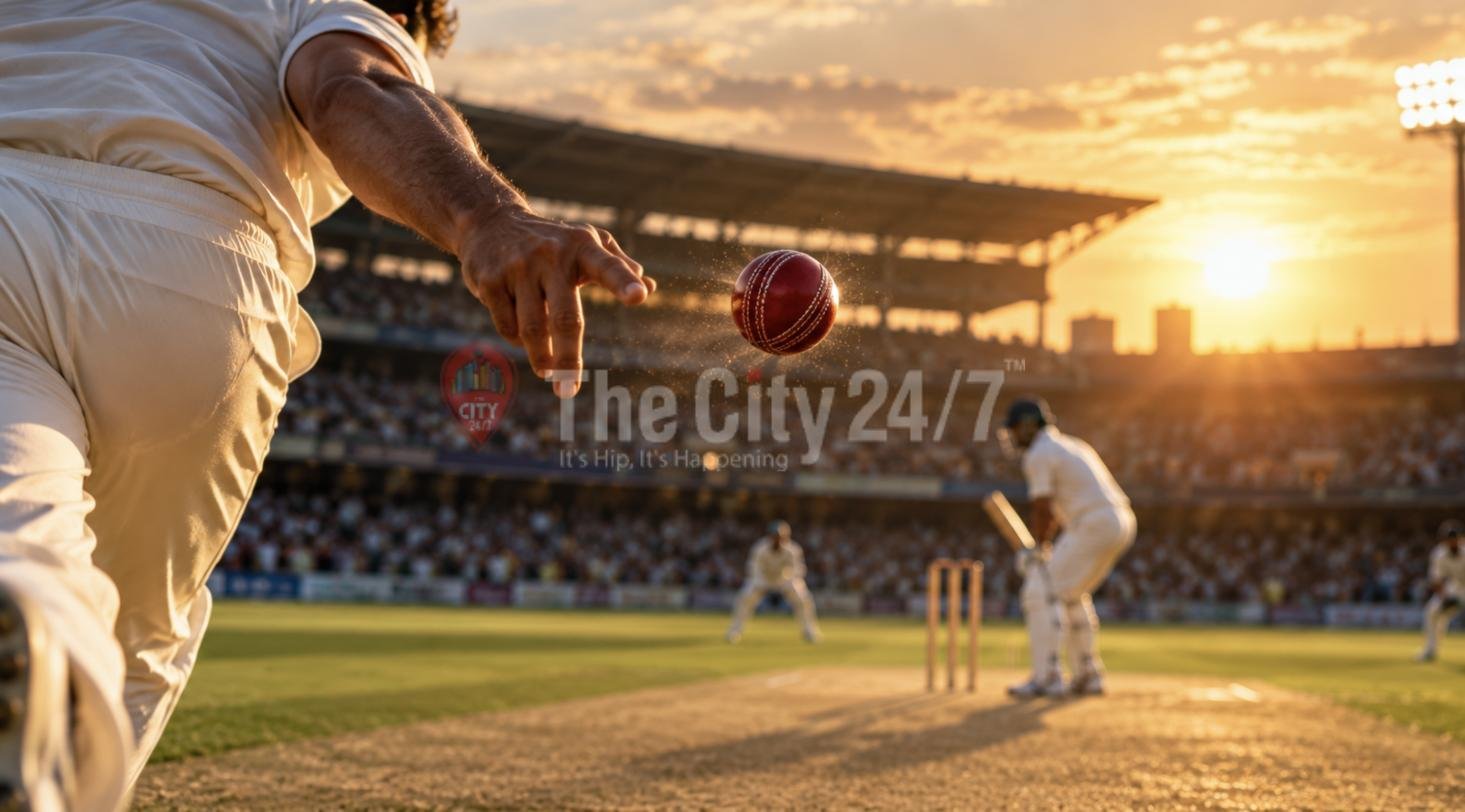
“He bowled with a broken jaw because the team needed him to. That is Kumble in one sentence.”
• On Antigua, 2002
Anil Kumble is India's highest wicket-taker in Test cricket, with 619 wickets in 132 Tests, and he was born and raised in Bengaluru. He studied mechanical engineering at RV College of Engineering, played for Karnataka, and in 1999 became only the second bowler in history to take all ten wickets in a Test innings. He later captained India's Test side, served as president of the Karnataka State Cricket Association, and has a traffic circle on MG Road named after him.
Every time I get stuck at Anil Kumble Circle, which is often, I think it is a slightly odd honour for a man whose whole career was about making things difficult for other people. He did not turn the ball as much as the great leg spinners. He bowled quicker, straighter and with a relentless accuracy that batsmen hated. He was, very much, an engineer's bowler.
This profile sticks to the well-established record. It is his Bangalore story: the Basavanagudi upbringing, the engineering degree, the famous ten, and why this city considers him one of its own in a way that goes beyond statistics.
Quick Information
Six hundred and nineteen Test wickets, one engineering degree and a traffic circle. Only in Bengaluru does a leg spinner become a landmark you get stuck at.
Is Anil Kumble From Bengaluru?
Yes, he was born in Bengaluru on October 17, 1970, and grew up in Basavanagudi. He learned his cricket at local clubs and in school matches in south Bengaluru, and went through the Karnataka system that produced a remarkable generation of India players in the 1990s.
- Basavanagudi. The old south Bengaluru neighbourhood where he grew up, near Gandhi Bazaar and the Bull Temple.
- Young Cricketers club. One of the local clubs where he developed as a bowler.
- National College. His college in Basavanagudi before engineering.
- RV College of Engineering. He completed a degree in mechanical engineering while playing top-level cricket.
What Happened When Anil Kumble Took All Ten Wickets?
On February 7, 1999, at the Feroz Shah Kotla in Delhi, Kumble took all ten Pakistan wickets in the second innings for 74 runs, and India won the Test. Only one bowler had done it before in Test cricket, England's Jim Laker in 1956. It remains one of the most celebrated performances by an Indian cricketer.
“Ten wickets, one innings, one bowler. It had happened once before, forty-three years earlier.”
• On Delhi, 1999
What Made Kumble Different as a Bowler?
Speed, accuracy and persistence. He bowled leg spin at close to medium pace, relied on top spin, bounce and variations rather than huge turn, and rarely gave batsmen anything loose. On Indian pitches he was a match winner for nearly two decades.
- Pace. Much quicker than a classical leg spinner, which made him very hard to step out to.
- Bounce. His height and high action got the ball to kick up off the pitch.
- The flipper. His quicker ball, which skidded on and trapped batsmen in front.
- Stamina. He bowled long spells without losing control, which is exactly what captains wanted.
What Happened in Antigua in 2002?
In a Test against the West Indies in Antigua in 2002, Kumble's jaw was broken by a bouncer while batting. He came out to bowl anyway, with his face bandaged, and sent down fourteen overs, taking the wicket of Brian Lara. The image of him bowling with his jaw strapped is one of the most famous in Indian cricket, and says a great deal about how he approached the game.
Was Kumble Part of a Golden Generation of Karnataka Cricket?
Yes. In the 1990s Karnataka produced an extraordinary group of India players, including Kumble, Rahul Dravid, Javagal Srinath, Venkatesh Prasad, Sunil Joshi and Vijay Bharadwaj. With that core, Karnataka won the Ranji Trophy in 1995 to 1996, 1997 to 1998 and 1998 to 1999, and for several years a large share of India's bowling attack came from Bengaluru's grounds.
- Srinath and Prasad. The fast bowling pair who, with Kumble, often made up most of India's attack.
- Dravid. His Karnataka and India teammate from their early twenties.
- Club culture. The city's league system, with its many clubs and matting pitches, gave them hundreds of competitive matches before they reached first-class cricket.
What Was Anil Kumble Like as India Captain?
Steady, principled and respected by his players. He was appointed Test captain in 2007 at the age of 37 and led India on the tough 2007 to 2008 tour of Australia. After a bitterly contested Sydney Test, his remark that only one team was playing in the spirit of the game became one of the most quoted lines in Indian cricket. He retired from international cricket in November 2008, during a home series against Australia.
Kumble's handling of the Sydney controversy is often cited as a model of calm leadership under pressure. It also confirmed, for many Indian fans, that the man from Basavanagudi would always put the game first.
What Did Kumble Do After Retiring as a Player?
He retired from international cricket in 2008 and went into administration, coaching and business. He served as president of the Karnataka State Cricket Association from 2010 to 2013, was head coach of the Indian team in 2016 and 2017, and was chairman of the ICC Cricket Committee. He is also known for his interest in wildlife photography and conservation in Karnataka.
Kumble took his 500th Test wicket in 2006, and his 600th in 2007. He also scored his only Test century at The Oval in 2007, in his 118th Test, which delighted Bengaluru nearly as much as the wickets.
Where Can You See Anil Kumble's Legacy in Bengaluru?
At Anil Kumble Circle on MG Road, at M Chinnaswamy Stadium, and in the south Bengaluru neighbourhoods where he grew up. The circle, near the stadium, is one of the few places in India named after a cricketer while he was still at the peak of his fame.
- Anil Kumble Circle. On MG Road near Chinnaswamy Stadium. You have almost certainly driven through it.
- M Chinnaswamy Stadium. Home of Karnataka cricket, which he later helped run as KSCA president.
- Basavanagudi. Walk from the Bull Temple to Gandhi Bazaar for the neighbourhood that made him.
- RV College of Engineering. His alma mater on Mysore Road, still proud of its most famous graduate.
What Can Bangaloreans Learn From Anil Kumble?
That you do not have to choose between education and ambition, and that effort can make up for a great deal of natural talent. Kumble finished an engineering degree while playing international-standard cricket, and built a career on doing a simple thing better and for longer than anyone else. That combination, very studious and very competitive, feels deeply Bengaluru.
Why Does Anil Kumble Belong in People of Bangalore?
Born in Bengaluru, raised in Basavanagudi, educated at National College and RV College, and later president of the state cricket association. There is a circle on MG Road with his name on it. Bengaluru does not just claim Kumble; it signposted him.
FAQs
Is Anil Kumble from Bengaluru?
Yes. Anil Kumble was born in Bengaluru on October 17, 1970, and grew up in Basavanagudi in south Bengaluru. He played his domestic cricket for Karnataka.
How many Test wickets did Anil Kumble take?
He took 619 wickets in 132 Tests, the most by any Indian bowler. He also took 337 wickets in One Day Internationals.
When did Anil Kumble take all ten wickets?
On February 7, 1999, against Pakistan at the Feroz Shah Kotla in Delhi, he took 10 for 74 in the second innings. Jim Laker of England was the only bowler to have done it before in Test cricket, in 1956.
What did Anil Kumble study?
He studied mechanical engineering at RV College of Engineering in Bengaluru, completing his degree while playing top-level cricket.
Where is Anil Kumble Circle?
Anil Kumble Circle is on MG Road in central Bengaluru, close to M Chinnaswamy Stadium.
Why is Anil Kumble called Jumbo?
Jumbo is a nickname given by teammates, often linked to his long stride and his height. It has stayed with him throughout his career.
Did Anil Kumble captain India?
Yes. He captained India's Test team from 2007 to 2008, before retiring from international cricket in November 2008.
Did Anil Kumble bowl with a broken jaw?
Yes. In Antigua in 2002 his jaw was broken while batting, but he returned to bowl fourteen overs with his face bandaged and dismissed Brian Lara.
Contact Details
The Bengaluru cricket institutions tied to his story.
Faced Him in the Nets?
If you played club cricket with Anil Kumble in Basavanagudi, or studied with him at RV College, Click the WhatsApp icon at the bottom right of your screen and tell me. That is also the easiest way to reach The City 24/7 about anything at all, including nominating someone for People of Bangalore.
And if you want one story about the people who make this city, every Sunday, join our ever growing community at thecity247.kit.com/join-the-community. Free, and about ten seconds of your life.
Same city, new stories, always.

Related Stories
 SPORT
Erapalli Prasanna: The Engineer Spinner of India's Famous Four
September 23, 2026
 SPORT
Venkatesh Prasad: The Bowler Behind Bengaluru's Most Famous Cricket Moment
September 23, 2026
 SPORT
Aparna Popat: The Mumbai Teen Who Moved to Bangalore and Won Nine Titles
September 24, 2026
 SPORT
Javagal Srinath: The Fast Bowler Karnataka Produced When India Had None
September 23, 2026
 SPORT
KL Rahul: From Karnataka Cricket to India in Every Format
September 23, 2026
 SPORT
Pankaj Advani: The Bengaluru Cueist With a Cabinet Full of World Titles
September 23, 2026
